Month: November 2025
National Trust: Expanding Collective History with the LGBTQ+ Heritage Alliance
October 16, 2025
By: Louis Finley
The National Trust for Historic Preservation interviewed our co-director Ken Lustbader:
When it comes to telling the stories of American history, some have been told more than others. The new, nationally focused, LGBTQ+ Heritage Alliance aims to change that. The initiative is a wide-ranging effort to amplify LGBTQ+ place-based history and culture by assisting those working to identify and document these rich, yet often untold, stories. In addition to creating a national network and inventorying past efforts, it has announced the first-ever grant program specifically designed for projects related to LGBTQ+ site-based history, said Ken Lustbader, the key organizer of the LGBTQ+ Heritage Alliance and co-director of the NYC LGBT Historic Sites Project.
NY1: “Advocates say Bayard Rustin story deserves recognition after federal grant loss”
October 16, 2025
By: Louis Finley
from Spectrum NY1 News:
The NYC LGBTQ Historic Sites Project learned earlier this month that a promised $32,000 federal grant was gone.
The money was meant to document and nominate the home of Bayard Rustin, the man who organized the March on Washington, as a National Historic Landmark.
MAPPED: Trans History, Queens Pride
November 20, 2025
NEWLY MAPPED SITES:
Following extensive research by the project team, the NYC LGBTQ Historic Sites Project announces the latest additions to its digital heritage map.
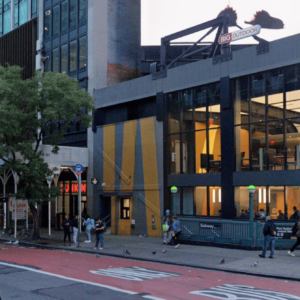
Murder Location of Amanda Milan & March Against Anti-Trans Violence
Eighth Avenue & West 42nd Street
Manhattan
In June of 2000, Amanda Milan, a trans sex worker, was attacked and murdered outside of the Port Authority Bus Terminal, near Times Square, by three men using transphobic hate speech. The Memorial for Amanda Milan and the March Against Anti-Trans Violence was organized a month later by her friends and family with the help of Sylvia Rivera, which led to the revival of the activist group Street Transvestite Action Revolutionaries (STAR). READ MORE
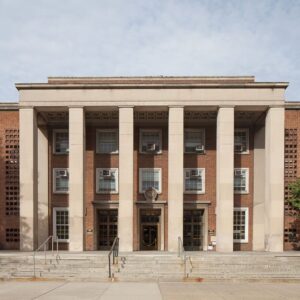
Queens Pride House at Queens Borough Hall
120-55 Queens Boulevard
Queens
From its inception in 1997 to May 2001, Queens Pride House had meeting and office space in Queens Borough Hall, where members organized events, coordinated legal and health services, and provided a gathering space for the Queens LGBTQ community. Queens Pride House has been a staple community space for LGBTQ people in Queens and still operates in Jackson Heights, where it has been located since 2004. READ MORE
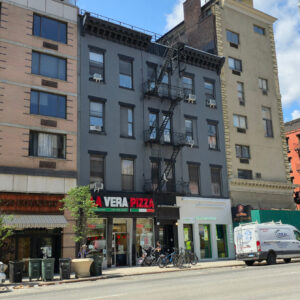
Otto Spengler Residence & Argus Pressclipping Bureau
352 Third Avenue
Manhattan
German immigrant Otto Spengler, proprietor of the Argus Pressclipping Bureau, was among the first trans people to be discussed in the U.S. medical community and to undergo an early, experimental form of what is now called feminizing hormone therapy. Spengler lived and operated Argus in this tenement building from 1904 until at least 1937. READ MORE
FROM THE ARCHIVE:
Explore the LGBTQ history of a site we’ve previously mapped.
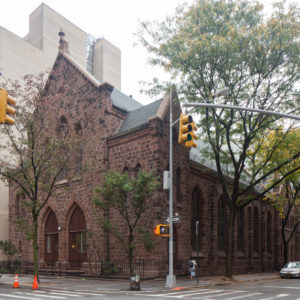
Gay Alliance of Brooklyn at Spencer Memorial Church
99 Clinton Street
Brooklyn
The Gay Alliance of Brooklyn was one of the first gay civil rights organizations established in New York City outside of Manhattan. The group, which was active from 1971 to 1973, was organized at the Spencer Memorial Church in Brooklyn Heights, a church with a welcoming, radical minister. The House of David and Jonathan, reportedly the country’s first gay synagogue, held services here in November and December 1970. READ MORE
“Homosexuals *Are* Different”: The Mattachine Society & LGBTQ Rights in the 1950s
December 10, 2025 | 6:30PM - 8:30PM
Did you know that America’s first effective LGBTQ rights movement began nearly 20 years before Stonewall with the founding of the Mattachine Society in 1951? Following World War II, the United States government targeted American citizens, including LGBTQ people, that it considered threats to national security. Organized religion, the psychiatric profession, police oppression, and the absence of positive LGBTQ representation in any facet of daily life, also shaped widespread homophobia in American society. Yet, even in this highly hostile climate, LGBTQ Americans laid the groundwork to advocate collectively for their civil rights and fight against invisibility and erasure.
In this program, Adrian Scott Fine, President and CEO of the Los Angeles Conservancy, will trace Mattachine’s beginnings on the West Coast. Jay Shockley, co-director and co-founder of the NYC LGBTQ Historic Sites Project, will highlight places in New York City that illustrate Mattachine’s transformation from a social group to one that actively demonstrated for gay rights in the 1960s. Blake McDonald, coordinator of the LGBTQ+ Heritage Initiative at the Virginia Department of Historic Resources, will expand the conversation beyond major coastal cities by discussing queer life in Richmond, Virginia, where an attempt to form a Mattachine chapter was made in the early 1960s.
Jon Marans, playwright of the 2009 Drama Desk Award-winning play The Temperamentals, about the founding of Mattachine, will give introductory remarks.
This free public program is hosted by the NYC LGBTQ Historic Sites Project. Optional donations go toward supporting the Project’s efforts to document NYC’s LGBTQ cultural heritage.
REGISTER NOW
About the Speakers:
ADRIAN SCOTT FINE, as President and CEO for the Los Angeles Conservancy, oversees the organization’s overall leadership within the greater Los Angeles region (serving 88 cities and unincorporated L.A. County, encompassing more than 4,000 sq. miles). Prior to joining the Conservancy in 2010, Mr. Fine was with the National Trust for Historic Preservation in Philadelphia and D.C., and previously with Indiana Landmarks.
BLAKE MCDONALD is a native of Albemarle County, Virginia, now residing in Richmond. He studied architectural history at Connecticut College and the University of Virginia. As the Survey and Grants Specialist for the Virginia Department of Historic Resources, he travels throughout the Commonwealth supporting the stewardship of Virginia’s diverse past. Prior to his current role, Blake worked in cultural resource management, historic preservation advocacy, and museum education.
JAY SHOCKLEY is co-director and co-founder of the NYC LGBTQ Historic Sites Project. He retired as senior historian at the NYC Landmarks Preservation Commission in 2015. Since 1979, he wrote over 100 designation reports covering all aspects of the city’s architectural and cultural history, including the first-ever to acknowledge LGBTQ history, in 1993. A year later, he co-authored a first-of-its-kind map honoring gay and lesbian historic sites for the short-lived Organization of Lesbian and Gay Architects + Designers (OLGAD). Jay also co-authored the 1999 National Register of Historic Places nomination for the Stonewall Inn, making it the first site to be listed for LGBTQ significance.
Special Closing Guests:
Following the Q&A, we’ll share a brief announcement about Sites of Queer Dying in NYC During the AIDS Epidemic, a collaboration between Pratt Institute and the NYC LGBTQ Historic Sites Project. Supported by the Taconic Fellowship program of the Pratt Center for Community Development, this project, led by Dr. Harriet Harriss, Caroline Hibbert, Fabio Lima, and Teal Nottage, explores how LGBTQ+ communities navigated death and memorialization during the HIV/AIDS crisis, prompting a reevaluation of traditional approaches to public memorialization. At this December 10th virtual event, the Taconic fellows will both launch an online survey inviting public reflections on queer experiences of death and dying and announce an in-person workshop on Sites of Queer Dying, to be held in February 2026.
NEW SITES PUBLISHED: Over 500 Extant Sites Across the 5 Boroughs
November 5, 2025
Our dynamic website features places where LGBTQ people made history, from college campuses on Staten Island to venues for supporting community in Brooklyn, to public parks in The Bronx, to storied sports venues in Queens. And in Manhattan, our team has added six new sites which expand the telling of LGBTQ place-based history.
 Murder Location of Amanda Milan & March Against Anti-Trans Violence
Eighth Avenue & West 41st Street
Manhattan
In June of 2000, Amanda Milan, a trans sex worker, was attacked and murdered outside of the Port Authority Bus Terminal, near Times Square, by three men using transphobic hate speech. The Memorial for Amanda Milan and the March Against Anti-Trans Violence was organized a month later by her friends and family with the help of Sylvia Rivera, which led to the revival of the activist group Street Transvestite Action Revolutionaries (STAR). (read more)
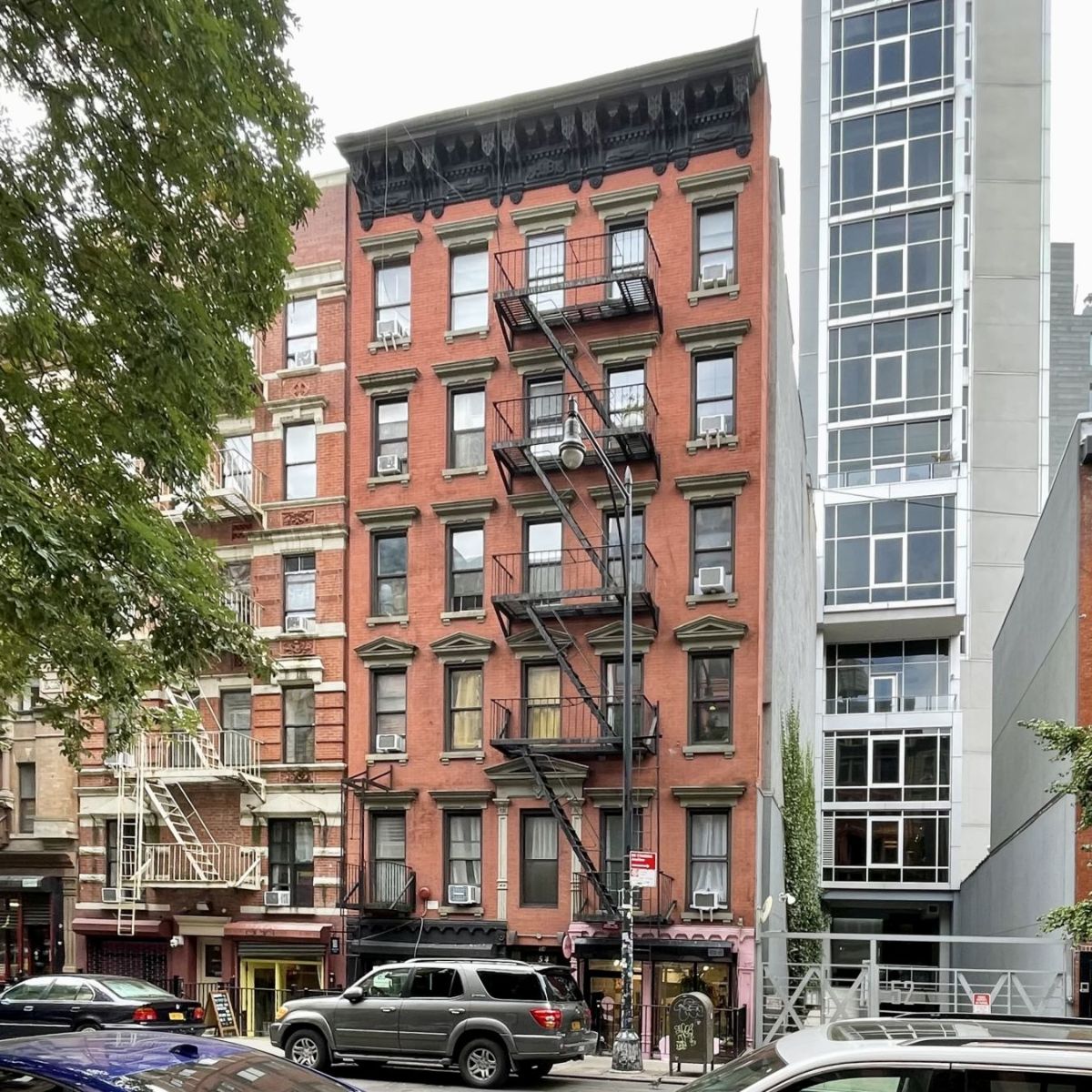 Agosto Machado Residence
54 East 4th Street
Manhattan
Downtown Manhattan performance artist, activist, and “street queen” Agosto Machado lived in an apartment in this East Village tenement building from 1970/71 to 1996/97. While here, as he lost many friends to the AIDS epidemic, he began creating altars and shrines in their memories. (read more)
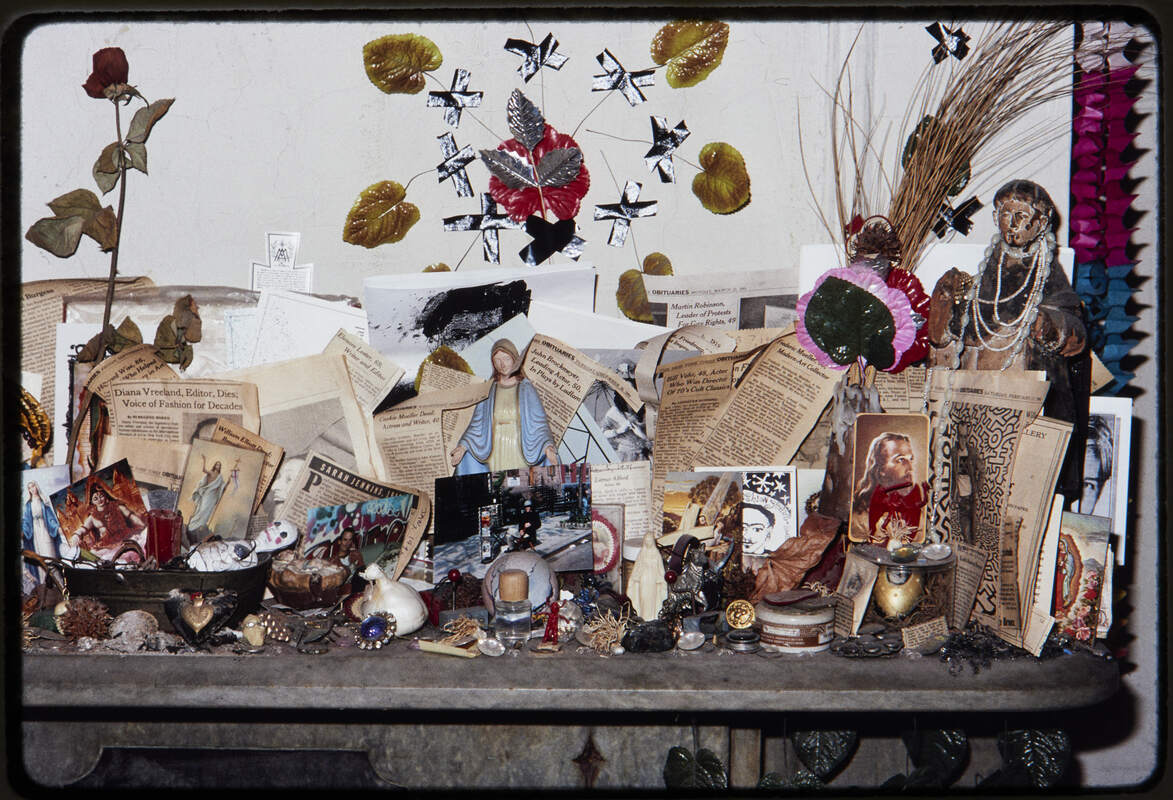 Mantel in Agosto Machado’s 4th Street apartment (obituary clippings, religious objects, and other ephemera). Courtesy of Gordon Robichaux.
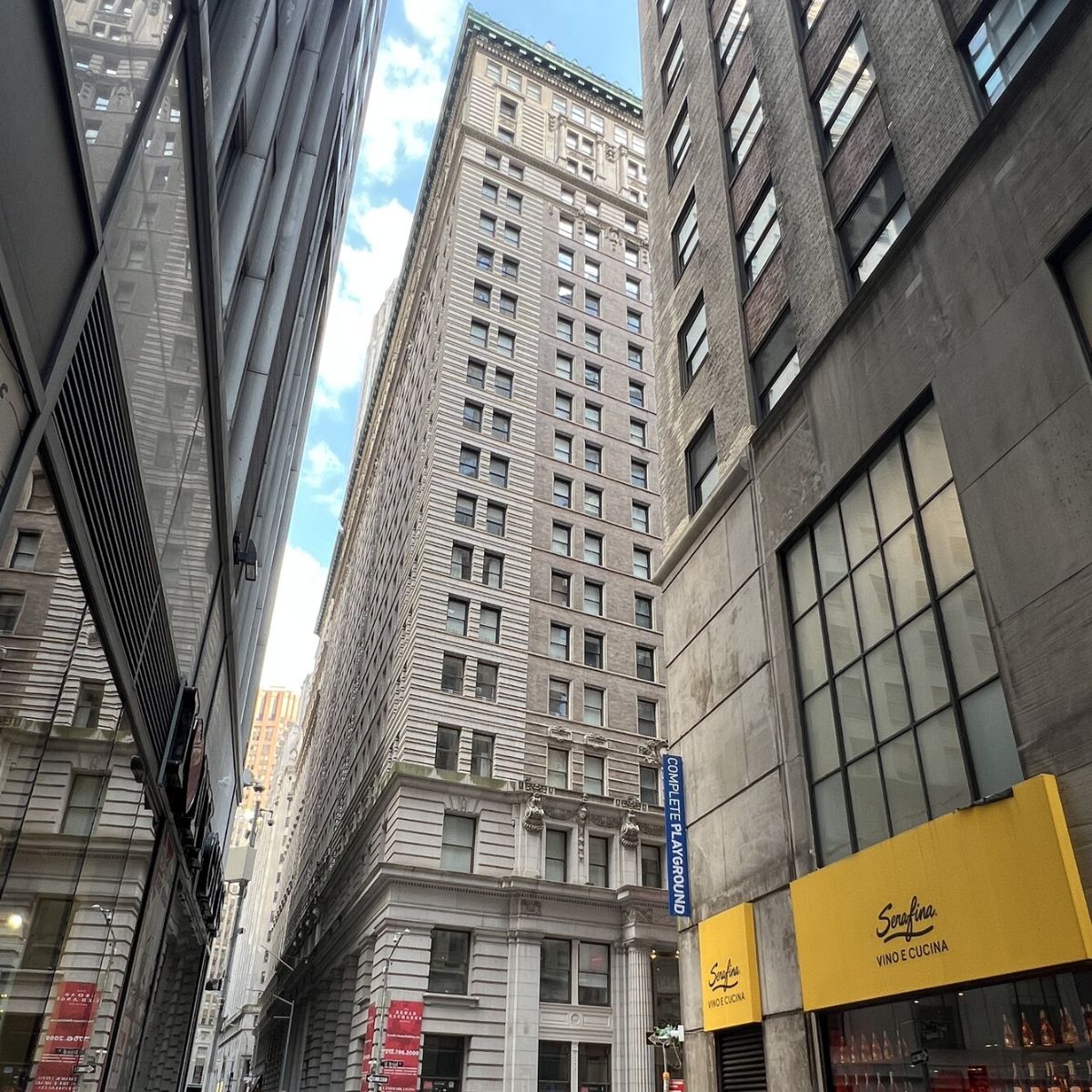 Albert Sprague Bard Office
25 Broad Street
Manhattan
The legal basis for New York City’s Landmarks Preservation Commission was the Bard Act, passed by the New York State Legislature in 1956 following several decades of lobbying by Albert Sprague Bard. Bard’s career, mainly focused on New York City, was dedicated to the beautification of the environment, and he maintained an office at the Broad-Exchange Building from its opening in 1902 until his death in 1963. (read more)
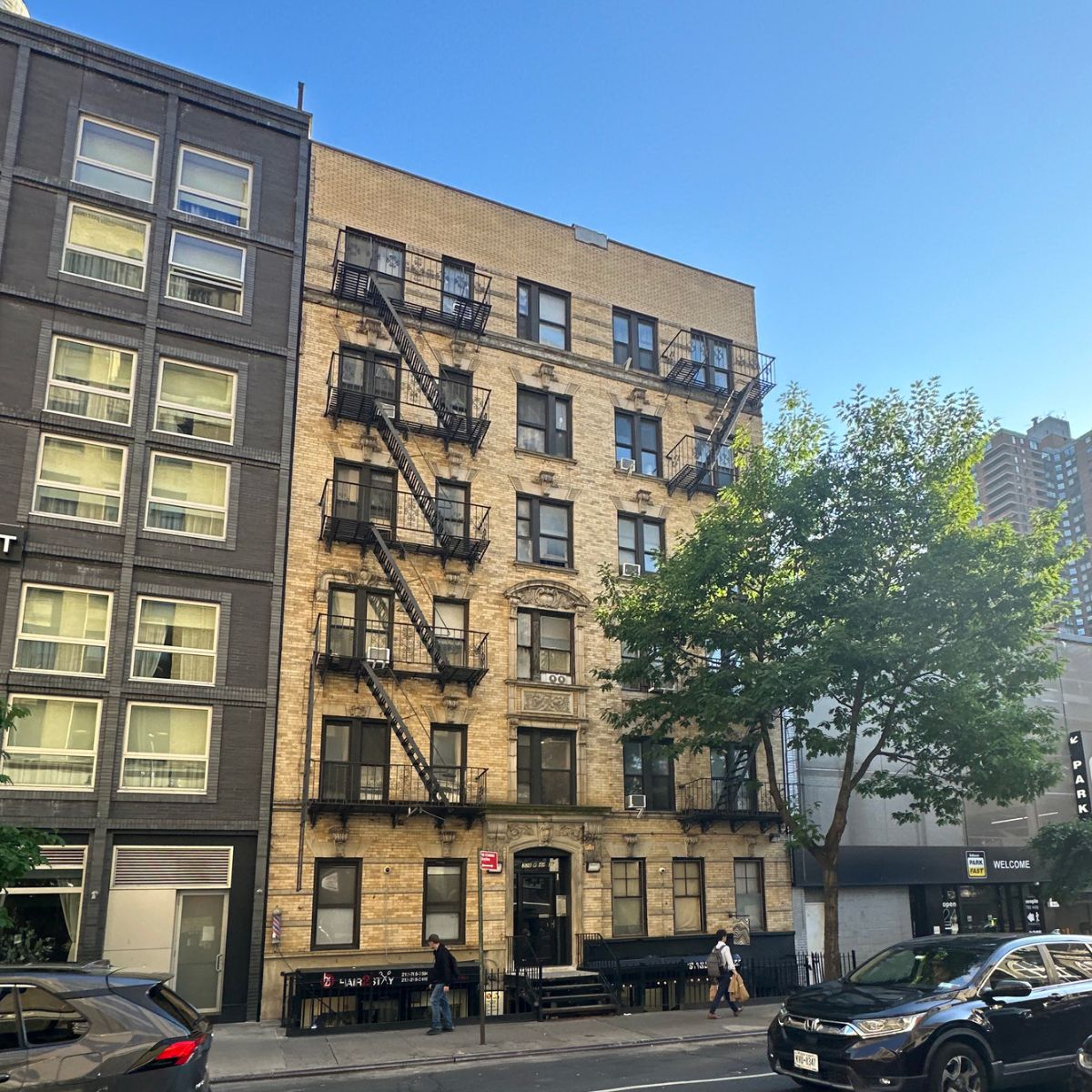 Reinaldo Arenas Residence
328 West 44th Street
Manhattan
Reinaldo Arenas was a Cuban novelist and poet known for his highly homoerotic work, through which he starkly criticized and denounced the Cuban Revolution and regime. Best known posthumously in the United States for Before Night Falls (both the autobiography and film), Arenas developed most of his oeuvre in his sixth-floor apartment in this building in Hell’s Kitchen, where he lived from 1983 until his death in 1990. (read more)
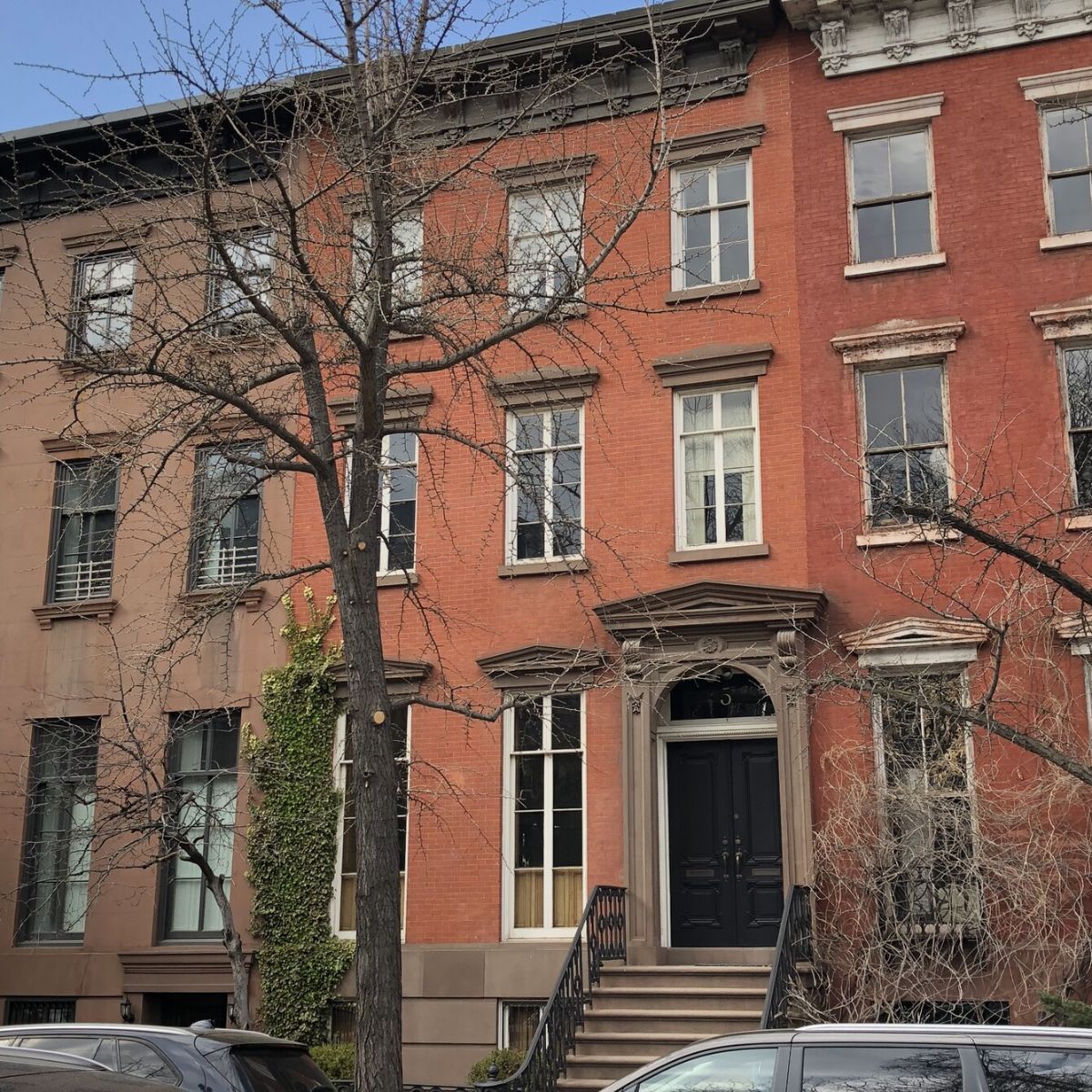 Paul Cadmus & Jared French Residence & Studio
5 St. Lukes Place, Manhattan
In 1935, the top floor of this Greenwich Village rowhouse became the home and studio of two of America’s most important mid-20th-century artists, Paul Cadmus and Jared French, both of whom frequently employed gay or homo-erotic imagery. It remained Cadmus’s home and studio through the 1950s and was where many of his major paintings were completed. (read more)
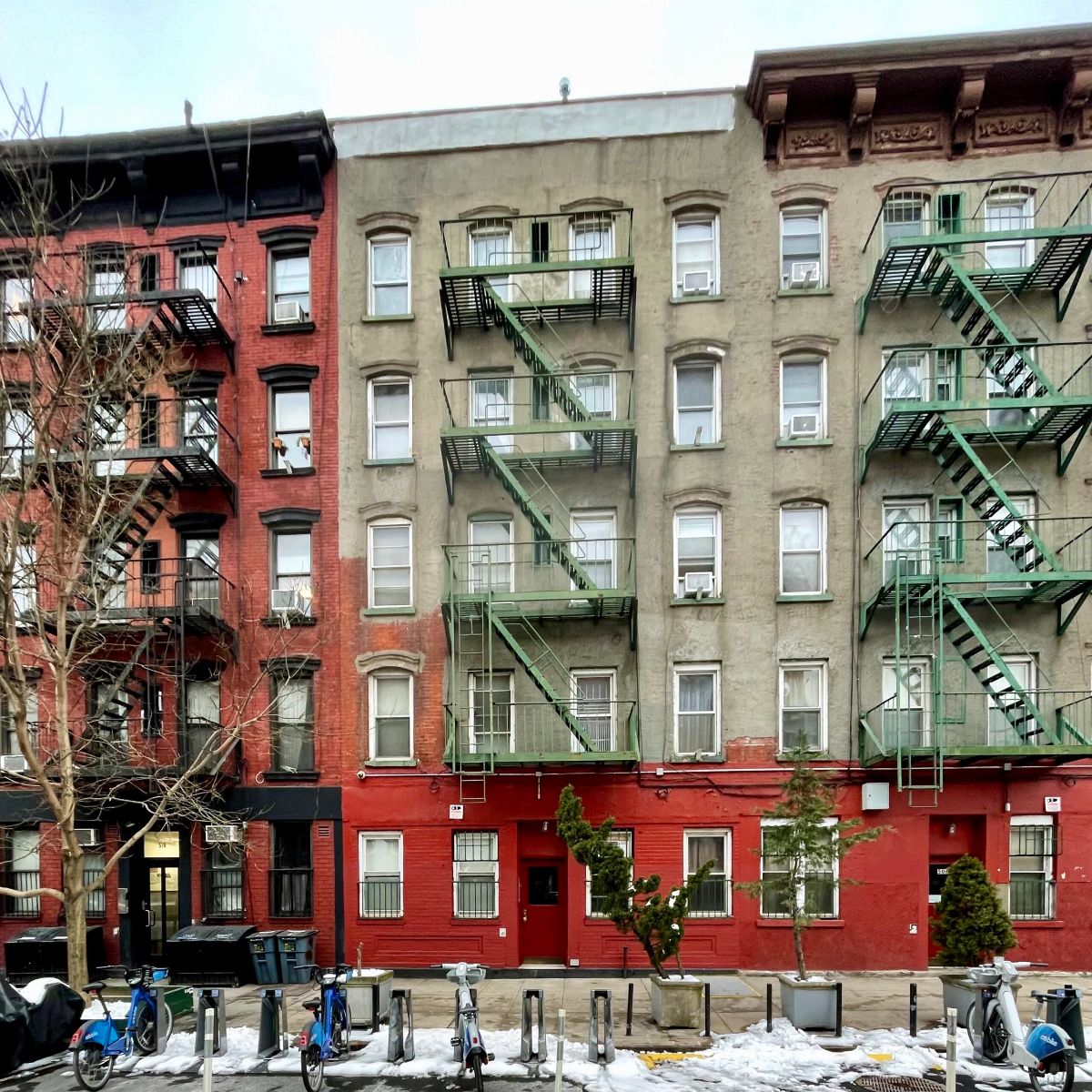 SILENCE = DEATH Collective at Jorge Socarrás Residence
508 East 5th Street
Manhattan
Here, a political collective of six gay artists finalized its now-iconic Silence = Death poster, featuring the pink triangle, which they designed in response to the AIDS epidemic. The Silence = Death collective, as they became known, ultimately gave permission to ACT UP to use the poster in its demonstrations and outreach, making the design one of the most influential works of protest art in American history. (read more)
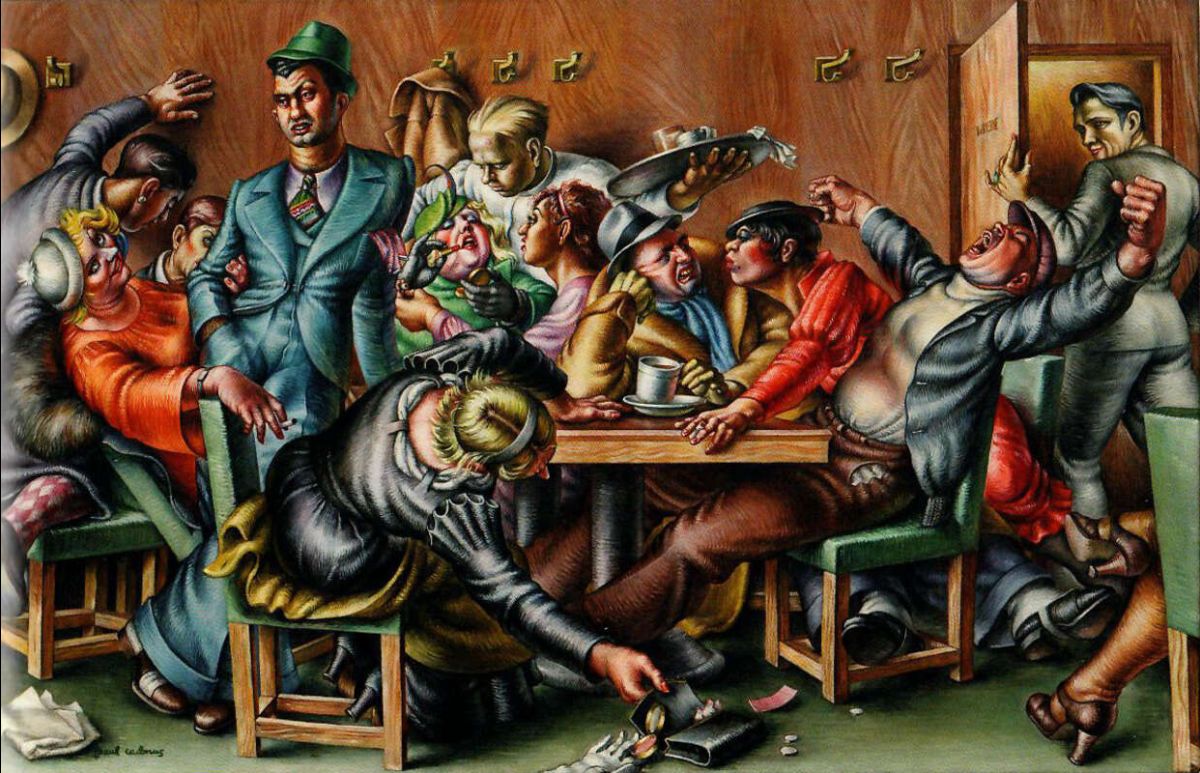
“Greenwich Village Cafeteria,” by Paul Cadmus, 1934. In the collection of the Museum of Modern Art (MoMA), and representing the real-life Stewart’s Cafeteria in Greenwich Village.
BONUS: New Historic Site in Queens Mapped & Published!
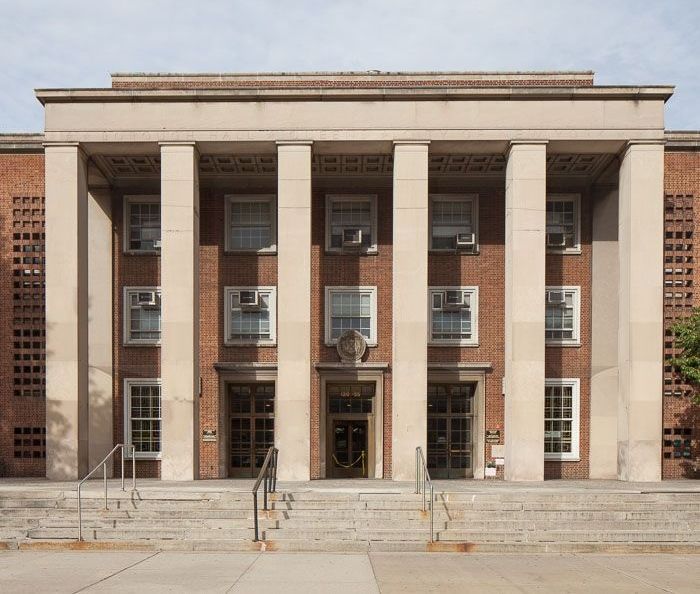
Queens Pride House at Queens Borough Hall
120-55 Queens Boulevard
Queens
From its inception in 1997 to May 2001, Queens Pride House had meeting and office space in Queens Borough Hall, where members organized events, coordinated legal and health services, and provided a gathering space for the Queens LGBTQ community. Queens Pride House has been a staple community space for LGBTQ people in Queens and still operates in Jackson Heights, where it has been located since 2004. (read more)