Otto Spengler Residence & Argus Pressclipping Bureau
overview
German immigrant Otto Spengler, proprietor of the Argus Pressclipping Bureau, was among the first trans people to be discussed in the U.S. medical community and to undergo an early, experimental form of what is now called feminizing hormone therapy.
Spengler lived and operated Argus in this tenement building from 1904 until at least 1937.
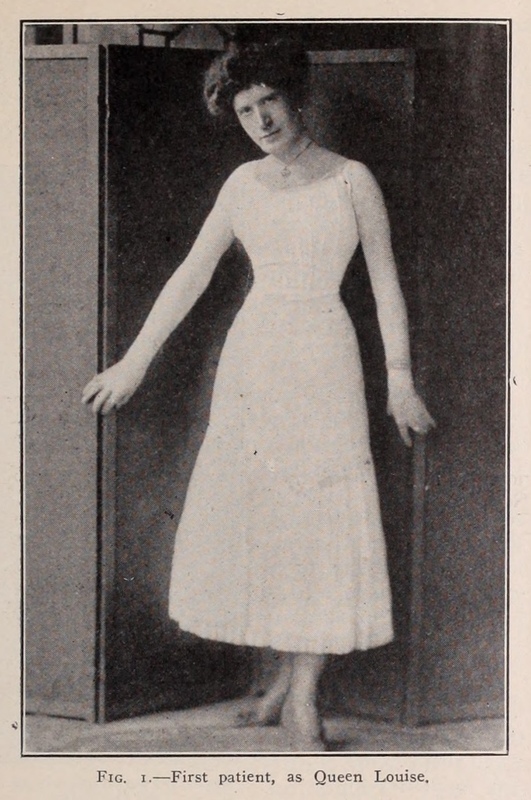
Photo of Otto Spengler included in Talmey's article. Source: New York Medical Journal, no. 99 (January to June 1914).
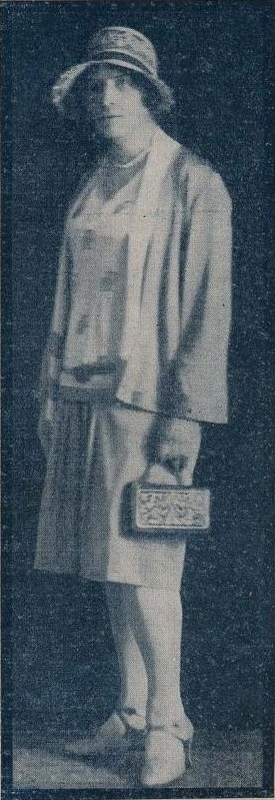
Otto Spengler in a photo Spengler submitted to the Berlin-based magazine Das 3. Geschlecht: Die Transvestiten (translated as The Third Sex: Transvestites). Source: Das 3. Geschlecht: Die Transvestiten, issue 3 (February 1931).
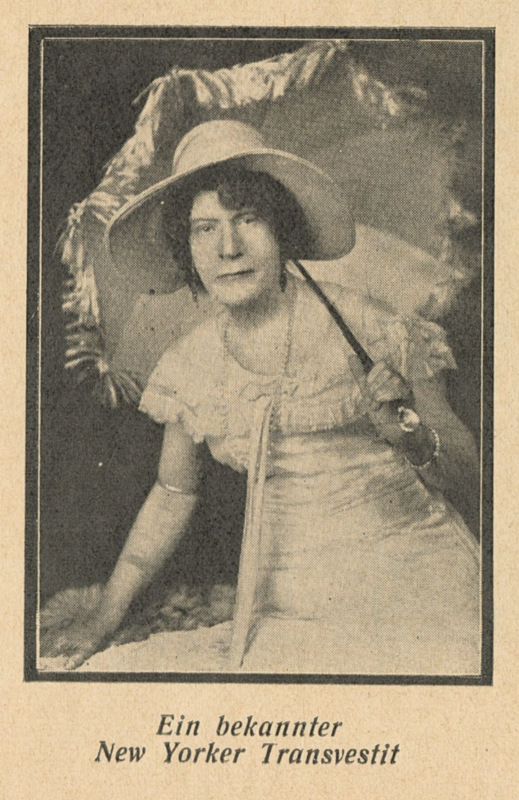
Otto Spengler in a photo Spengler submitted to the Berlin-based magazine Das 3. Geschlecht: Die Transvestiten (translated as The Third Sex: Transvestites). Source: Das 3. Geschlecht: Die Transvestiten, issue 5 (May 1932).
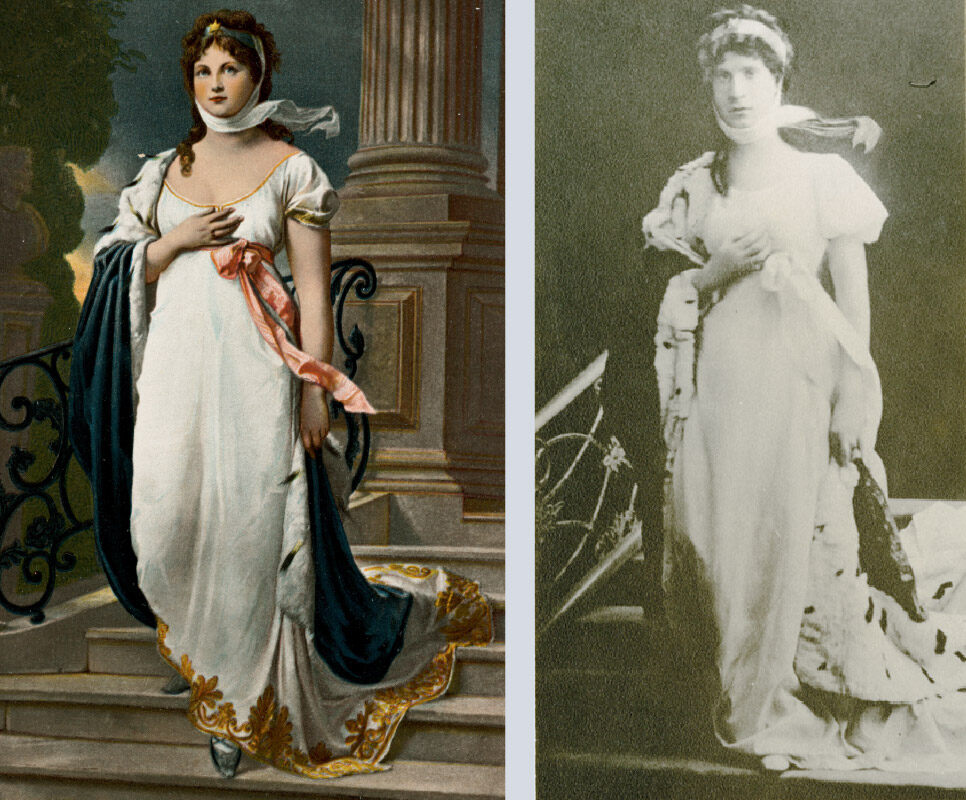
(left) Queen Louise of Prussia (1879), an oil painting by Gustav Richter. Source: Digital Commonwealth. (right) Photo of Otto Spengler posing as Queen Louise. Source: Kinsey Institute Library and Archives photo collection. Copyright © 2017, The Trustees of Indiana University on behalf of the Kinsey Institute. All rights reserved.
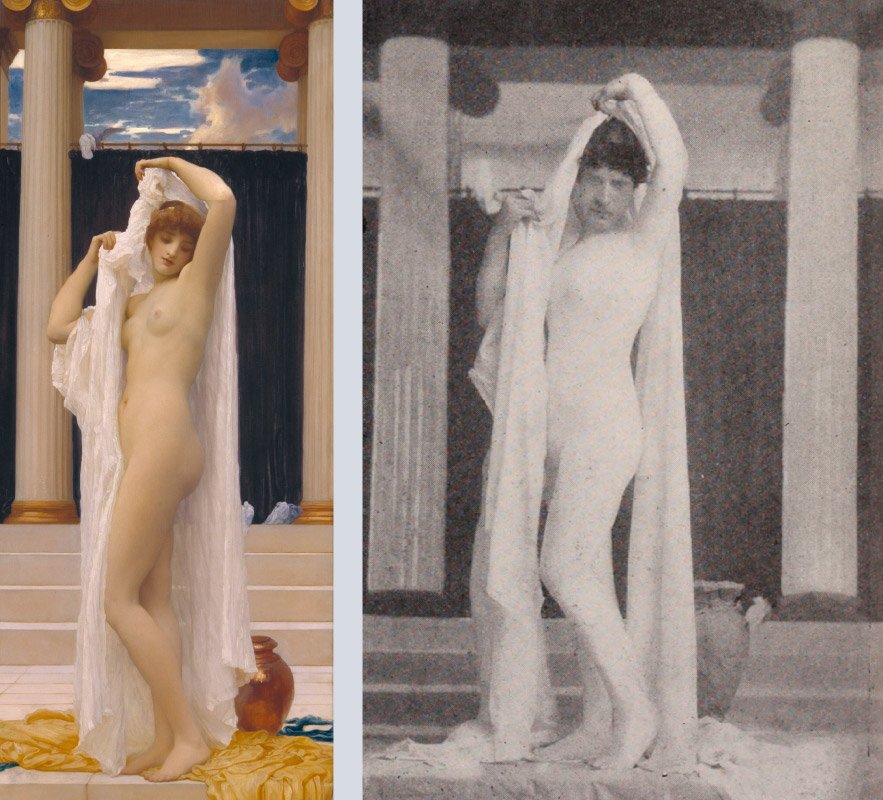
(left) The Bath of Psyche (1890), an oil painting by Lord Frederic Leighton. Source: Public domain, via Wikimedia Commons. (right) Photo included in Talmey's article of Otto Spengler posing in imitation of The Bath of Psyche. Source: New York Medical Journal, no. 99 (January to June 1914).

Portrait of Otto Spengler, c. 1913. Source: Otto Spengler, Das deutsche Element der Stadt New York.
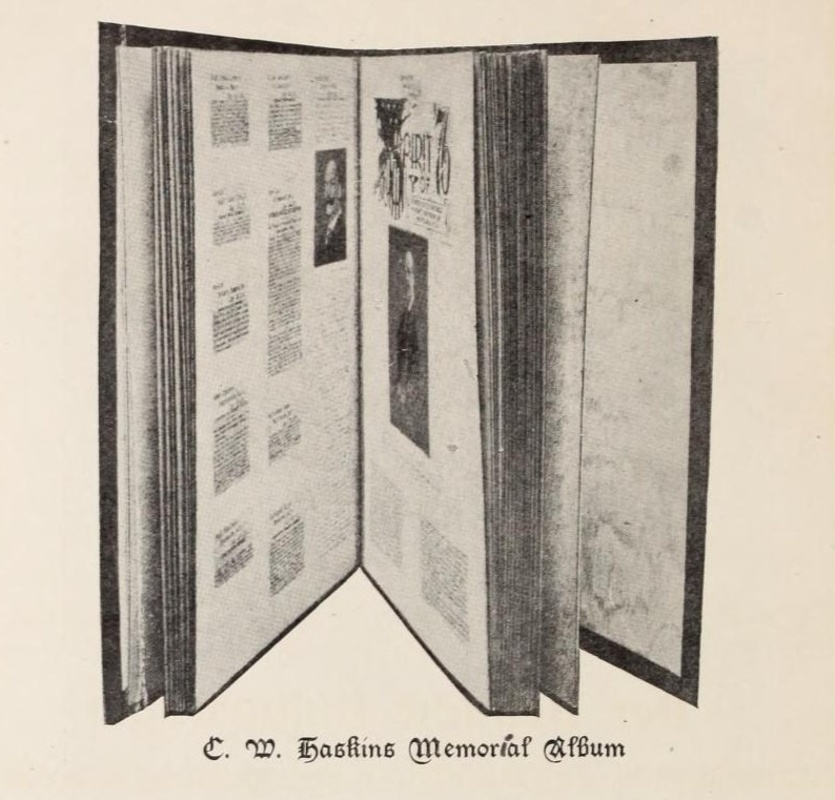
A scrapbook album of mounted press clippings that Spengler was commissioned to prepare in memoriam of accountant Charles Waldo Haskins, c. 1900s. Source: Otto Spengler, Das deutsche Element der Stadt New York.
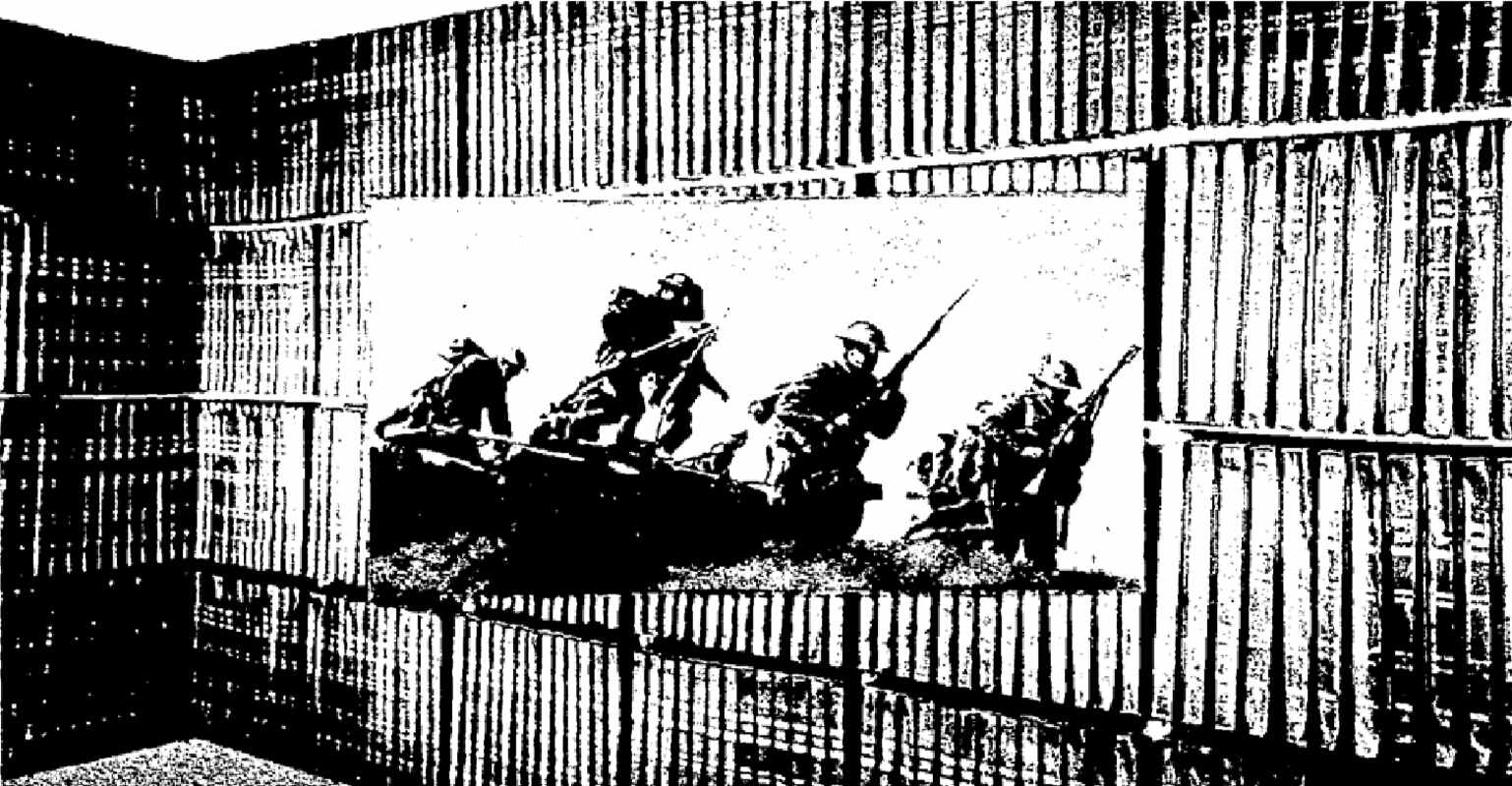
View of the World War I collection compiled by the Argus Pressclipping Bureau, with an overlaid photograph of soldiers during warfare. Source: New York Herald Tribune, November 7, 1937.
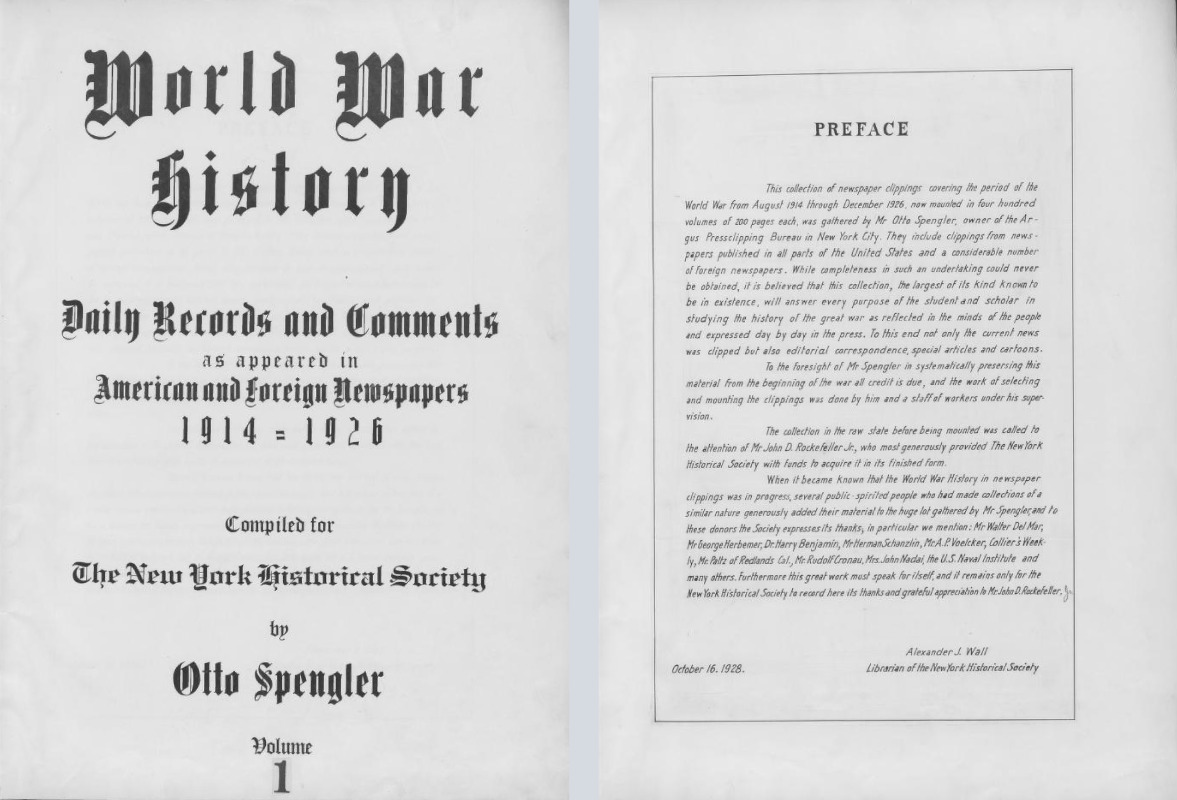
(left) Title page of World War History: Daily Records and Comments as Appeared in American and Foreign Newspapers, 1914-1926 (Volume 1), compiled by Otto Spengler. Source: Library of Congress. (right) Preface written by Alexander J. Wall, Librarian of the New York Historical Society. Source: Library of Congress.

(left) First page of press clippings compiled by Spengler in Volume 1 of World War History: Daily Records and Comments as Appeared in American and Foreign Newspapers, 1914-1926, covering events in 1914. Source: Library of Congress. (right) Last page of press clippings in Volume 400, covering events in 1917. Source: Library of Congress.
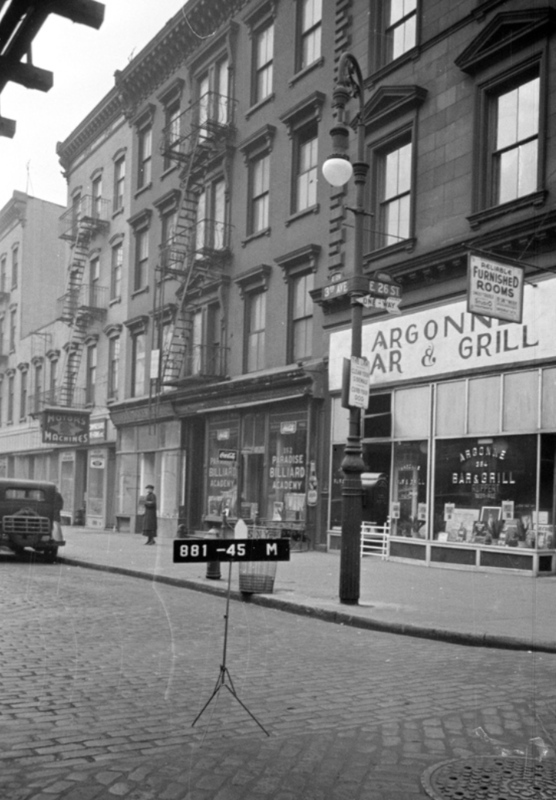
Tax photo of 350 Third Avenue, c. 1939. Photo by the NYC Department of Taxes. Courtesy of NYC Municipal Archives.

Floor plan of 352 Third Avenue’s third story where Spengler resided, 1913. Source: New York City Housing Preservation & Development.
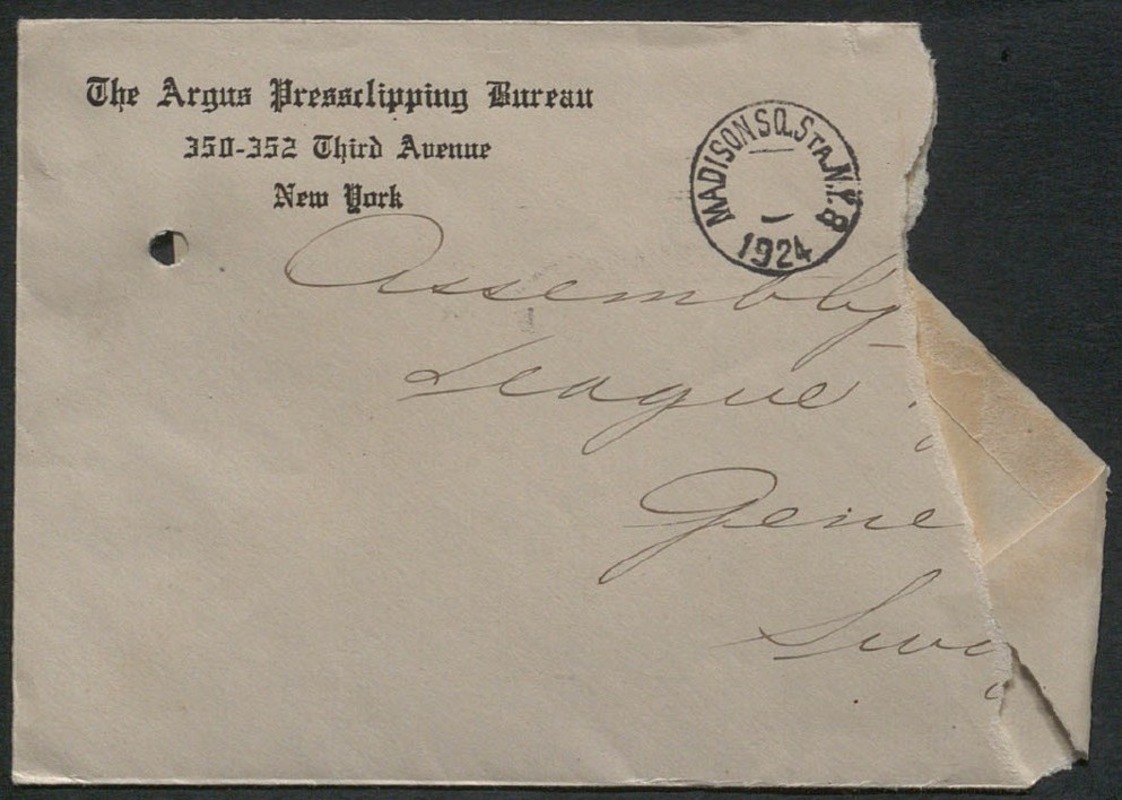
Argus Pressclipping Bureau envelope, 1920. Source: United Nations Library & Archives Geneva.
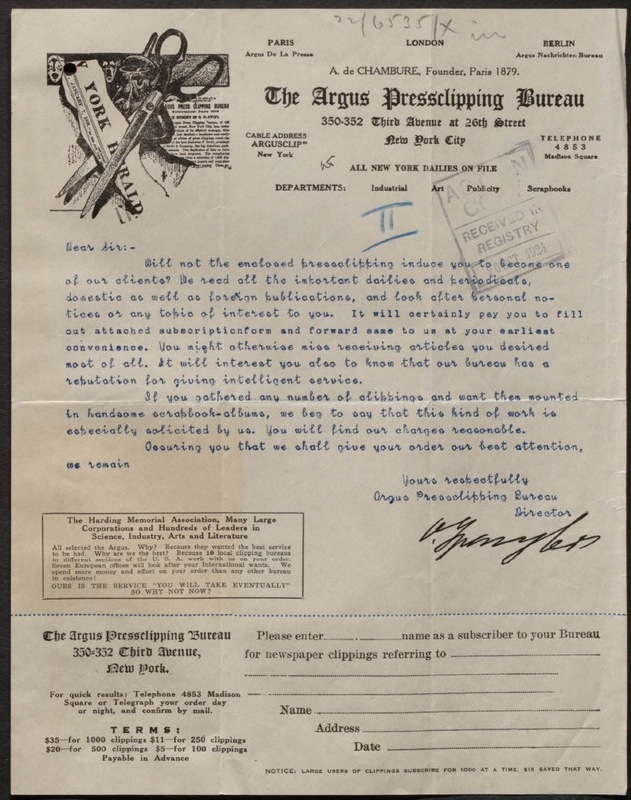
Argus Pressclipping Bureau letter, 1920. Source: United Nations Library & Archives Geneva.
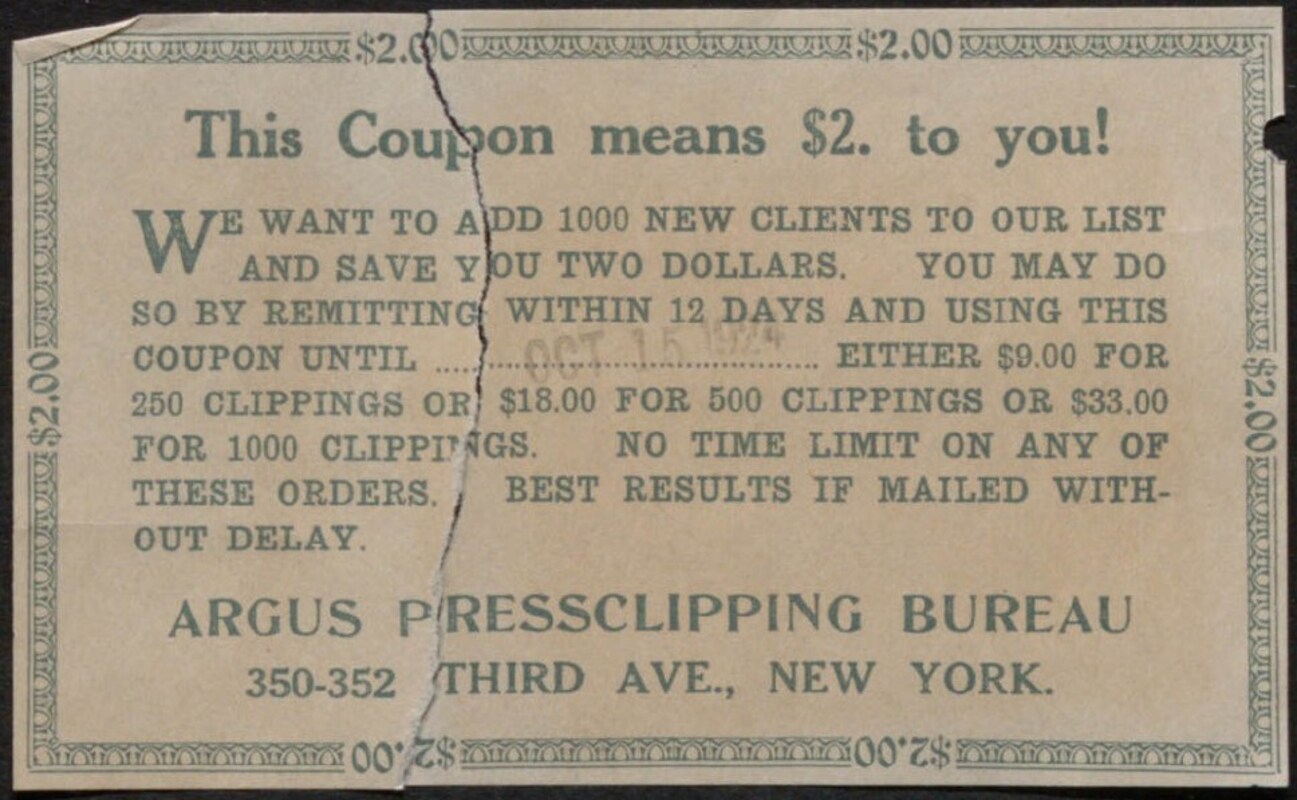
Argus Pressclipping Bureau coupon, 1920. Source: United Nations Library & Archives Geneva.
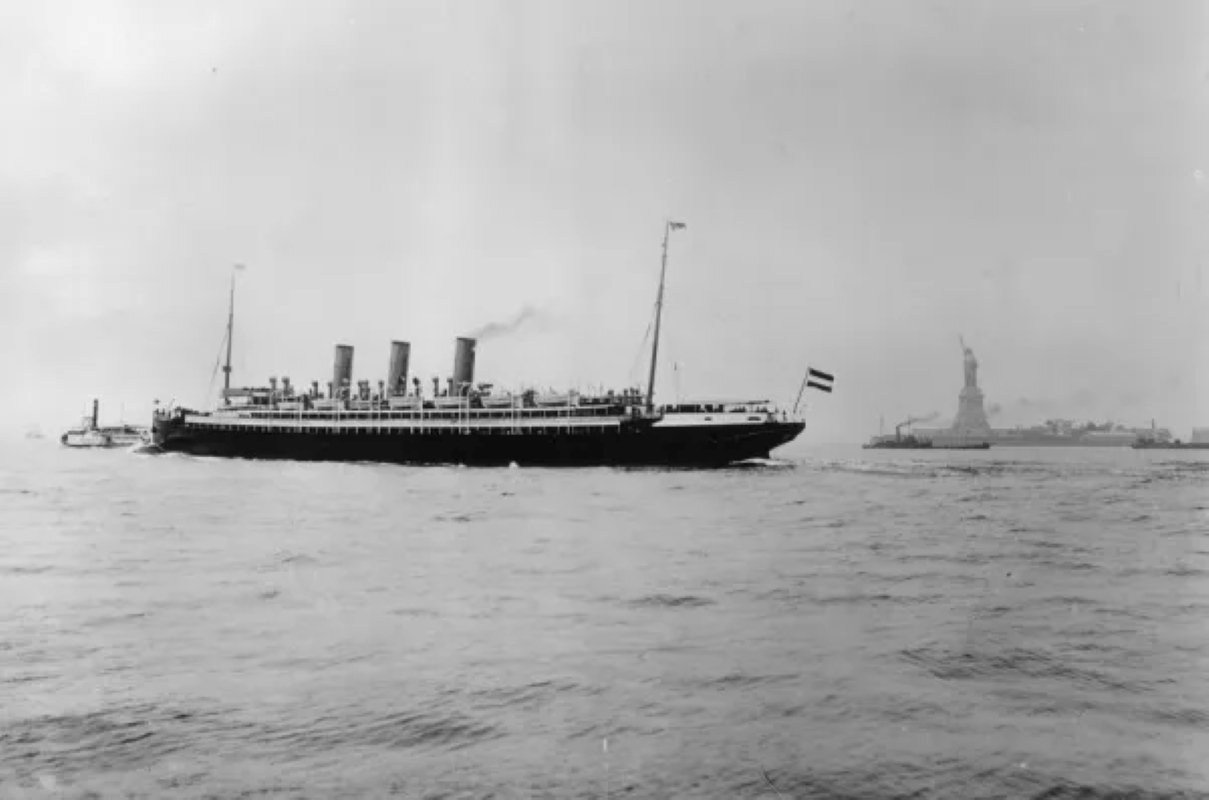
The SS Augusta Victoria (1888), the steamship that Otto Spengler sailed aboard when immigrating to the United States in 1892. Photographer and source unknown.
History
Otto Spengler (1873-1946), who was assigned male at birth but might identify today as transgender, was featured in the earliest known discussion of “transvestites” in the U.S. medical community. In a 1913 lecture and 1914 article, Dr. Bernard S. Talmey — Spengler’s longtime friend — presented anonymized case histories of Spengler and four gender-nonconforming individuals with whom Spengler had corresponded. Later, Spengler appeared (as “Rudolph H.”) in another monumental study, Dr. George W. Henry’s Sex Variants (1941), derived from Jan Gay’s interviews. Together, these works offer valuable insight into Spengler’s life.
Born in Strasburg, Prussia (now Germany), and raised in Berlin, Spengler wore earrings, high-heeled shoes, and dresses throughout childhood. Around age 12, Spengler first experienced gender incongruence, which intensified after immigrating to New York in 1892. Although Spengler might also identify today on the asexual spectrum and never willingly wanted to marry, Spengler married Helene Wasbutzky in 1898. They moved to the third floor of 352 Third Avenue, at East 26th Street, in 1904, where they raised three children: Valerie, Hildegard, and Alfred.
Spengler eventually became estranged, but the family initially treated Spengler’s gender variance with a degree of normalcy. Helene sewed dresses and shared her lingerie, while Hildegard gifted Spengler feminine items and affectionately called Spengler “papa-lady.” Also, desiring “to dress as a woman at every opportunity,” Spengler habitually did so at home. This freedom likely informed Spengler’s decision to become a home-based business owner; “before that,” Spengler noted, “I thought I [had] to be more manly.”
Spengler worked in press clipping — a service that compiles newspaper clippings mentioning customers’ names, products, or subjects — for decades before independently establishing the Argus Pressclipping Bureau in 1902. After 1904, Spengler worked in a second-floor office at 352 Third Avenue — and, later, in the basement — with a rotation of female assistants manually clipping articles for subscribers. Spengler specialized in assembling scrapbooks, including Argus’s crowning achievement: a 400-volume, 80,000-page collection of World War I clippings. The New-York Historical Society (now New York Historical) acquired it in 1928, emphasizing that “The importance of the collection cannot be overestimated…it will make the best contemporary record of the World War to which future historians can turn.” Besides press clipping, Spengler held positions in numerous German-American organizations and, in 1913, compiled an expansive biographical dictionary of New York’s notable German immigrants.
After Helene moved out in the 1910s, Spengler remained in the apartment, which became “cluttered with figures and portraits of women, and with forms” displaying Spengler’s dress collection. Although, in 1906, Spengler may have delivered a lecture on gender transition to the German Scientific Society of New York, Spengler’s engagement with sexological circles deepened after Helene left. As Henry noted:
[Spengler] maintains his interest in promoting a more tolerant attitude toward the transvestite and he is ready at any time to present himself for study and demonstration … at his combined residence and business.
Spengler attended, and was reportedly presented as “a typical transvestite,” at Magnus Hirschfeld’s lectures and shared private photos with the German magazine Das 3. Geschlecht (“The Third Sex”). Defending crossdressing in letters to newspaper editors, Spengler lauded the German police’s “transvestite passes” permitting individuals to dress in accordance with their gender identity (and had separately requested similar permits from the New York Police Department, to no avail). Spengler’s clearest defense of gender expression appeared in a letter praising the dismissed charges against Civil War surgeon and suffragist Dr. Mary Walker for “masquerading in male attire”:
[T]here is, has been, and no doubt always shall be persons of either sex, whose inborn impulse will tend to dressing in the attire of the opposite sex …. Freedom in matters of dress means life and death to them.
Spengler’s articulation of authentic gender expression as a matter of survival was rooted in personal experience. As Talmey observed, Spengler suffered “absentmindedness” and suicidal thoughts when wearing masculine clothing but became more mentally acute, cheerful, and restful in feminine attire. This emotional distress deepened Spengler’s “desire…to live as a woman absolutely,” leading Spengler to seek gender-affirming care — including X-ray sterilization in 1926 and, later, hormone therapy — from Dr. Harry Benjamin, who didn’t begin focusing on this care until the late 1940s.
Despite publicly appearing in feminine attire rarely and always veiled, Spengler remained vulnerable to discrimination. During the 1915 New York Ripper murder investigations, police targeted and surveilled Spengler for weeks “as a man seen masquerading in woman’s graments [sic]” after five-year-old Leonore Cohn was found murdered in the building at 350 Third Avenue, next to where Spengler lived. Police also reportedly attempted to bribe Spengler’s alibi witness (the family’s servant) to provide false testimony.
By 1937, Spengler was “nearly blind and feeble, antisocial in great measures,” and living “next to the starvation point” due to declining business. The Argus Pressclipping Bureau moved to 132 East 26th Street in 1938, but its fate thereafter remains uncertain. By the 1940s, Spengler resided at 49-12 39th Avenue in Sunnyside Gardens, Queens. However, for extensive periods from at least 1940 until Spengler died in 1946, Spengler was hospitalized for psychosis at Metropolitan Hospital on Welfare Island (demolished except for the tower), Manhattan State Hospital for the Insane (demolished) on Wards Island, and Brooklyn State Hospital (now Kingsboro Psychiatric Center) in East Flatbush.
Entry by Ethan Brown, project consultant (November 2025).
NOTE: Names above in bold indicate LGBT people.
Building Information
- Architect or Builder: Unknown
- Year Built: c. 1860s
Sources
“About this Collection: World War History: Newspaper Clippings, 1914 to 1926,” Library of Congress, bit.ly/3TxbwUP.
Alex Bakker, Raine Hernn, Michael Thomas Taylor, and Annette F. Timm, Others of My Kind: Transatlantic Transgender Histories (Calgary, Canada: University of Calgary Press, 2020).
Allison Miller, “The Revenge of Miss Jan Gay,” Slate, November 21, 2023, bit.ly/46xlgFI.
Bernard Simon Talmey, “Transvestism: A Contribution to the Study of the Psychology of Sex,” New York Medical Journal 99 (January to June 1914), 362-68, bit.ly/43Tk2Dr.
“Blood-Stained Garb of Woman Gives a Clue,” Evening Examiner (Peterborough, Ontario), March 27, 1915, 1.
Brian Fehler, “‘Sex Variants’ Were Everywhere,” Gay & Lesbian Review Worldwide (November–December 2020), bit.ly/4kPRUqJ.
“Clippings on War Fill 400 Volumes,” New York Times, March 22, 1926, nyti.ms/45retvw.
Death Certificate for Otto Spangler [sic], October 19, 1946, certificate number 20318, Brooklyn, New York, on.nyc.gov/49iMTV4.
George W. Henry, Sex Variants: A Study of Homosexual Patterns (New York: Paul B. Hoeber, Inc., 1941), pp. 487–498, bit.ly/3Hi7c8Y. [source of first pull quote]
Manhattan Phone Directories, 1900-1940.
Monthly Report of the Scientific-Humanitarian Committee 5, no. 7 (July 1, 1906), trans. Google Translate, bit.ly/4lhiGIl.
Otto Spengler, ed., Das deutsche Element in der Stadt New York: biographisches Jahrbuch der Deutsch-Amerikaner New Yorks und Umgebung (New York: Otto Spengler, 1913), bit.ly/3SrKT39.
Otto Spengler, “Praise for Vorhees: Otto Spengler Thinks Women Should Dress as Men if They Want To,” letter to the editor, Brooklyn Daily Times, September 2, 1913, p. 8. [source of second pull quote]
“Police Question Neighbor’s Aides in ‘Ripper’ Hunt,” Evening World (New York), March 26, 1915, 1.
“The Press Clipping Business,” Time, May 30, 1932, bit.ly/4ozfMkk.
Do you have more information about this site?
This project is enriched by your participation! Do you have your own images of this site? Or a story to share? Would you like to suggest a different historic site?