Albert Sprague Bard Office
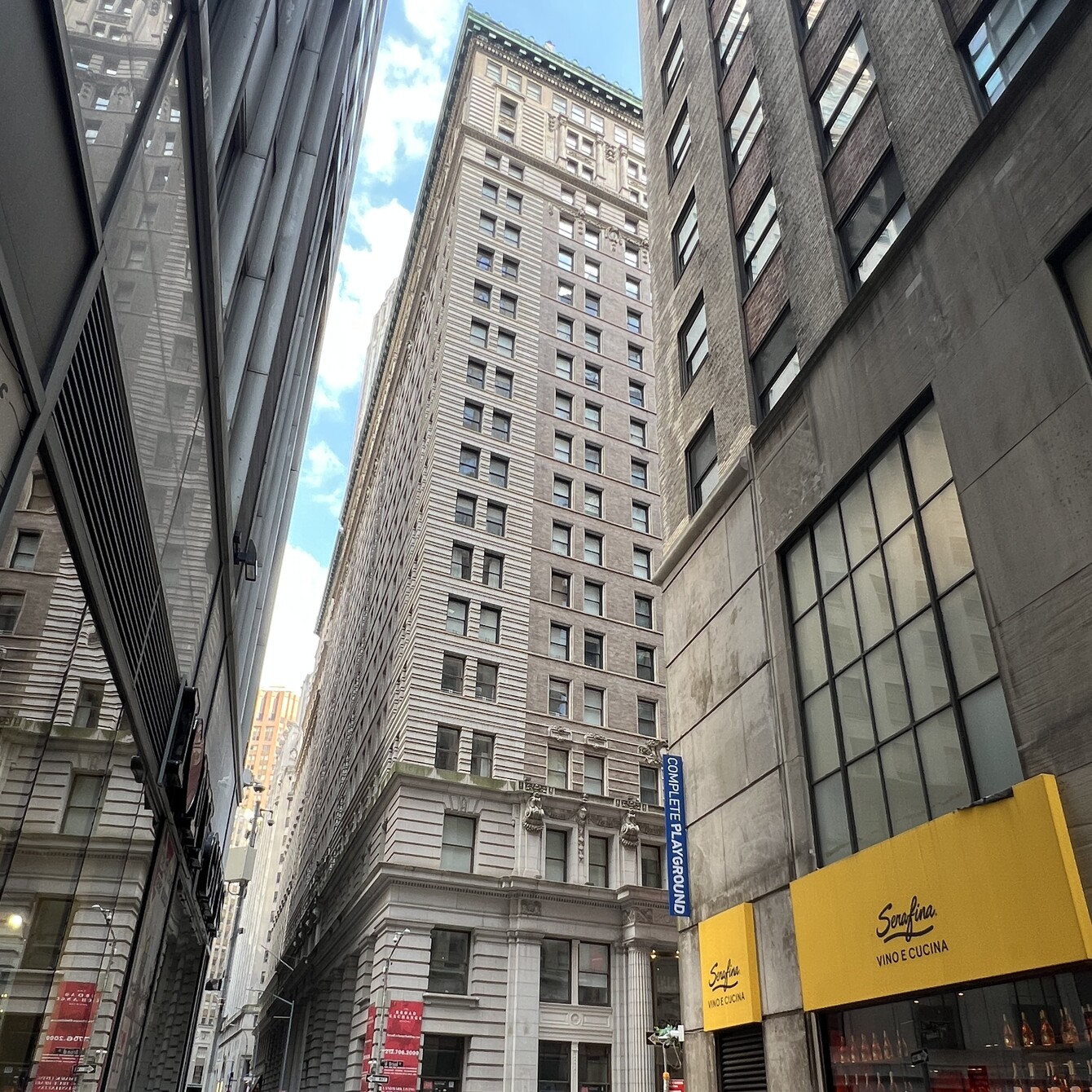
also known as the Broad-Exchange Building
overview
The legal basis for New York City’s Landmarks Preservation Commission was the Bard Act, passed by the New York State Legislature in 1956 following several decades of lobbying by Albert Sprague Bard.
Bard’s career, mainly focused on New York City, was dedicated to the beautification of the environment, and he maintained an office at the Broad-Exchange Building from its opening in 1902 until his death in 1963.
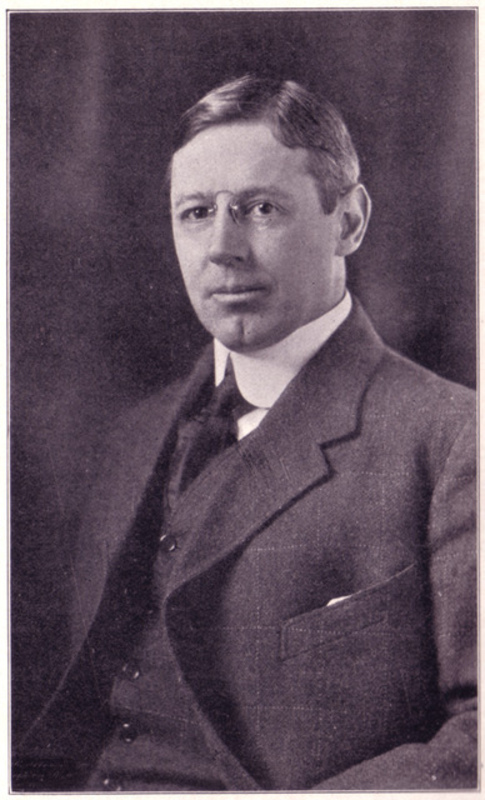
Albert Bard in 1908. Courtesy of Chi Sci Fraternity.
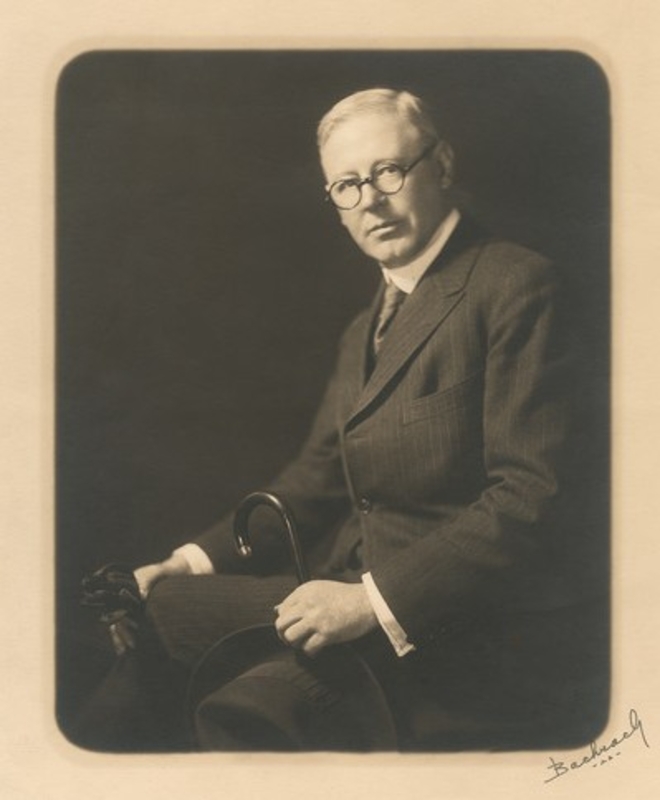
Albert Bard in 1922. Photo by Bachrach. Courtesy of Chi Sci Fraternity.
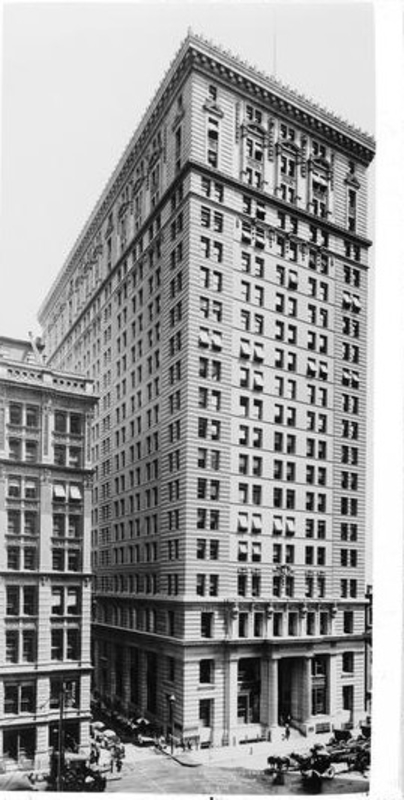
Broad-Exchange Building, 1902. Photo by Irving Underhill. Source: Museum of the City of New York.
History
The creation of the New York City Landmarks Preservation Commission would not have been possible without the legal foundation established by Albert Sprague Bard (1866-1963). Bard had three passions, two of which were part of his active public life: the cause of advancing and preserving beauty in the public realm, with an emphasis on New York, and the social world of his national college fraternity, Chi Psi. The third was his love for the handsome, yet troubled, Robert Gordon Switz, a passion that he had to keep secret.
Born and raised in Norwich, Connecticut, Bard attended Amherst College, where he joined the Chi Psi fraternity, and received his law degree from Harvard. Like many gay men at the time when homosexuality was illegal, Bard moved to New York City. He established a law practice housed in the Broad-Exchange Building, then the largest office building in New York. Bard was an original tenant and remained in the building until his death. He became involved in many civic causes through active work with the City Club, Citizens Union, Municipal Art Society, and the Fine Arts Federation.
Bard was appalled by what he saw as the increasing ugliness of the urban environment, and advocated for governmental regulation of aesthetics. He was especially active in the fight against billboards and roadside advertising; he was known to rip down illegal ads as he walked around New York City. He was also involved in some of the city’s earliest preservation battles, taking on Robert Moses in opposition to the proposed Brooklyn Battery Bridge and the related preservation of Castle Clinton in Lower Manhattan.
In 1913, Bard first proposed that the New York State Legislature pass a bill that would enable aesthetic regulation, but what came to be known as the Bard Act did not become law until 1956; he was, according to Bard’s biographer, Anthony C. Wood, “like a dog with a bone.” The Bard Act provided the legal basis for the establishment of New York City’s Landmarks Preservation Commission in 1965. Bard’s importance to quality design was recognized by his peers, who established the Albert S. Bard Awards for Distinguished Architecture and Urban Design, presented by the City Club between 1964 and 1978.
For 70 years [Albert Bard] fought for good government, preservation of historic landmarks, elimination of unsightly billboard advertising and protection of city parks.
While known for his civic pursuits, Bard was deeply involved with the love of his life, Robert Gordon Switz (known as Gordon,1904-1951). In 1935, after living in Manhattan for decades, Bard moved to East Orange, New Jersey, into the home of Gordon’s widowed mother, and became the de facto head of the Switz family. Gordon’s wife Marjorie later confirmed the relationship between Bard and Switz in an interview with Wood. Bard supported Switz financially and even used his influence to assist Switz and his wife after their arrest as Soviet spies while on their honeymoon in France. He would serve as the “grandfather” of their children, including their first son who was named after Bard.
Following Bard’s death, the New York City Council passed a resolution honoring him for his civic work.
Entry by Andrew S. Dolkart, project director (August 2025)
NOTE: Names above in bold indicate LGBT people.
Building Information
- Architect or Builder: Clinton & Russell
- Year Built: 1900-02
Sources
Albert S. Bard, obituary, New York Times, April 1, 1963. [source of pull quote]
Anthony C. Wood, Servant of Beauty: Landmarks, Secret Love, and the Unimagined Life of an Unsung New York Hero (Lanham, Maryland: Rowman & Littlefield, 2025).
Do you have more information about this site?
This project is enriched by your participation! Do you have your own images of this site? Or a story to share? Would you like to suggest a different historic site?