Month: May 2026
Stonewall National Monument Named to National Trust’s 2026 List of US’s 11 Most Endangered Historic Places
May 20, 2026
PRESS CONTACT
Ken Lustbader, NYC LGBTQ Historic Sites Project
(917) 848-1776 / k[email protected]
Federal Government Actions Threaten Monument and Devalue Contributions of LGBTQ+ Americans
MAY 20, 2026—NEW YORK, NY—The National Trust for Historic Preservation, the national advocate for historic places, has named the Stonewall National Monument in New York City to its 2026 list of America’s 11 Most Endangered Historic Places. Stonewall’s placement on the list is of concern to several of the groups that helped lead the campaign to include its story within our National Park System, including the National Parks Conservation Association, the NYC LGBTQ Historic Sites Project and Making Gay History.
Designated in 2016, the Stonewall National Monument is the first U.S. National Monument (and only unit of the National Park Service) dedicated to LGBTQ+ history. It serves as a permanent and official acknowledgment that the courage and leadership shown by the LGBTQ+ community has fundamentally advanced equality in American law, culture, and public life. However today, the Stonewall National Monument is threatened by federal actions aimed to censor and rewrite the LGBTQ+ presence in American history.
Federal actions threaten the Stonewall National Monument’s inclusive interpretation, community representation, and educational impact. Changes to the site’s interpretive materials by the federal government, including removal of the Pride flag and references to the participation of transgender people in the Stonewall Uprising, have already limited the ability to tell the full story of Stonewall and its national and global significance. Although the Pride flag has been restored after successful litigation, its removal created serious concerns about the protection of essential aspects of the site’s heritage, and altered online interpretive materials have not yet been corrected. These censorship actions continue to threaten understanding the LGBTQ+ presence in and contributions to American history.
This comes at a time when the LGBTQ+ community finds itself under sustained assault from a number of federal government actions, including the shuttering of federal websites that shared the contributions of LGBTQ+ people in American history and the present day, the removal of “T” and “Q” from acronyms to exclude those who identify as transgender and queer, the rescinding of committed federal grant funding for LGBTQ+ related projects, and the removal of rainbow flags from federal buildings.
As allies and partners prepare to celebrate the 10th anniversary designation of the National Monument, sustained advocacy is necessary to ensure that the full and accurate LGBTQ+ history of the Stonewall Uprising remains publicly visible and fully accurate. Stonewall’s history is intertwined with the history of other LGBTQ+ historic sites across the country. It is essential to maintain the full and factual story through interpretive materials at the Stonewall National Monument for all, as well as expand public interpretation and awareness about why the Stonewall Uprising matters, in order to contextualize historic LGBTQ places throughout the entire nation.
“Fifty-seven years ago it took incredible bravery for LGBTQ+ New Yorkers to stand up to the harassment from authorities that they had grown accustomed to. Today, bravery is again required to ensure the full story of the Stonewall Uprising is told at the National Monument, including the roles of transgender and gender-nonconforming people in the events of 1969.”
— Carol Quillen, president and CEO, National Trust for Historic Preservation
“Stonewall National Monument, the first national monument dedicated to LGBTQ history, is a tangible reminder of the LGBTQ community’s role in shaping American culture and society. It also demonstrates the power of place to connect people to history in profound and meaningful ways. Its full story must be protected from erasure because LGBTQ people are, and always have been, part of the American experience. History gives us pride, connection, and the courage to move forward.”
— Ken Lustbader, co-director, NYC LGBTQ Historic Sites Project
“The Stonewall Uprising of June 1969 changed the course of history—for LGBTQ Americans in our fight for equality and dignity, as well as our place in the American story. The Stonewall National Monument commemorates where young LGBTQ people said, ‘enough’ and fought back. Failing to preserve and amplify that history in the place where it happened would be an affront to their memories and an insult to the LGBTQ community.”
— Eric Marcus, executive director, Making Gay History
“The events at Stonewall changed our history forever and continue to inspire us today. As we celebrate the 10th anniversary of Stonewall National Monument, we remain steadfast in our efforts to ensure the full, factual story continues to be represented here for all to learn and know. Censorship in our national parks is wrong. It goes against the very values of our democracy and ideals our parks represent. We will continue to make sure the Stonewall story is known, its significance celebrated and its legacy carries on.”
— Kristen Sykes, Northeast Regional Director, National Parks Conservation Association
About the NYC LGBTQ Historic Sites Project
The NYC LGBTQ Historic Sites Project, launched in 2015 by preservation professionals, is an award-winning cultural heritage initiative and educational resource documenting and presenting historic sites connected to the LGBTQ community throughout New York City. Its website, including an interactive map, features over 500 diverse places from the 17th century to 2000 that are important to LGBTQ history and illustrate the community’s influence on NYC and American culture.
The project researches and nominates LGBTQ sites to the National Register, advocates for the official recognition of LGBTQ historic sites, provides walking tours (also accessible through a free-app), presents lectures, engages the community through events, develops educational programs for New York City public school students, and disseminates its content through robust social media channels. Its goal is to make an invisible history visible while fostering pride and awareness. Learn more at www.nyclgbtsites.org, and follow the Project on Instagram: @nyclgbtsites.
About Making Gay History
Making Gay History addresses the absence of substantive, in-depth LGBTQ+-inclusive American history from the public discourse and the classroom. By sharing the stories of those who helped a despised minority take its rightful place in society as full and equal citizens, we aim to encourage connection, pride, and solidarity within the LGBTQ+ community—and to provide an entry point for both allies and the general public to its largely hidden history.
With an archive of more than a hundred podcast episodes to draw from, Making Gay History (MGH) has now also partnered with the National Education Association to create lessons for educators anchored by MGH episodes to help bring LGBTQ+ history into the classroom in an engaging and accessible way.
About the National Parks Conservation Association
Since 1919, the nonpartisan National Parks Conservation Association (NPCA) has been the leading voice in safeguarding our national parks. NPCA and its more than 1.6 million members and supporters work together to protect and preserve our nation’s most iconic and inspirational places for future generations. For more information, visit www.npca.org.
Walking Tour: LGBTQ History in Chelsea
June 11, 2026 | 6pm - 7:30pm
Hotel Chelsea
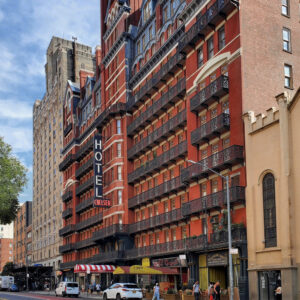 Join our Executive Director Amanda Davis, and Director and co-Founder Ken Lustbader, for an exclusive walking tour of Chelsea with AIANY LGBTQIA+ Alliance.
For LGBTQ people in the late 1960s and early 1970s, Chelsea emerged as an affordable yet still-centrally located alternative to neighboring Greenwich Village. In fact, over the next two decades, Chelsea gradually overtook the Village as the city’s gay hub. Influential artists, from composer Virgil Thomson to poet Assotto Saint and photographer Tseng Kwong Chi, called Chelsea home. By the 1990s, gay-owned venues like the Big Cup and Barracuda were located on and around Eighth Avenue. The neighborhood also played a key role in LGBTQ rights and AIDS activism, as seen at sites connected to Lesbian Feminist Liberation, Gay Men’s Health Crisis, pioneering openly transgender psychiatrist Dr. Jeanne Hoff, bouncer and activist Stormé DeLarverie, and activist and film historian Vito Russo.
The tour will also feature the Project’s new research about the iconic Hotel Chelsea, bringing to light its rich LGBTQ history and expanding how it is interpreted today.
This 90-minute walking tour will begin in front of the Hotel Chelsea, 222 West 23rd Street, and end near The Lost & Found (372 8th Ave, New York, NY 10001), for networking and drinks. Rain or shine.
This event is funded, in part, by grants from the New York Community Trust, New York State Council on the Arts with the support of the Office of the Governor and the New York State Legislature, and New York City Tourism Foundation.
PRIDE & PRESERVATION: 20th Century Figures Who Shaped the Movement
June 9, 2026 | 6pm - 8pm
The J.M. Kaplan Fund
71 West 23rd Street, #903 New York, NY 10010 (northeast corner of Sixth Avenue and 23rd Street)
View on Google Maps
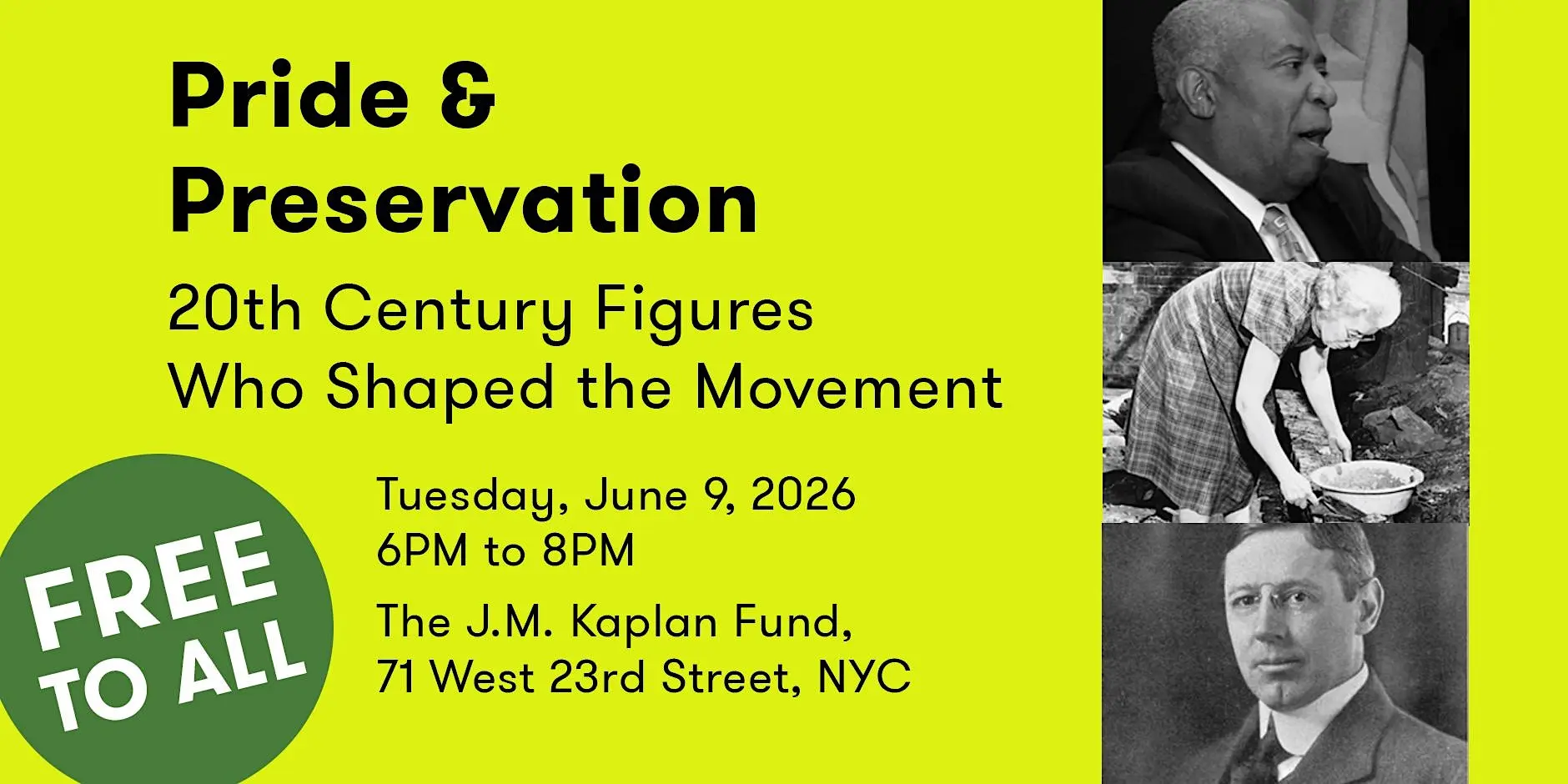 Join us at The J.M. Kaplan Fund (71 West 23rd Street, Suite 903) for a conversation moderated by our Project Director Ken Lustbader with Anthony C. Wood, John Reddick, and Blake McDonald.
This Pride Month, join us on June 9th for a moderated conversation exploring the often-overlooked role of LGBTQ individuals in shaping the preservation movement, from Virginia to New York City. Spanning the 1930s through the late 20th century, the program will reflect on their lasting impact and what that legacy means today.
The conversation will focus on three preservationists: Albert Bard (1866–1963), Thom Bess (unknown -2019), and Mary Wingfield Scott (1895–1983).
Moderated by Project co-director Ken Lustbader, the conversation will feature Anthony C. Wood reflecting on Bard’s role in establishing the legal foundation for New York city’s landmarks law, John Reddick discussing Bess’s work in Harlem and his impact on expanding the field’s reach, and Blake McDonald speaking to Scott’s pioneering grassroots efforts in Richmond, Virginia, carried out with the support of her longtime partners.
Registration is limited to 70 participants. For security purposes, attendees must present a government-issued ID (driver’s license or passport) that matches your Eventbrite registration information.
About the Speakers:
Anthony (Tony) C. Wood is a preservationist, historian, and grant maker. He is the author of the award-winning publications: Preserving New York: Winning the Right to Protect a City’s Landmarks (2008) and Servant of Beauty: Landmarks, Secret Love, and the Unimagined Life of an Unsung New York Hero (2025). Wood has worked for the New York Landmarks Preservation Commission, the Municipal Art Society, The J.M. Kaplan Fund, and is currently the Executive Director of the Ittleson Foundation. He is the founder and Chair Emeritus of the New York Preservation Archive Project. He is a past Chair of the Preservation League of New York State and Partners for Sacred Places. He has served as an Advisor and Trustee of the National Trust for Historic Preservation. He is the Chair Emeritus of the Historic Districts Council and has served on the board of the Drayton Hall Preservation Trust. For over twenty years Mr. Wood was an Adjunct Assistant Professor of Historic Preservation at Columbia University.
John T. Reddick is an architectural preservationist, historian, and Harlem resident. He currently serves as a consultant on Community Engagement Projects for the Central Park Conservancy and sits on several boards, including Green-Wood Cemetery and the New York Preservation Archive Project. His knowledge of Harlem’s culture and architecture has advanced several public art and open space projects, including the Ralph Ellison Memorial, Harriet Tubman Square, the Frederick Douglass Memorial and Circle, and New York’s LGBT Memorial and Monument in Hudson River Park. Under a grant from the Mellon Foundation, Reddick is working with the Central Park Conservancy to advance public discussion of Seneca Village as a foundation for its commemoration as a predominantly African American pre-park community. He received his Bachelor of Science in Architecture from Ohio State University and a Master of Architecture from Yale University.
Blake McDonald is an architectural historian with Historic Richmond, a nonprofit that encourages architectural preservation, rehabilitation, and revitalization in Virginia’s capital. He studied architectural history at Connecticut College and the University of Virginia. Prior to his current role, Blake managed the architectural survey program at the Virginia Department of Historic Resources. He also led the state’s LGBTQ+ Heritage Initiative, documenting more than 100 places associated with queer history across the Commonwealth. In his free time, he enjoys trail running in Richmond’s beautiful James River Park System.
About the NYC LGBTQ Historic Site Project
The NYC LGBTQ Historic Sites Project is a nonprofit cultural initiative and educational resource that is making an invisible history visible by documenting extant historic and cultural sites associated with the LGBT community throughout New York City. For more, visit www.nyclgbtsites.org, or follow on Instagram, Facebook, or Twitter.
This free program is hosted by the NYC LGBTQ Historic Sites Project. Optional donations go toward supporting the Project’s efforts to document NYC’s LGBTQ cultural heritage.
Presented by the LGBTQ+ Heritage Alliance, the NYC LGBTQ Historic Sites Project, the New York Preservation Archive Project, the West Harlem Community Preservation Organization, and Historic Richmond. This event is funded, in part, by grants from the New York Community Trust, New York State Council on the Arts with the support of the Office of the Governor and the New York State Legislature, and New York City Tourism Foundation.