The Gallery
overview
During the post-Stonewall era, the Gallery emerged as an influential private club, operating in this SoHo building from 1974 to 1977.
The Gallery established a model for DJ-led, queer-centric venues, focusing on the connection between music and dance like the Garage, Studio 54, and the Warehouse.
See Flamingo for more information on this site’s LGBTQ history.
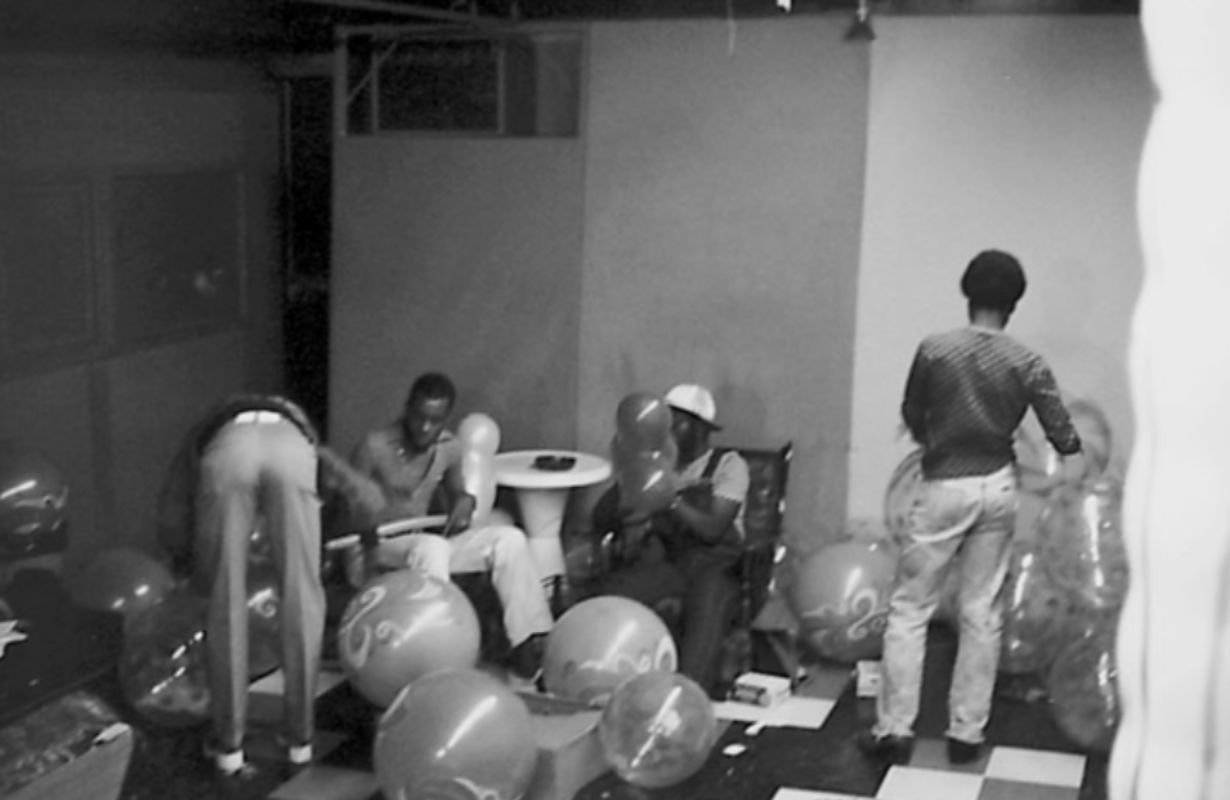
The Gallery’s first location: “Frankie Knuckles blowing up balloons at the Gallery,” c. 1973. Source: Nicky Siano. Retrieved from Tim Lawrence, Love Saves the Day: A History of American Dance Music Culture, 1970-1979 (Duke University Press, 2004), 105.
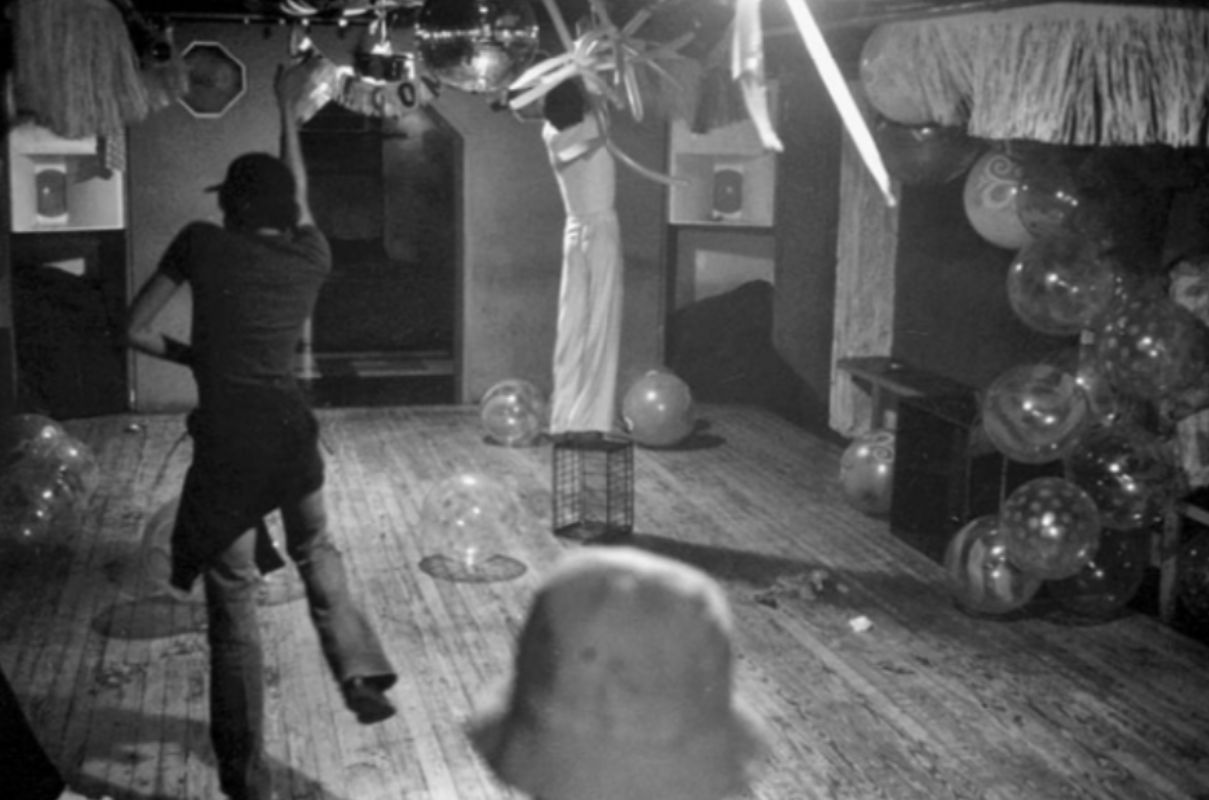
The Gallery’s first location: “The Gallery dance floor,” c. 1973. Source: Nicky Siano. Retrieved from Tim Lawrence, Love Saves the Day: A History of American Dance Music Culture, 1970-1979 (Duke University Press, 2004), 105.
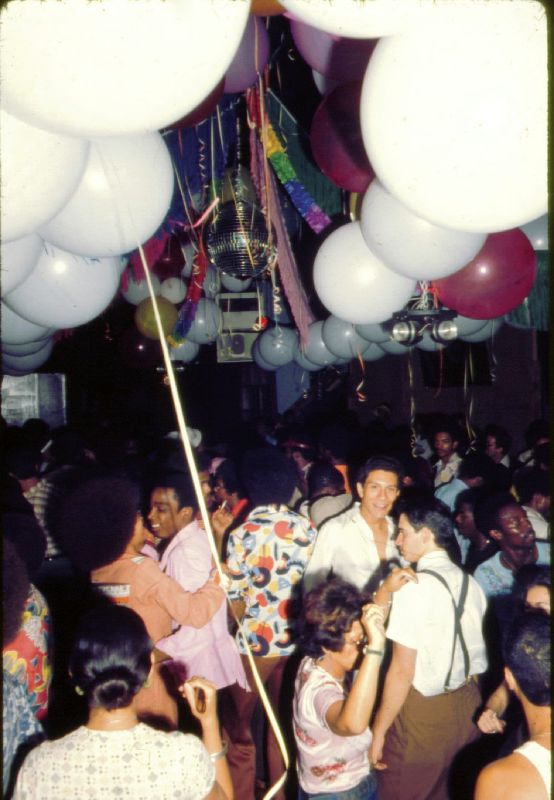
“Dance floor at the new Gallery [Mercer Street location],” c. 1974-77. Source: Nicky Siano. Retrieved from WaxPoetics Magazine.
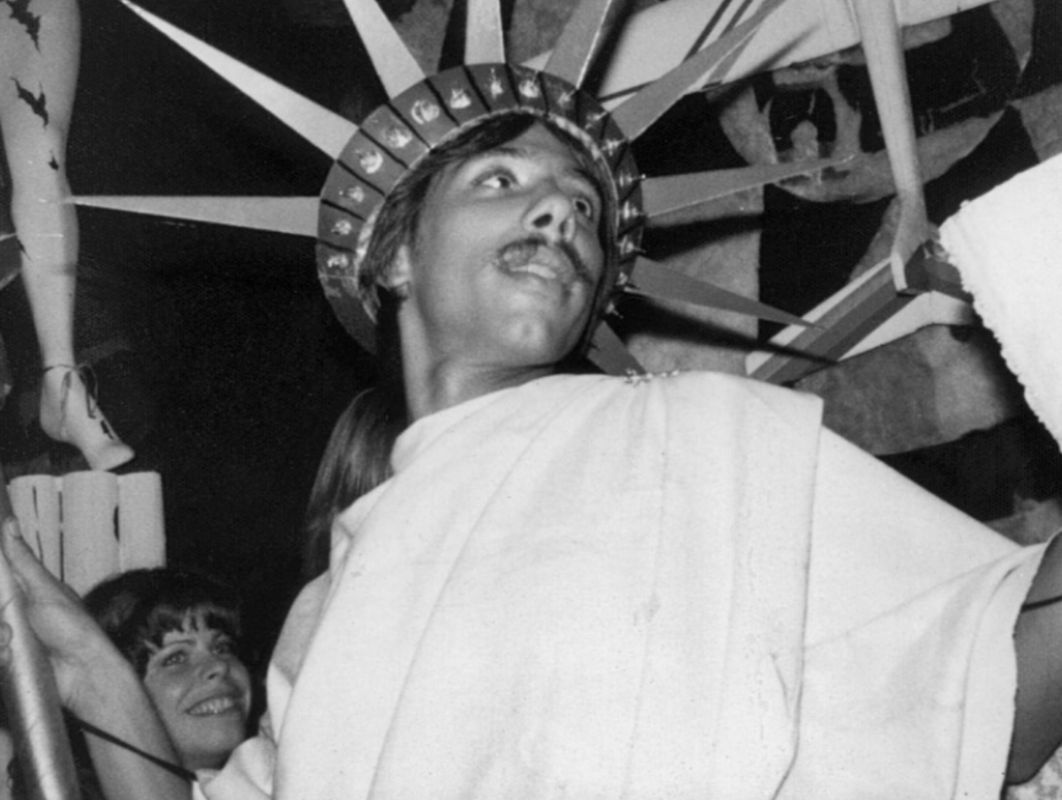
“Nicky Siano as Miss Libby,” c. 1976. Source: Nicky Siano. Retrieved from Lawrence, Love Saves the Day, 244.
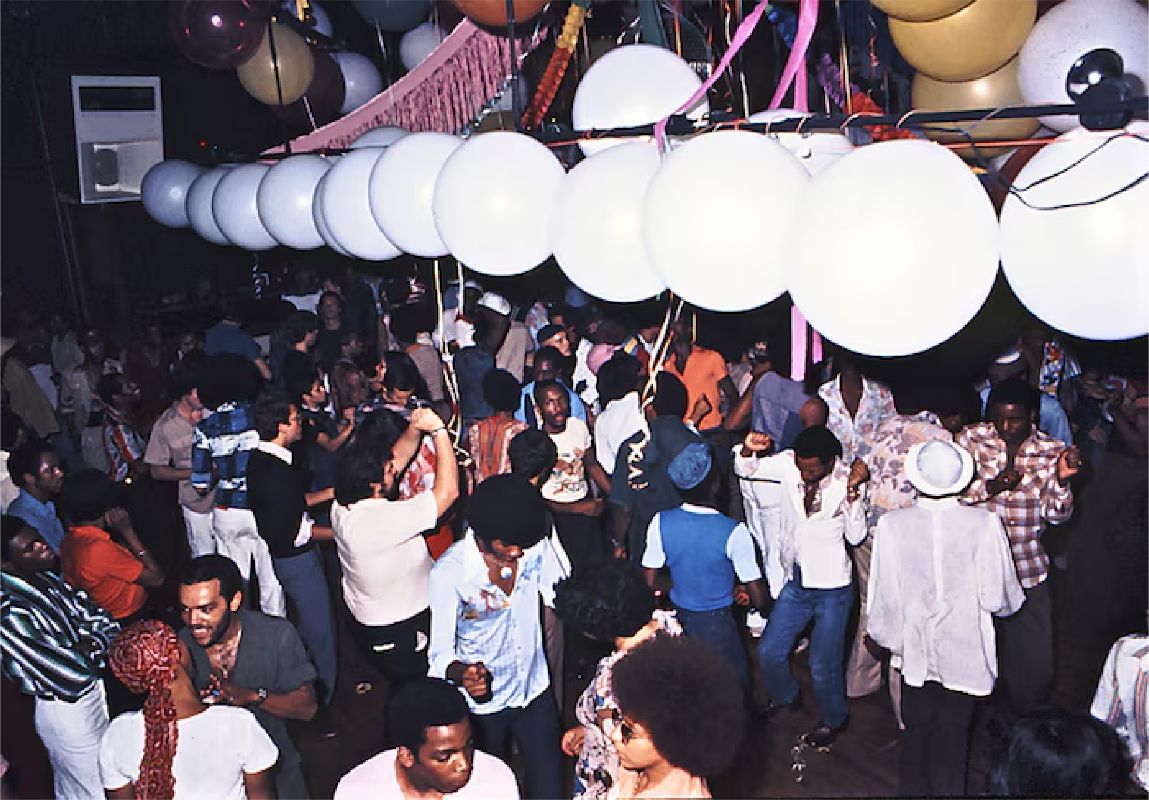
“The Gallery [Mercer Street location],” c. 1974-77. Source: Nicky Siano. Retrieved from Redbull Music Academy.
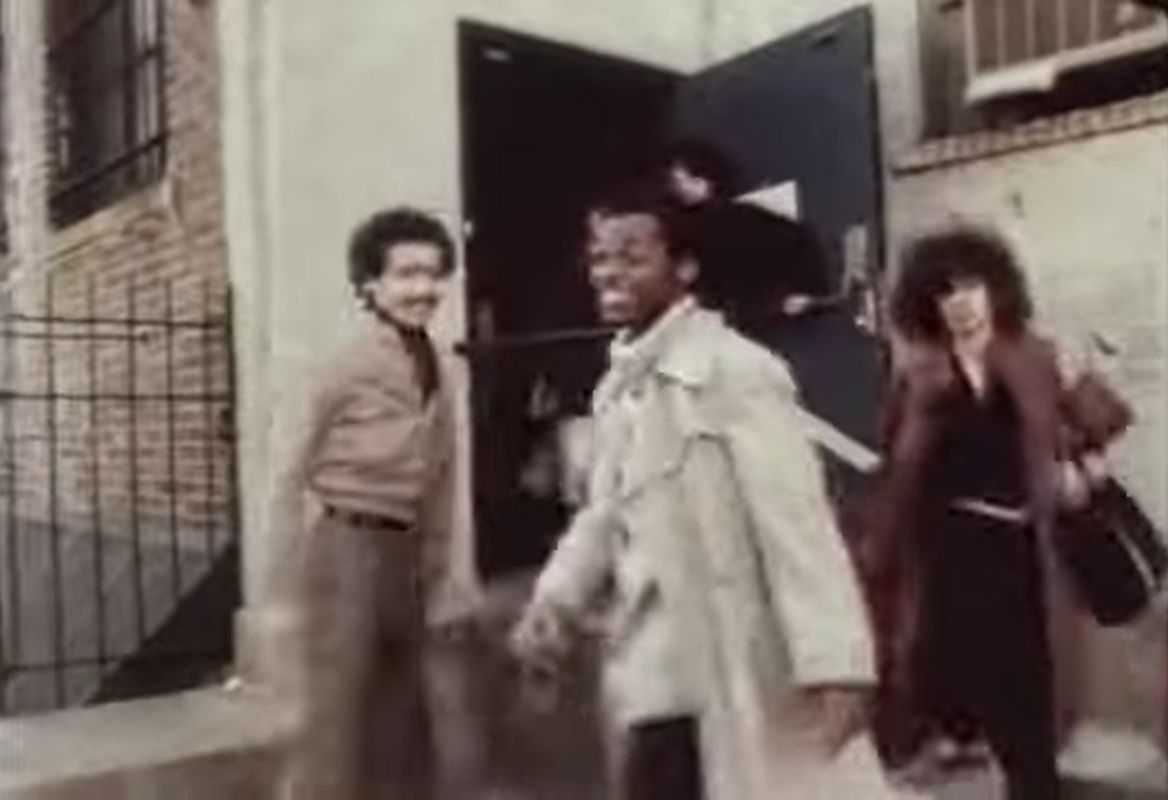
Still frame from the documentary Love Is The Message, dir. Jim Bidgood, 1976. The image shows people leaving the Gallery at 7:30am, on the corner of Houston Street and Mercer. Source: Nicky Siano. Retrieved from The Standard Hotel.
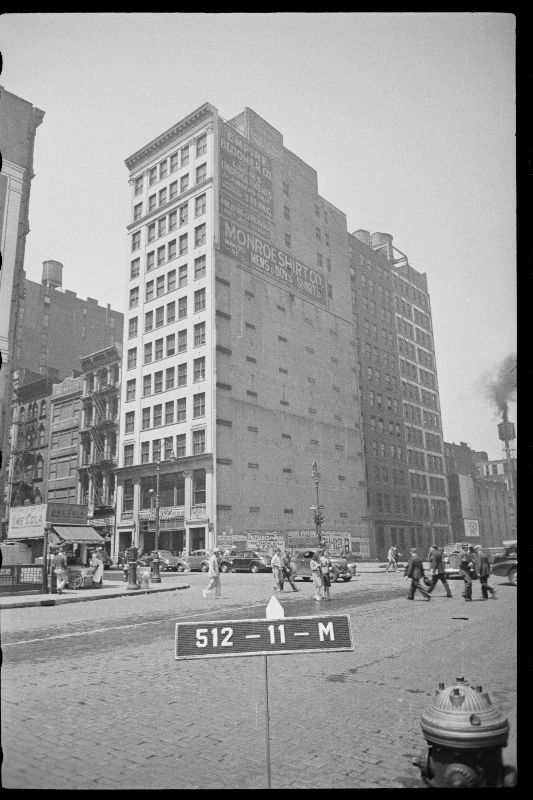
“172 Mercer Street,” c. 1939-41. Source: New York City Municipal Archives.
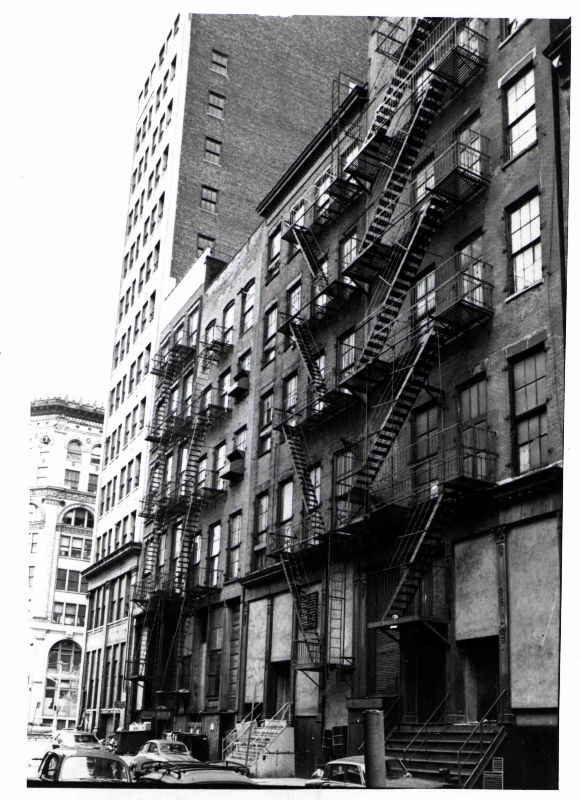
“599-601 Broadway (aka 172 Mercer Street),” 1973. The entrance to the building on Mercer Street is visible on the left-hand side of the photograph. Source: NYC Landmarks Preservation Commission.

Disco Genealogy: Tracing the Club Influences Behind the Gallery and Flamingo. Illustration by Fabio Lima/NYC LGBTQ Historic Sites Project.
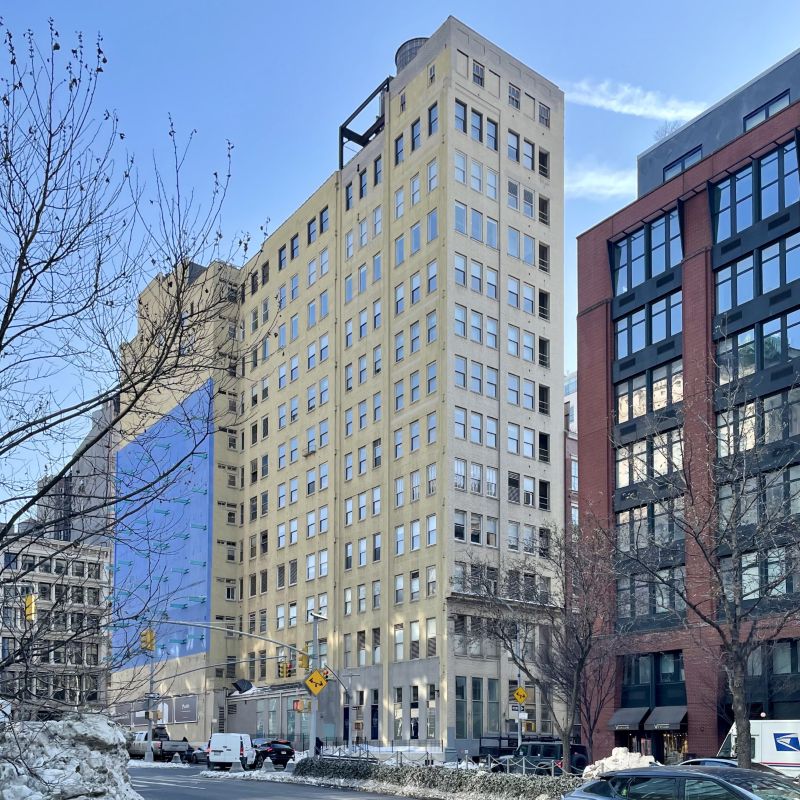
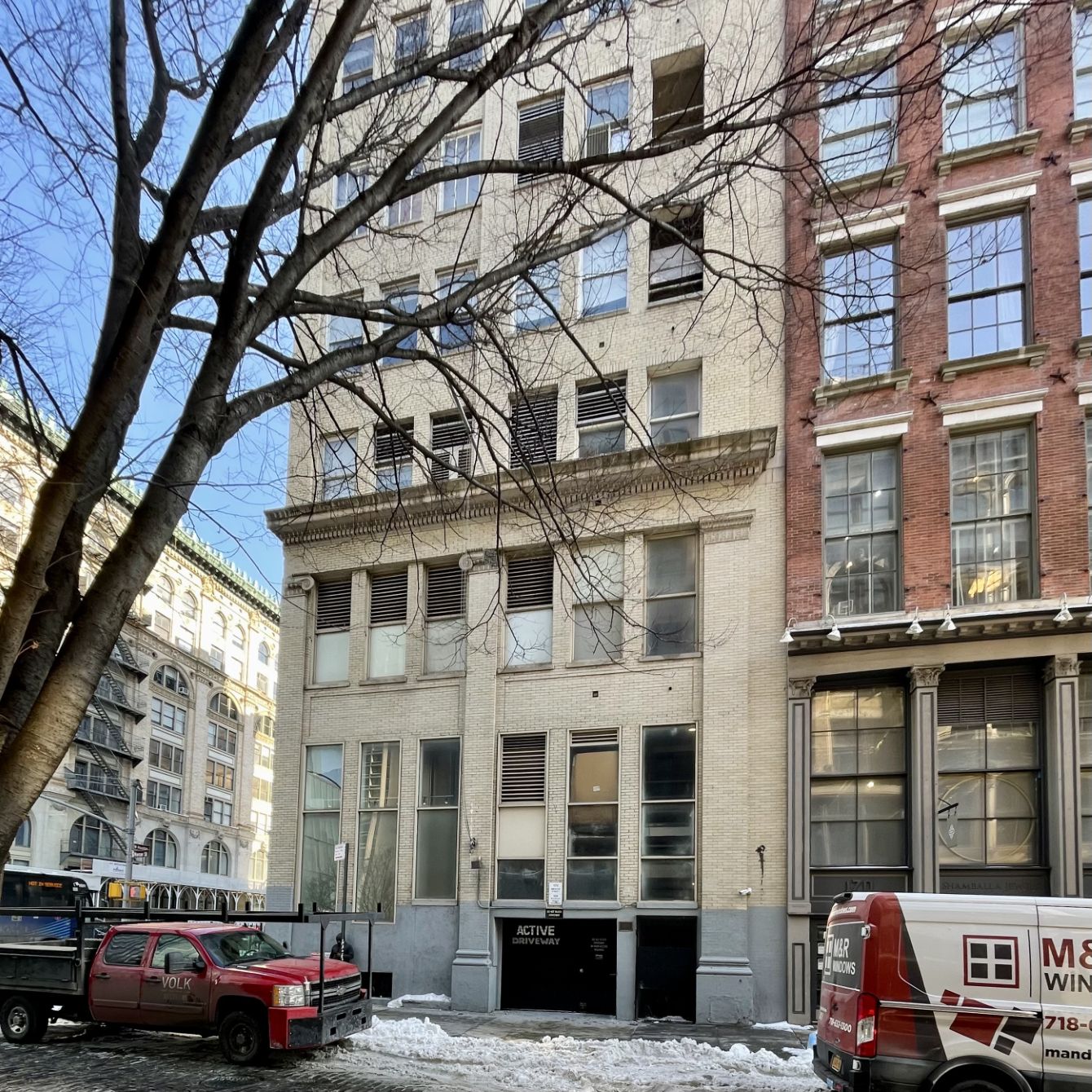
Exterior of 172 Mercer Street, 2026. Photo by Amanda Davis/NYC LGBTQ Historic Sites Project.
History
In 1974, the Gallery and Flamingo – two unrelated clubs – opened in the same 12-story building, both drawn to the open layout of the former commercial space that made it ideal for dancing. Lines of partygoers on opposite ends of the block signaled the otherwise discreet locations. The Gallery, then in its second iteration, occupied the ground floor at 172 Mercer Street and Flamingo had its street-level entrance around the block at 599 Broadway and occupied the second floor. These early clubs skirted cabaret licensing laws by offering only non-alcoholic drinks, and patrons often used drugs to enhance their experience. One famous example includes the acid-laced punch served at the Gallery.
The Gallery
When it reopened at its second location in November 1974, the Gallery became one of the most important clubs in the early years of disco, then emerging as a new style of dance music and nightlife. The club could hold between 1,200 and 1,500 people, and its attendees reflected the cross-cultural nature of the early disco era. Most of the patrons were gay people of color, though the club also drew white dancers (roughly 25%) and women. Friday and Saturday nights were particularly coveted at the Gallery.
Co-founder Nicky Siano (b. 1955), originally from Sheepshead Bay, Brooklyn, had been introduced to the burgeoning downtown music scene as a 15-year-old teenager, frequenting the weekly parties at the Gay Activist Alliance Firehouse in 1971 and later at other more experimental venues such as Tamburlaine and Tambourine. David Mancuso’s Loft in particular influenced Siano, who admired how the venue combined music, dance, and lighting to create a transformative experience. The Loft influenced a new generation of DJs, known as the “Loft babies,” who helped shape the genre of disco music and nightclubs. Siano also learned from already established DJs including Michael Cappello and David Rodriguez, who alternated nights at the original Limelight in the Village (91 Seventh Avenue South).
After briefly working as a DJ at the Round Table (151 East 50th Street) and being expelled from the Loft for selling drugs, Siano convinced his older brother, Joe Siano, to help him open his own place. Located in a 3,000 square-foot loft on the second floor of 132 West 22nd Street, the first iteration of the Gallery (opened February 1973), also known as the This & That Gallery, was envisioned as a straight counterpart to the Loft. But the straight crowd – most of them part of Joe’s social circle – soon plummeted. Nicky Siano later admitted that he felt they could not appreciate his “gay music.” When Mancuso announced that the Loft would close for renovations in the summer of 1973, Siano seized the opportunity. The Gallery DJ planned a second opening the weekend after Mancuso’s renovations party and promoted it by handing out flyers to Loft-goers. The predominantly Black crowd adopted the venue and the Gallery’s membership grew steadily over the next weeks, rivaling that of the Loft when it resumed its operations in the fall.
The upswing was short-lived. In August 1973, unregulated dance venues like the Gallery became a source of concern for municipal authorities. A series of inspections forced the closure of several after-hours discotheques and, by November 1974, the Gallery had relocated to this larger space in SoHo. The steel beam construction and reinforced concrete arches of 172 Mercer Street offered ample opportunities compared to the low ceilings of the first Gallery. The height was put to good use by installing a three-tiered lighting system covered by a canopy of balloons. From his booth, Siano coordinated light in sync with the music. At times, the room would be plunged into total darkness, only to be lit up again seconds later by a blinding white flash that Siano controlled with a foot pedal. But the sound was Siano’s main obsession. With the help of Alex Rosner, the Loft’s veteran sound designer, Siano equipped the Gallery with tweeter arrays, a three-way crossover (to isolate frequency ranges), three turntables, and the first bass horn system, which dramatically improved the ability to hear low-frequency sounds. Leveraging the influence of discotheques on record sales, Siano obtained free records from record companies and mixed them with innovative sound effects. Siano’s devotion to diva vocalists and his playful extension of a song’s peak held dancers in an ecstatic state.
It’s in a converted SoHo loft, and the wildness is exquisitely wholesome. Furious dancing. Gentle laughter. Crepe paper and tinsel. […] The floor is a drum to the dancers – many of them gay, most of them black – whose upsprung fists and tambourines lob the balloons and streamers above at what seem to be collectively-chosen intervals.
Music was the connective medium bringing people together, offering the Gallery’s disenfranchised clientele a space in which to experience complete liberation. The club nurtured an array of legendary figures like Frankie Knuckles (Warehouse, Chicago), Larry Levan (Paradise Garage) and Andre Collins (Warehouse, the Bronx). Singers Grace Jones and Loleatta Holloway both made their debut at the Gallery.
In November 1977, the club closed due to a disagreement between the Siano brothers regarding Nicky’s drug use. Undeterred, Nicky went on to DJ at Buttermilk Bottom (110 Hudson Street) and Studio 54 before temporarily retiring to get sober. He returned to DJing in 1996.
See Flamingo for more information on this site’s LGBTQ history.
Entry by Fabio Lima, project consultant (January 2026).
NOTE: Names above in bold indicate LGBT people.
Building Information
- Architect or Builder: J. Odell Whitenack
- Year Built: 1917
Sources
Bill Brewster and Frank Broughton, Last Night a Dj Saved My Life: The History of the Disc Jockey (New York: Grove Press, 2000).
Landmarks Preservation Commission, SoHo-Cast Iron Historic District Designation Report (New York: Landmarks Preservation Commission, 1973).
Nicky Siano, in discussion with the author, July 18, 2025.
Peter Shapiro, Turn the Beat Around: The Secret History of Disco (New York: Faber and Faber, 2005).
Sheila Weller, “New Wave of Discotheques,” New York Sunday News, August 31, 1975. [source of pull quote, p. 26]
Tim Lawrence, Love Saves the Day: A History of American Dance Music Culture, 1970-1979 (Durham: Duke University Press, 2004).
Will Hermes, Love Goes to Buildings on Fire: Five Years in New York That Changed Music Forever (New York: Farrar, Straus and Giroux, 2012).
Do you have more information about this site?
This project is enriched by your participation! Do you have your own images of this site? Or a story to share? Would you like to suggest a different historic site?