Everard Baths
overview
The Everard Baths, one of the most legendary and long lasting of New York’s bathhouses, was a refuge for gay men probably since its opening in 1888, but definitely by World War I.
As with most of the city’s gay bathhouses, it was closed in 1986 by the City of New York as an anti-AIDS measure.
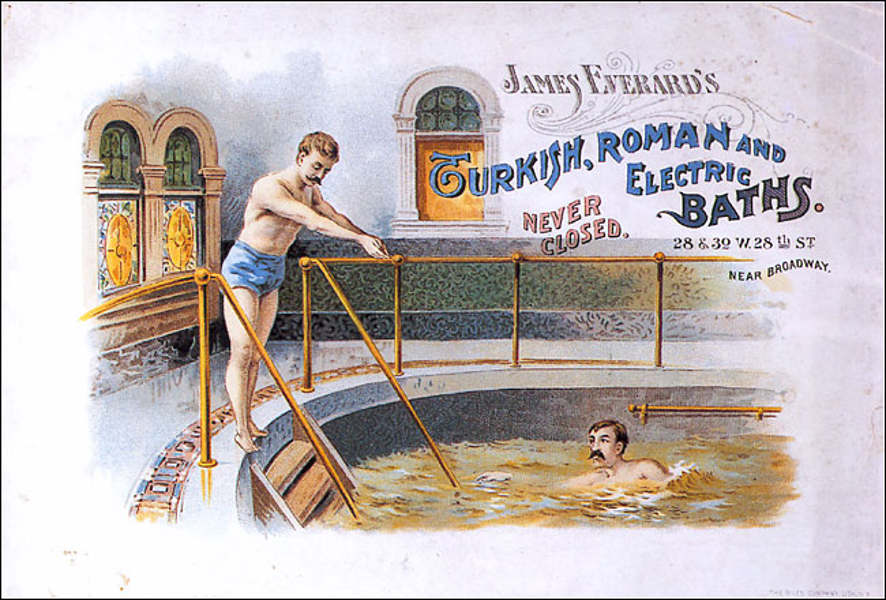
Cover of booklet advertising the original Everard's Baths, 1892.
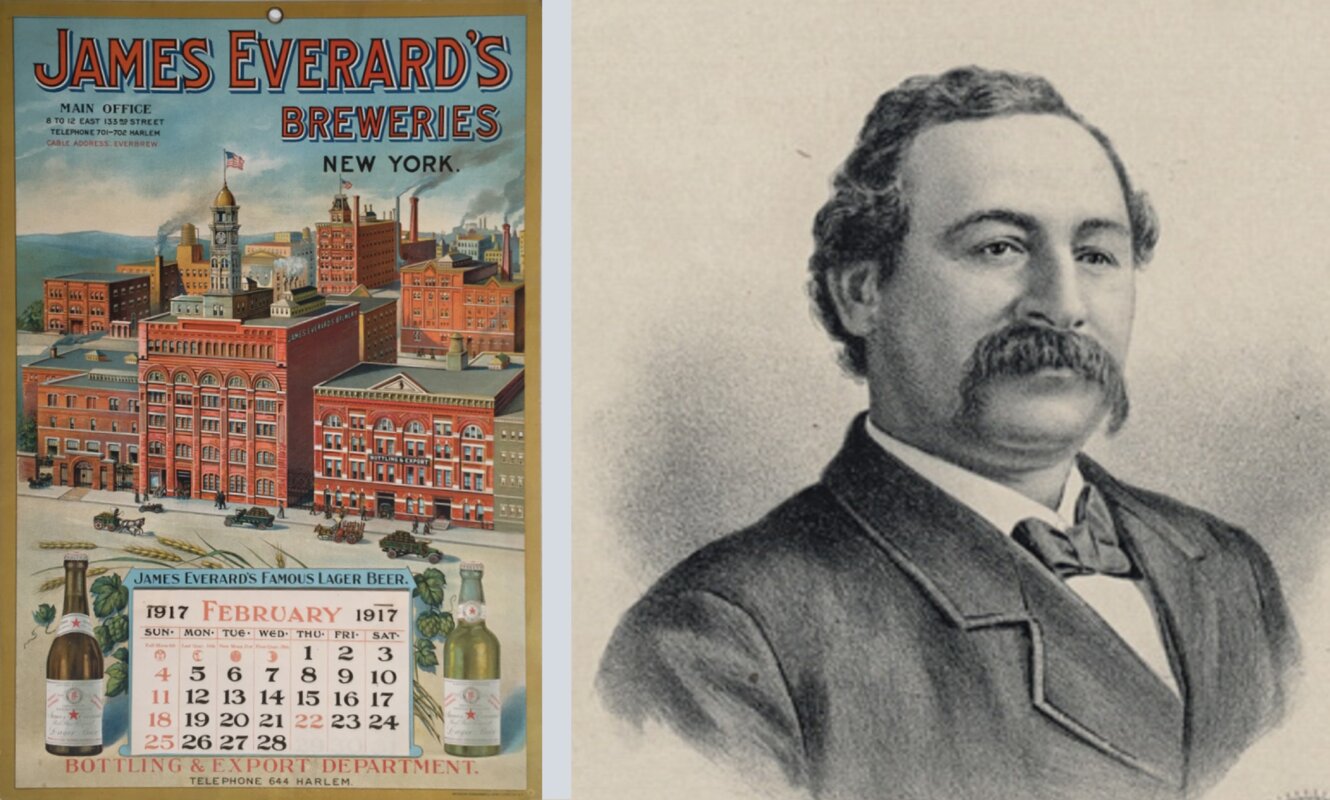
(left) James Everard’s Breweries Calendar, 1917. (right) James Everard, 1885. Source: The Western Brewer, 1885.
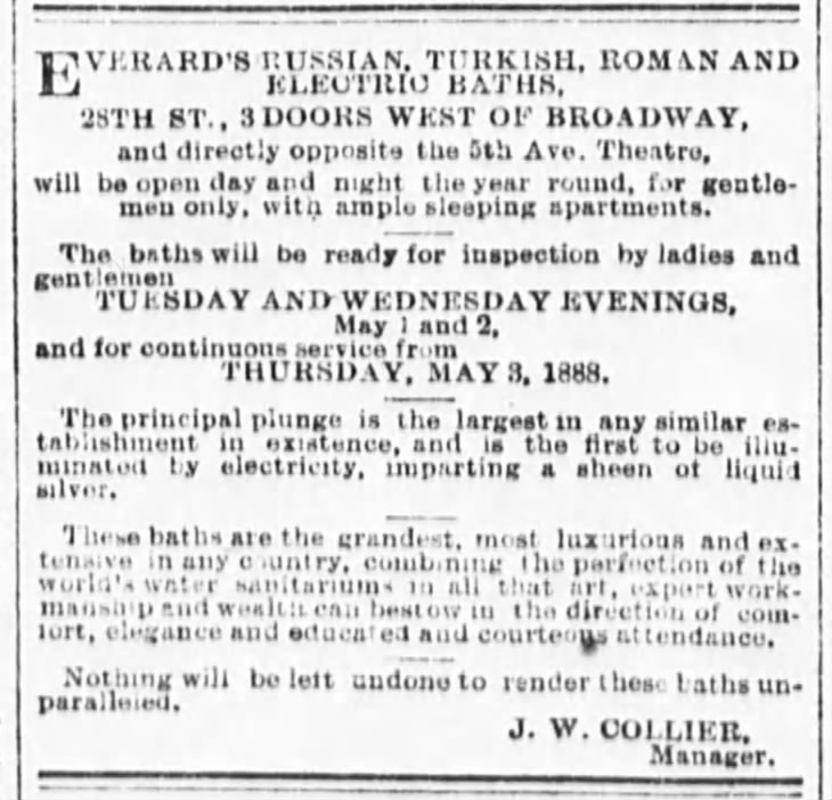
Ad for Everard’s Baths appearing in the Evening World, May 1, 1888.
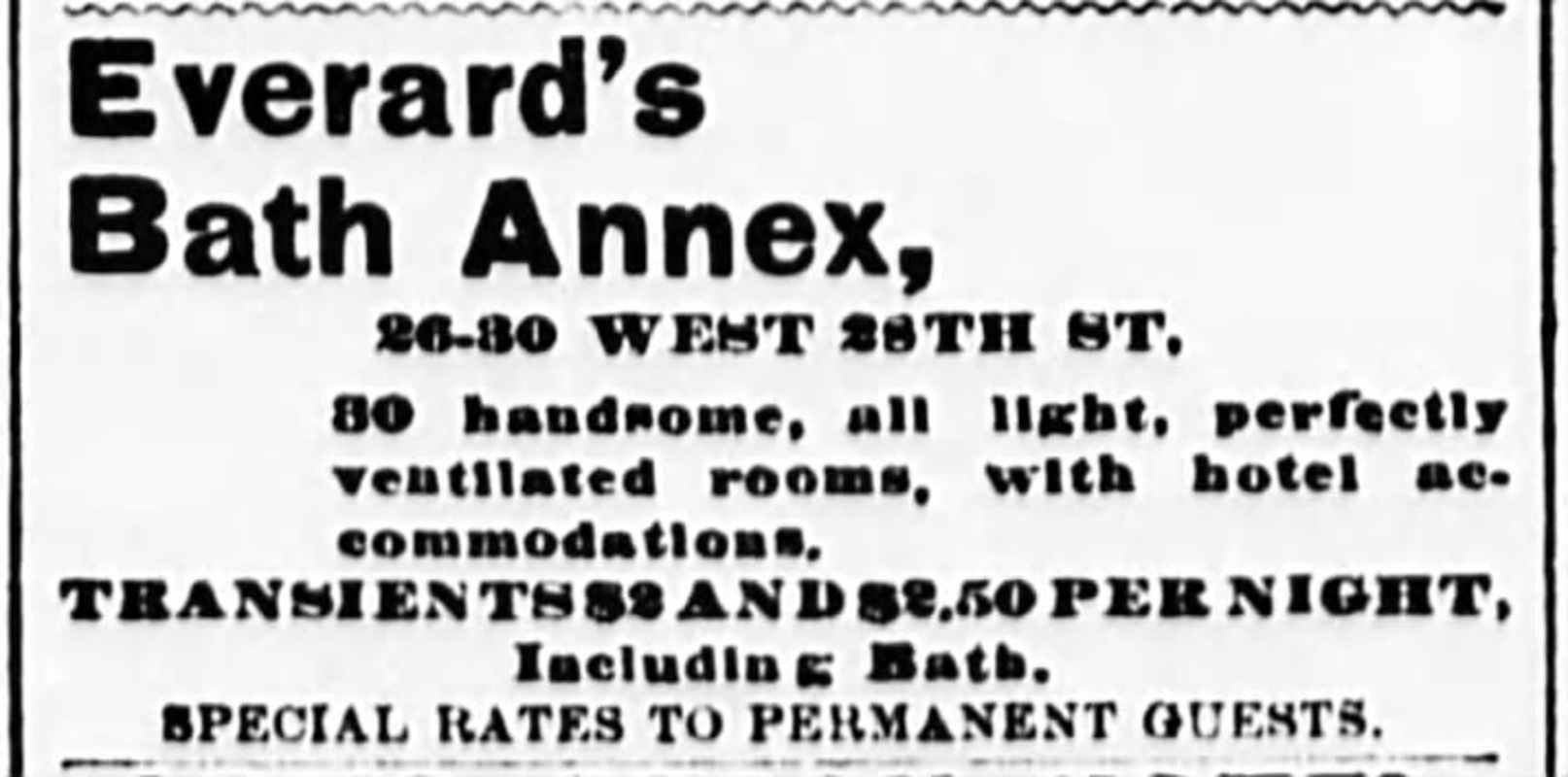
Ad for Everard's Bath Annex appearing in The Sun, March 1, 1896.
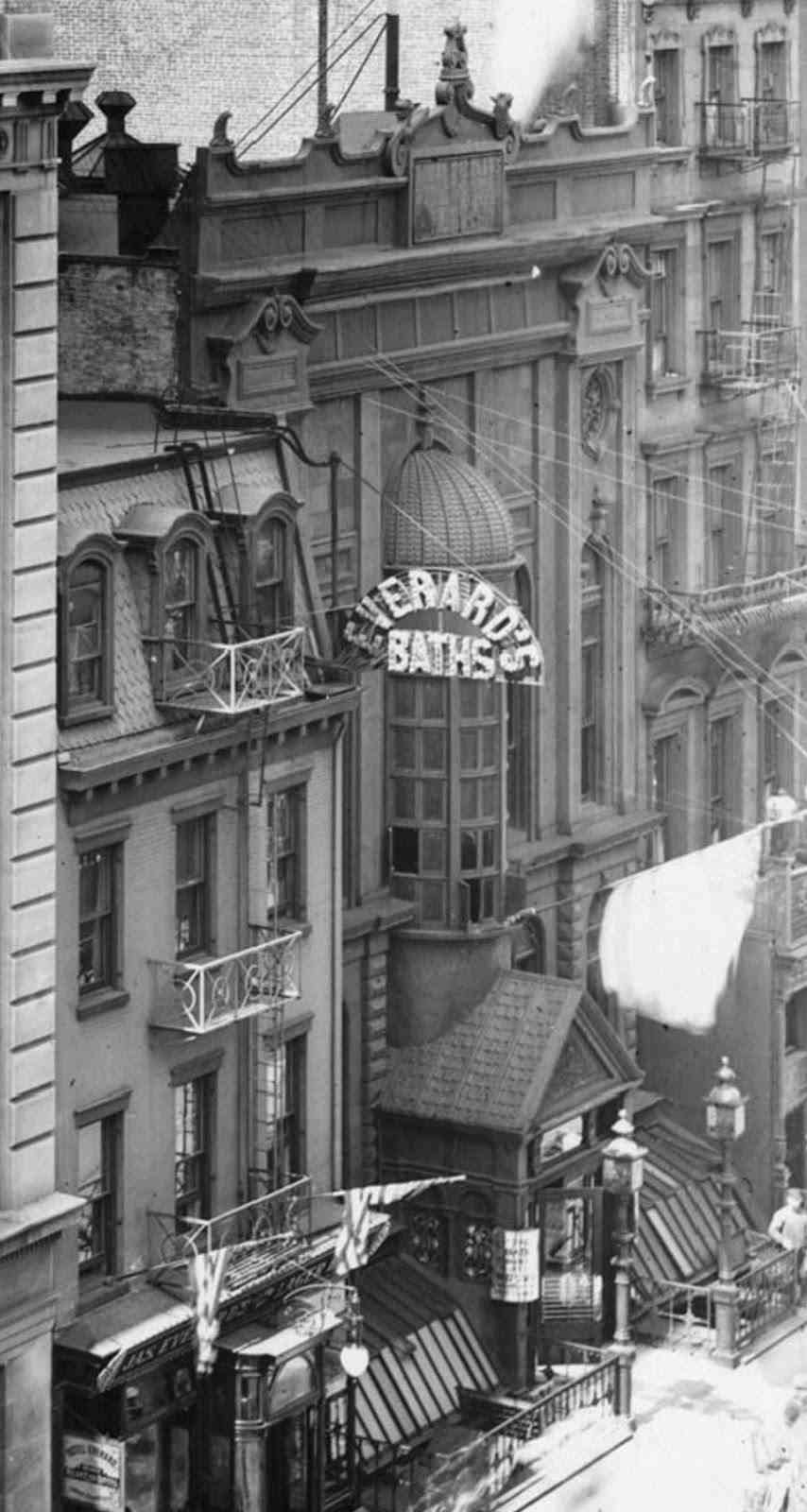
Everard's Baths, 1905. Photo by George P. Hall & Son. Source: The New York Historical.
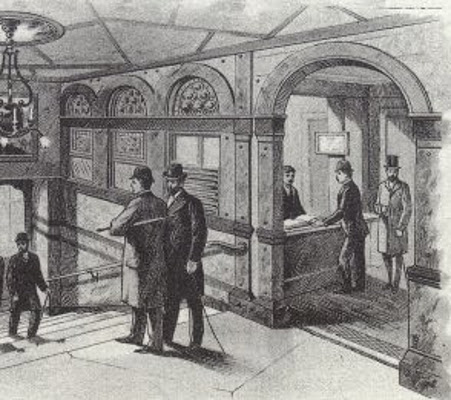
Rendering of the Everard's Baths Lobby. Source: "StevenWarRan" blog.
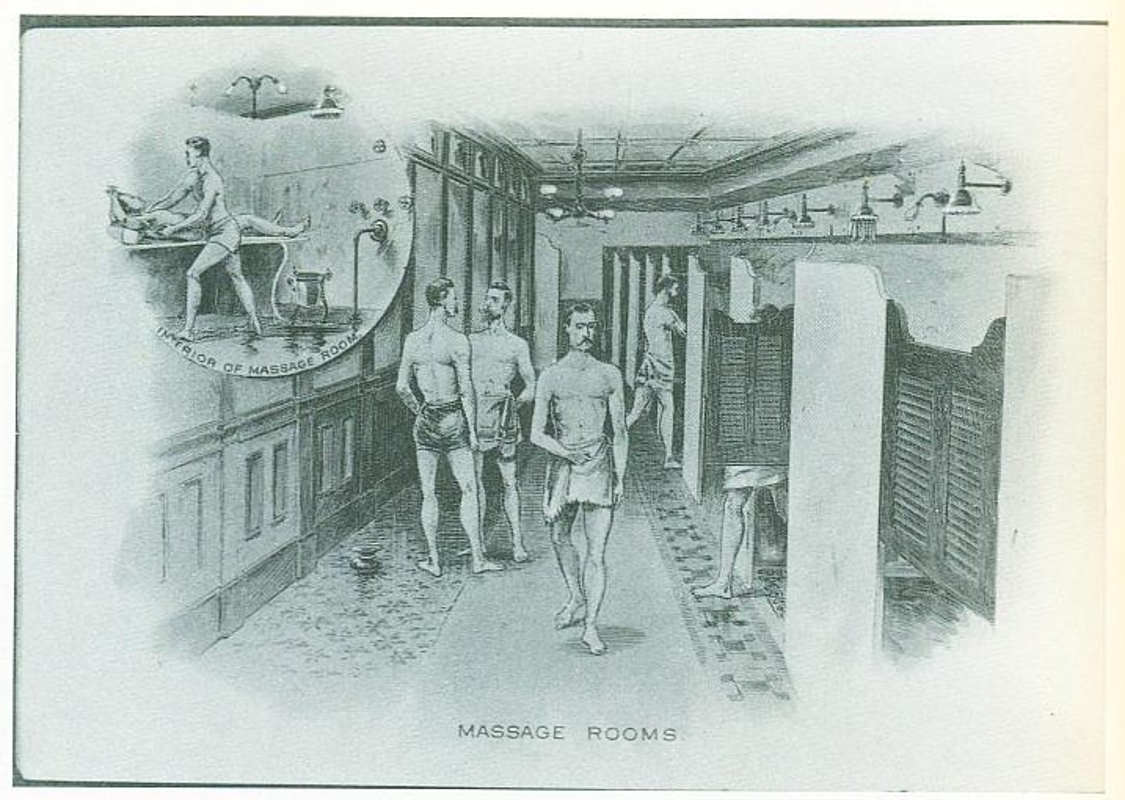
Depiction of the massage rooms at Everard's Baths.
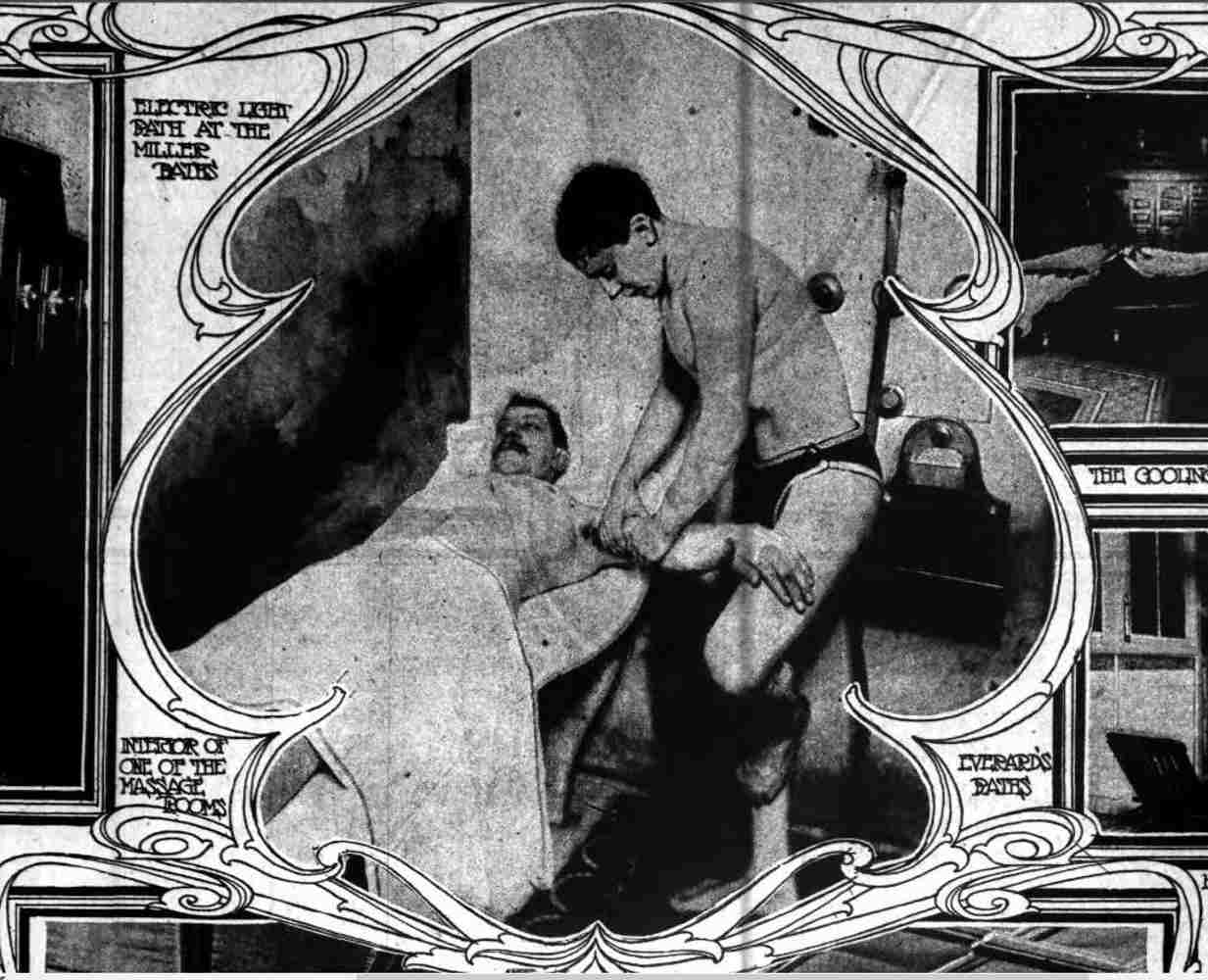
Massage at Everard's Baths, New York Herald, January 22, 1905.
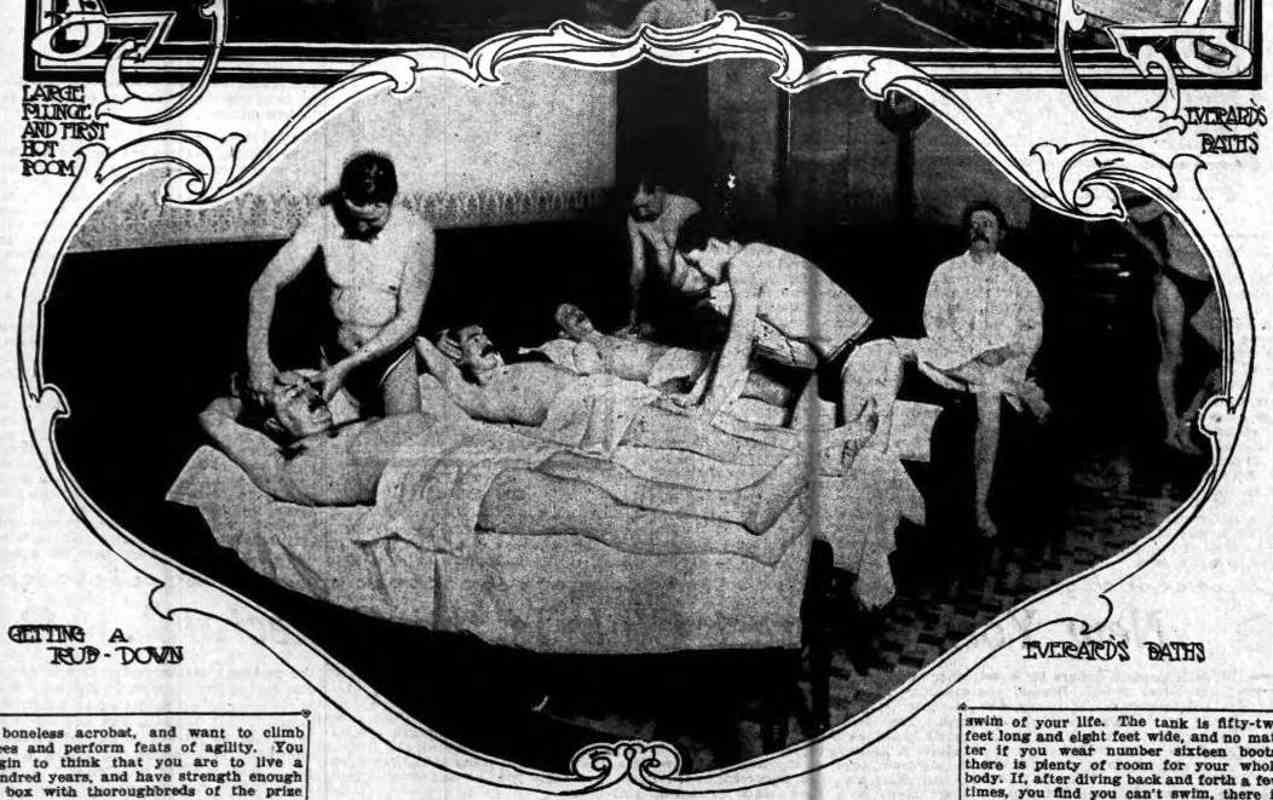
Massage at Everard's Baths, New York Herald, January 22, 1905.
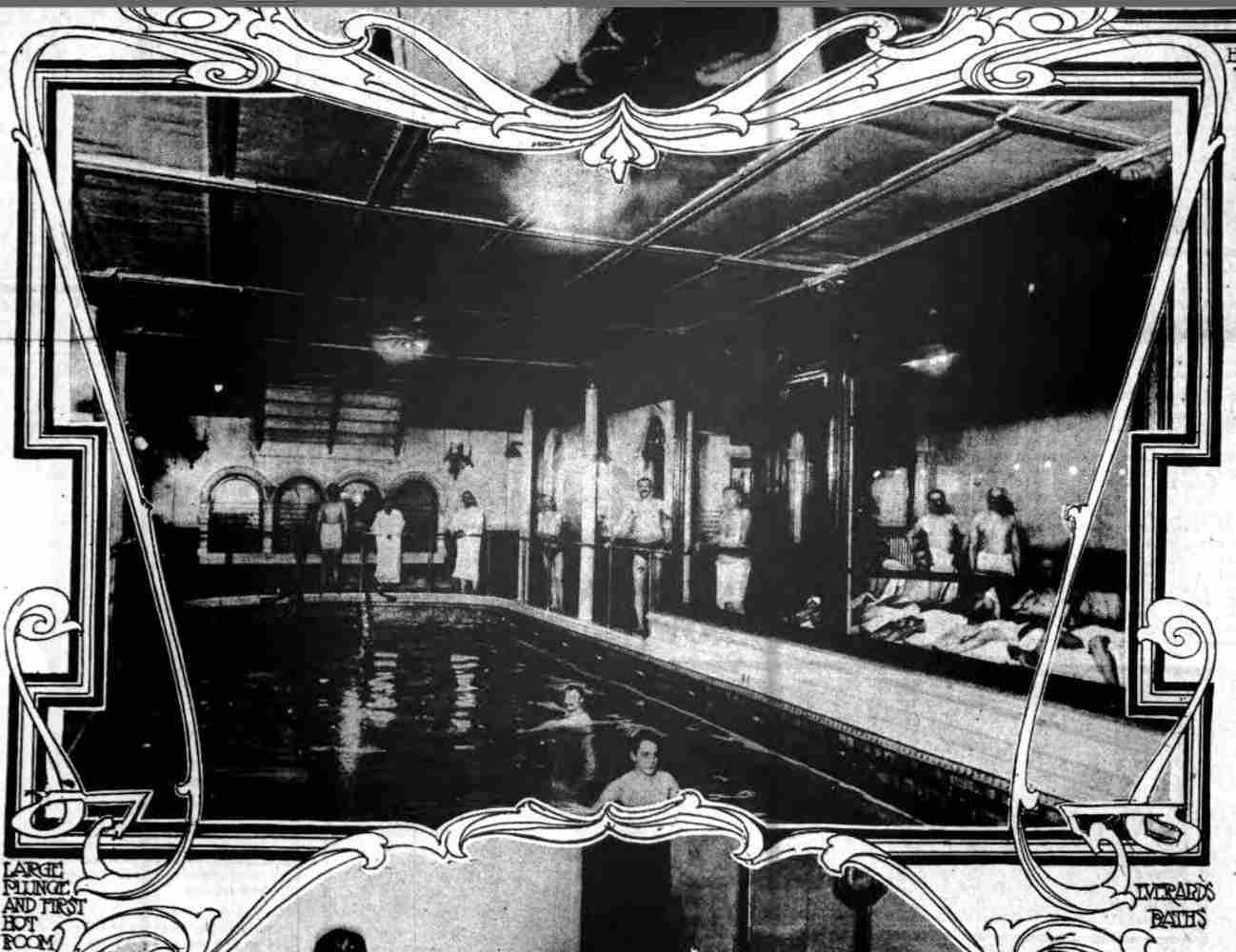
Everard's Baths swimming pool, New York Herald, January 22, 1905.
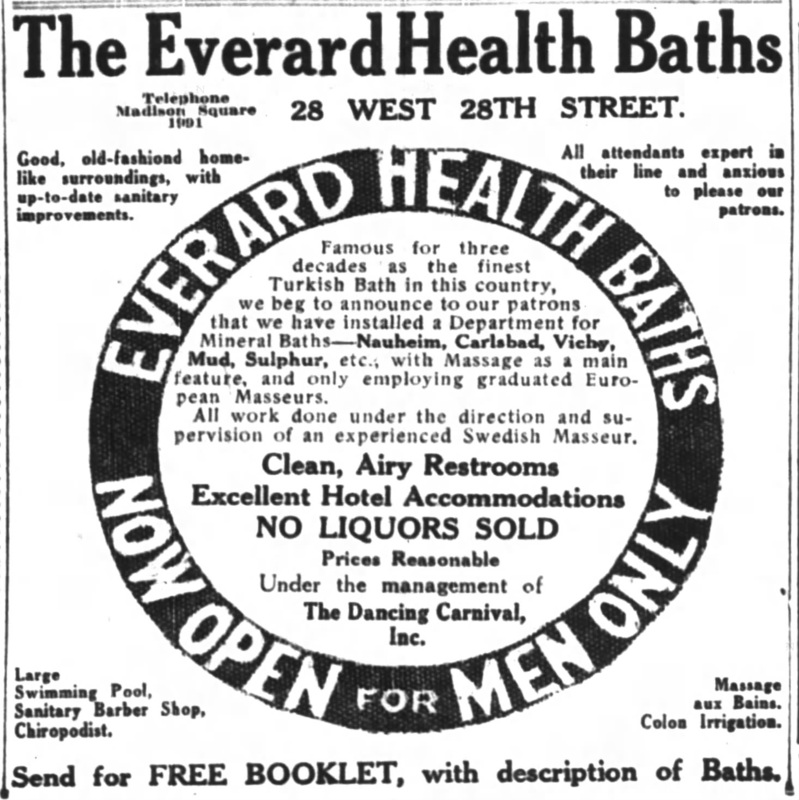
Ad for Everard’s Baths appearing in the New York Times, February 5, 1916.
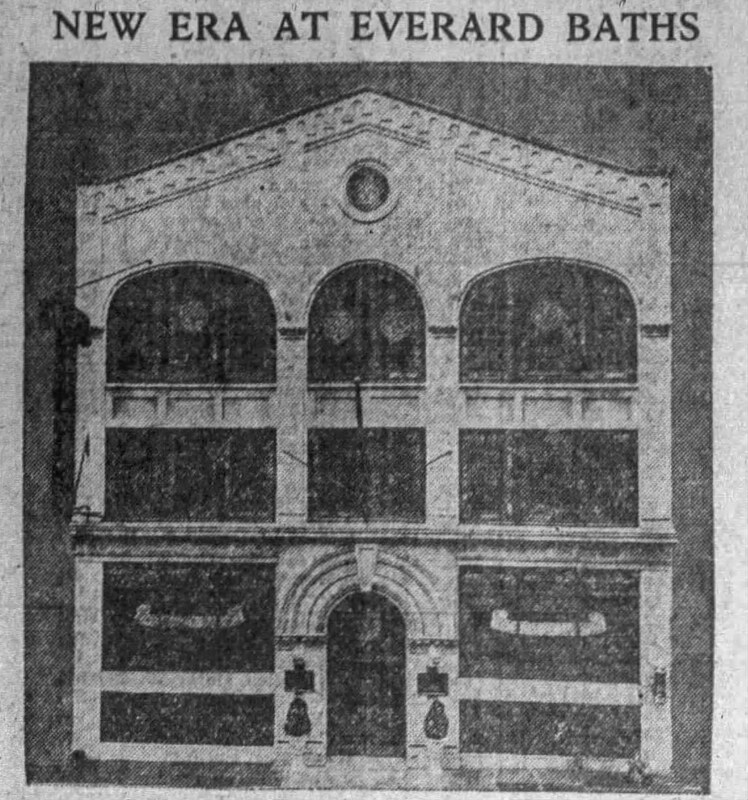
“New Era at Everard Baths.” Source: Times Union, March 28, 1932.
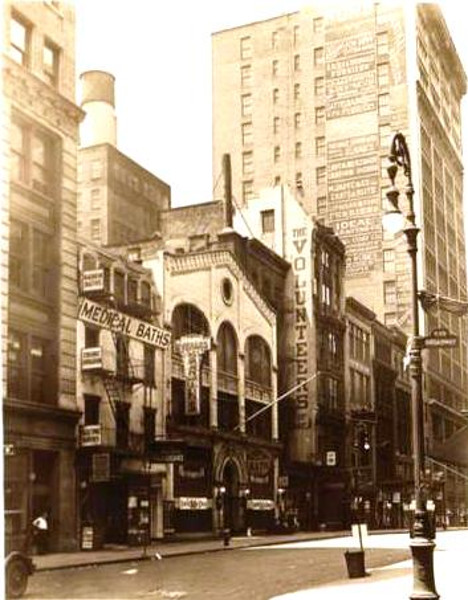
Everard Baths, 1932. Photo by P.L. Sperr. Courtesy of the New York Public Library.
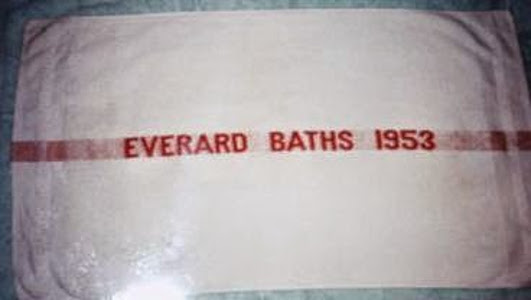
A towel with the Everard Baths branding, 1953.
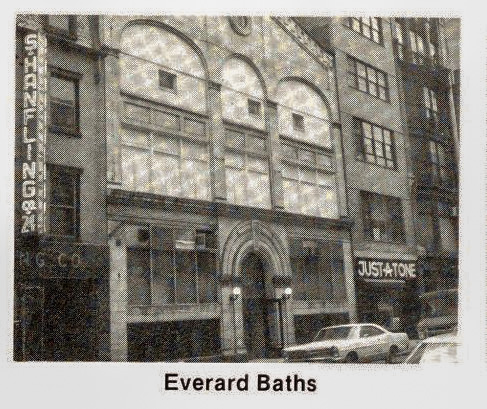
Everard Baths, appearing in the March-April 1975 issue of Ciao!.
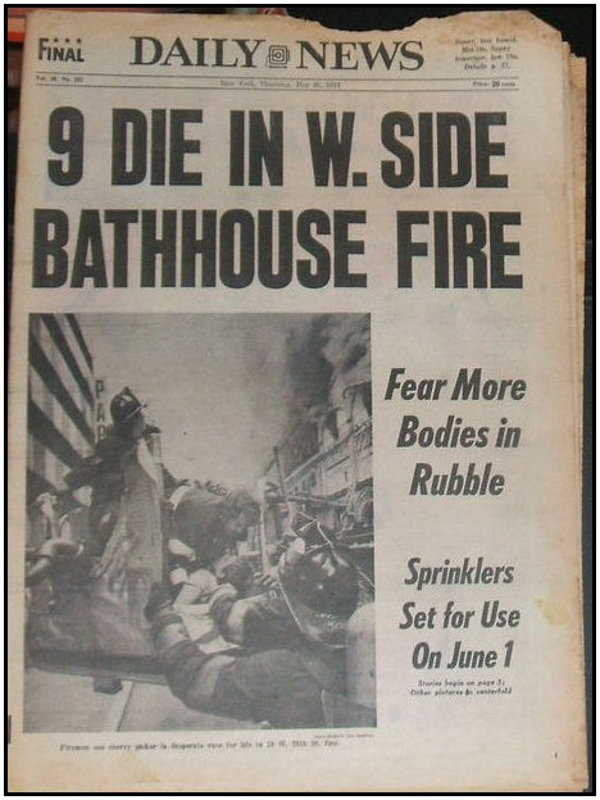
Front page of the Daily News about the fire at Everard Baths, May 26, 1977.
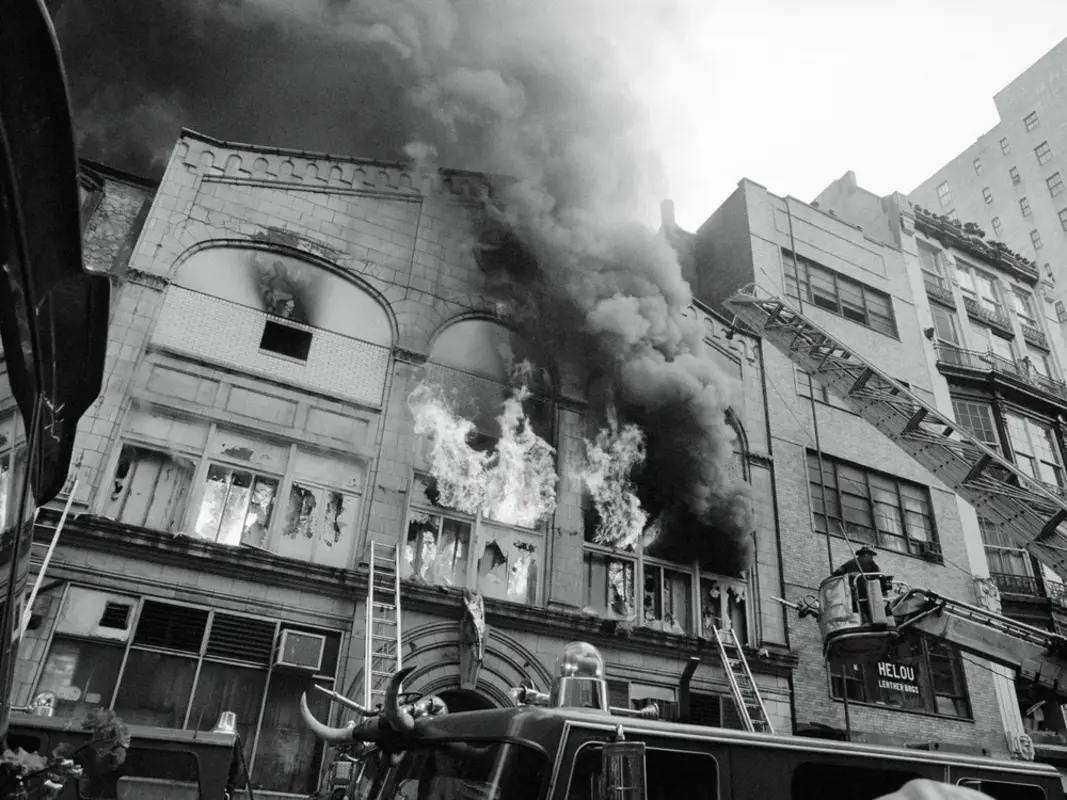
Fire damage at the Everard Baths. Source: Daily World, May 25, 1977.
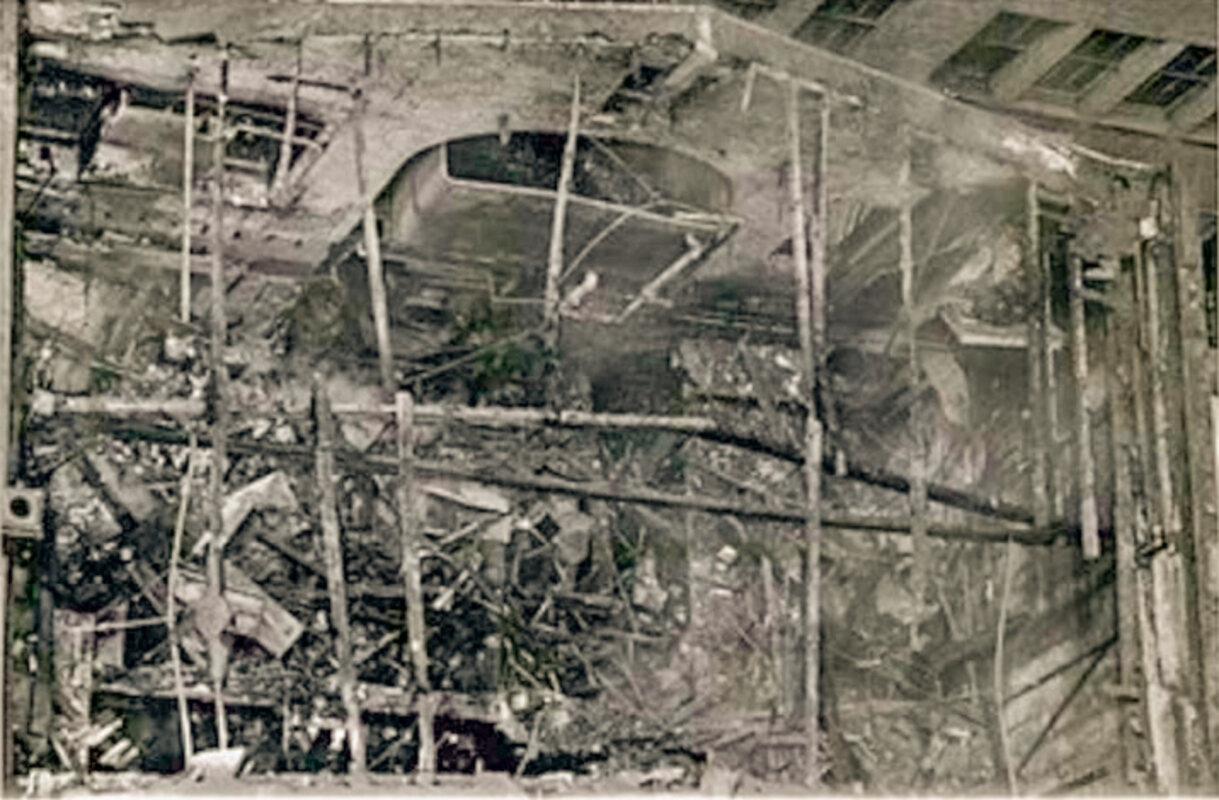
Fire damage at the Everard Baths in May 1977. Source: New York City Fire Department.
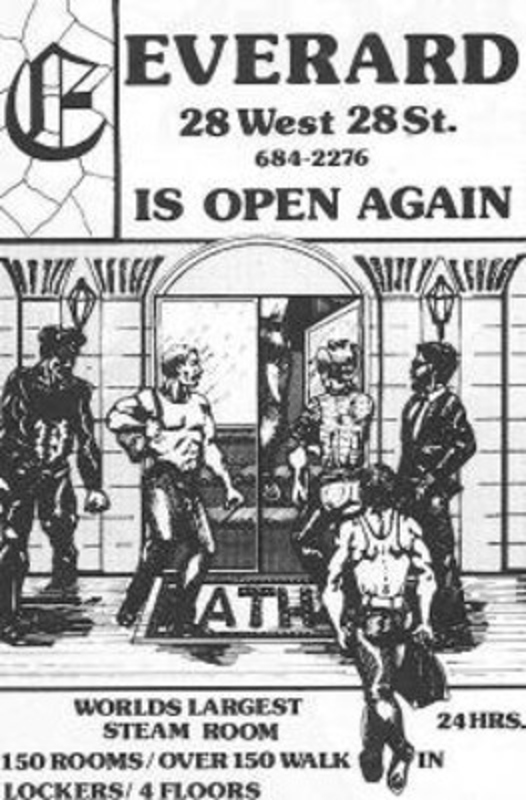
Everard Baths ad, c. 1977.
History
The legendary Everard Baths, one of the longest lasting of New York’s bathhouses, attracted gay men probably since its opening in 1888, but, as documented, from at least World War I until its closing in 1986.
The building began as the Free Will Baptist Church in 1860. In 1882, it was converted into the New-York Horticultural Society’s Horticultural Hall. It became the Regent Music Hall in 1886-87, then the Fifth Avenue Music Hall, financed by James Everard. Born in Dublin, Ireland, Everard (1829-1913) came to New York City as a boy, and eventually formed a masonry jobbing business that was successful in receiving a number of major city public works contracts. With his profits, he invested in real estate after 1875, and built up one the country’s largest brewing concerns. (He was buried at Woodlawn Cemetery.)
After the Music Hall was closed by the City over the sale of beer there, Everard decided to save his investment by turning the facility into a commercial “Russian and Turkish” bathhouse, opened in May 1888 at a cost of $150,000. Lushly appointed and with a variety of steam baths and 100 sleeping rooms, it had a prime location in the heart of the neighborhood known as the Tenderloin, with its many theaters and other entertainment venues, hotels and bachelor flats, restaurants, brothels, and sex resorts.
In its earliest years Everard’s Baths had a wealthy and middle-class, predominantly white, clientele and an international renown. By 1896 Everard’s had an Annex next door at No. 26. In 1921, the bathhouse was sold to lawyer Abraham Harawitz, who planned $100,000 worth of alterations and expansion. An ad in 1922 stated “everything new but the location” and boasted that it was the “Most Luxurious Baths in the World.” It was again remodeled in 1932.
By at least the 1910s, Everard’s was well known to gay men. Historian George Chauncey found that raids by the New York Society for the Suppression of Vice in 1919 and 1920 here produced the arrests of numerous gay men. Still, Chauncey considered bathhouses the “safest, most enduring’ of social spaces for gay men, in comparison to riskier streets, parks, restrooms, speakeasies, and restaurants, as well as “some of the first exclusively gay commercial spaces in the city.” Everard’s was relatively private, had few police raids, and had a level of front-desk security that allowed in fewer “outsiders” such as thugs and straight men. Baths served as a fairly discreet and anonymous place for married and closeted men, and were sources of introduction to the gay community for many men.
One guide in the 1940s noted that
Everard’s Turkish Baths…plays a major role in New York’s gay life. On weekend nights, there is almost always a waiting line after 10 PM, sometimes over an hour long for dormitory space and longer yet for rooms.
It continued, “Most of the activity takes place in the huge dormitory on the second floor. There are some rooms around this dormitory, but most are on the third floor. Below the street level, for any who may be interested, are found the steam room, showers and even a swimming pool. … There are, of course, many other Turkish Baths in New York. … But [none] of the others, no matter what their occasional activity, can boast of a reputation even approximating that of Everard’s.”
Some of the celebrated patrons of the “Everard Baths,” as it came to be known (or fondly the “Everhard”), are said to have included British actor/playwright Emlyn Williams, actor Alfred Lunt, writers Gore Vidal (he met his long-term partner, Howard Austen, there in 1950), Truman Capote, and Larry Kramer, dancer Rudolf Nureyev, and composer Ned Rorem.
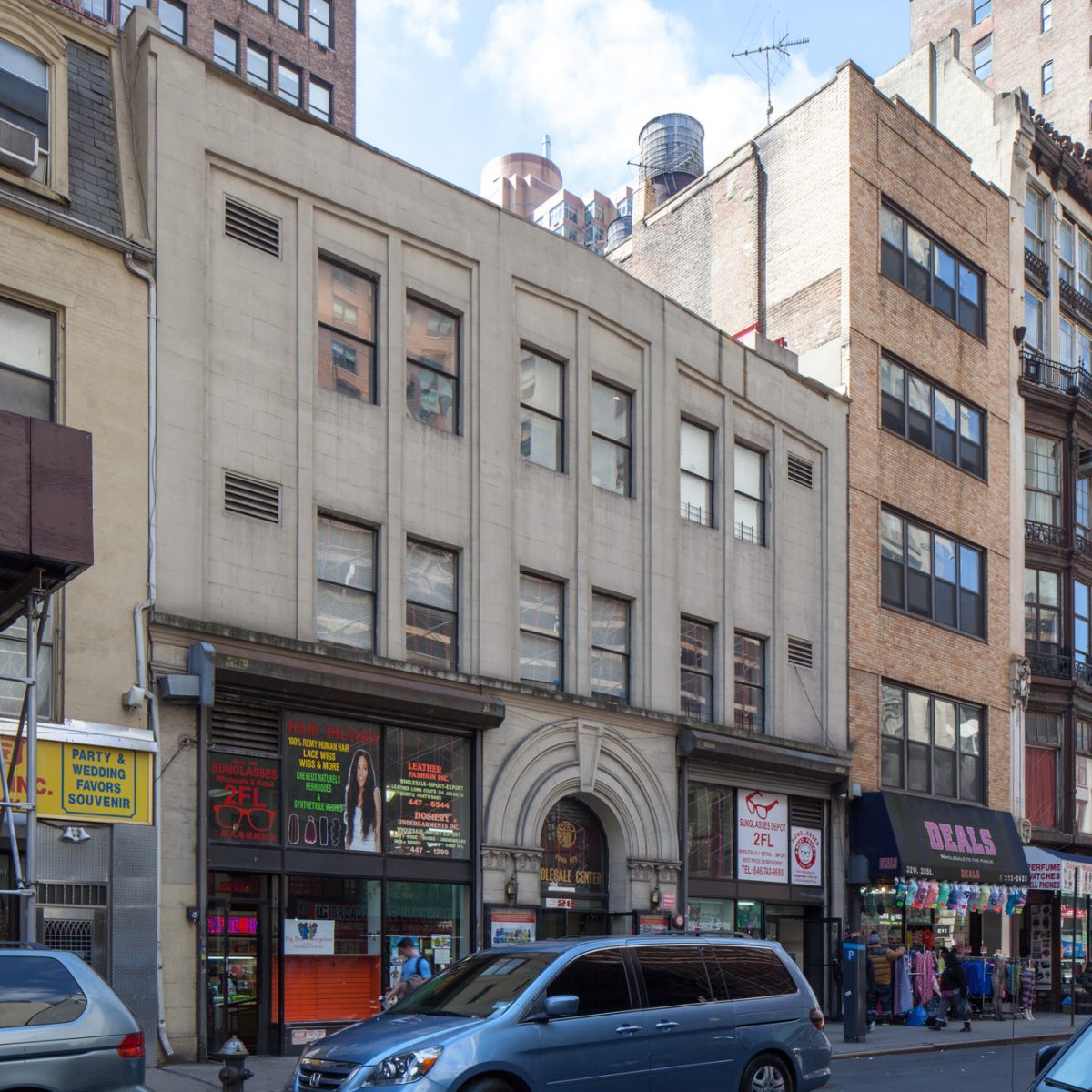
After the 1968 opening of the lavish Continental Baths on the Upper West Side drew many patrons away, the Everard got a seedier reputation and had numerous safety violations. A tragic fire struck on May 25, 1977, when nine men died and the upper two floors were destroyed. The bathhouse was rebuilt and reopened, with an altered façade, but Mayor Ed Koch closed the Everard for good in April 1986 as an anti-AIDS measure.
Entry by Jay Shockley, project director (March 2017; last revised May 2025).
NOTE: Names above in bold indicate LGBT people.
Building Information
- Architect or Builder: Deutsch & Parker (alteration and expansion)
- Year Built: 1860; 1921 (alteration and expansion); 1977 (rebuilt after fire)
Sources
Daniel Hurewitz, Stepping Out: Nine Walks Through New York City’s Gay and Lesbian Past (New York: Henry Holt & Co., 1997).
Gaedicker’s Sodom-on-Hudson (Spring 1949).
George Chauncey, Gay New York: Gender, Urban Culture, and the Making of the Gay Male World, 1890-1940 (New York: Basic Books, 1994).
Laurie Johnston, “9 Killed in Bath Fire Identified by Friends,” The New York Times, May 27, 1977, 17.
Robert Klara, “Before It Burned Down, This Bathhouse Served as a Haven for New York City’s Gay Community,” Smithsonian Magazine, June 26, 2023.
Steven Welch, “Fire in the Everard Baths,” StevenWarRan blog, July 15, 2014, bit.ly/2fQCnXw.
Do you have more information about this site?
This project is enriched by your participation! Do you have your own images of this site? Or a story to share? Would you like to suggest a different historic site?