City Cemetery, Hart Island
also known as the city's Potter's Field
overview
Hart Island, the city’s public cemetery for people who died indigent or whose bodies went unclaimed, became the burial location of reportedly thousands of people, many LGBTQ, who died of AIDS, from the mid-1980s and the 1990s. If confirmed, the island would be the nation’s single largest burial ground for those who died of the disease.
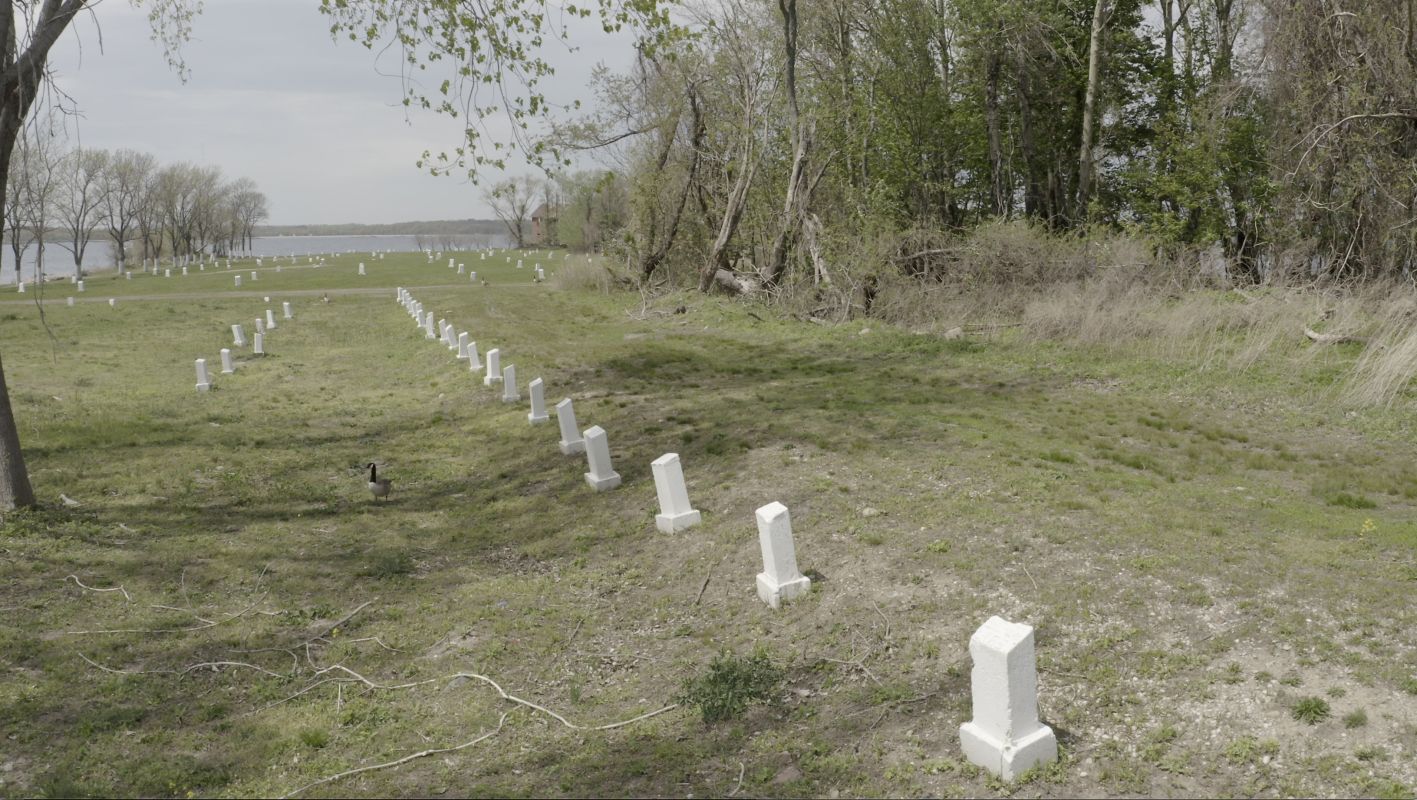
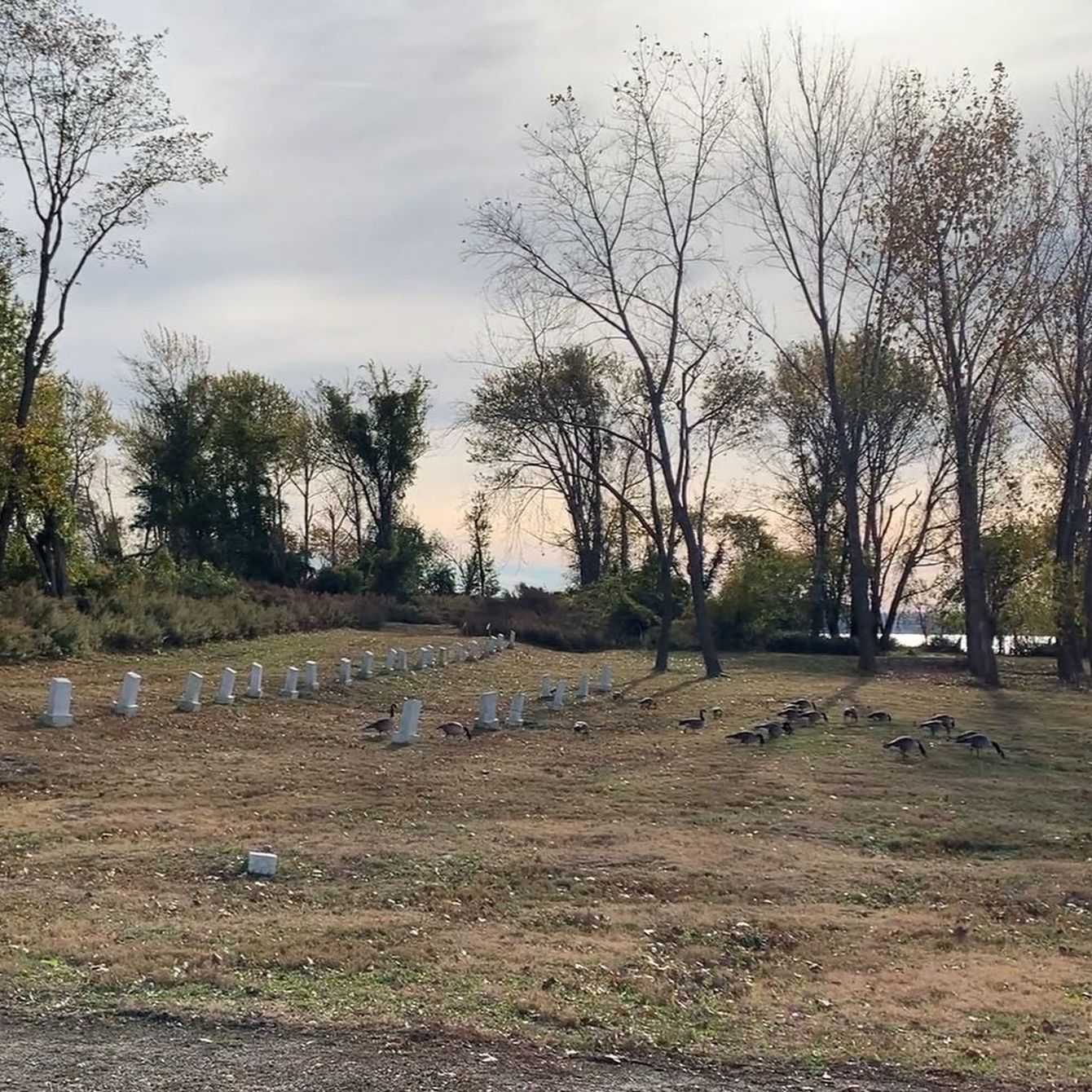
Anonymous AIDS burials on Hart Island. Photo credit: © 2021 Alon Sicherman & Sean Vegezzi. Courtesy of The Hart Island Project.
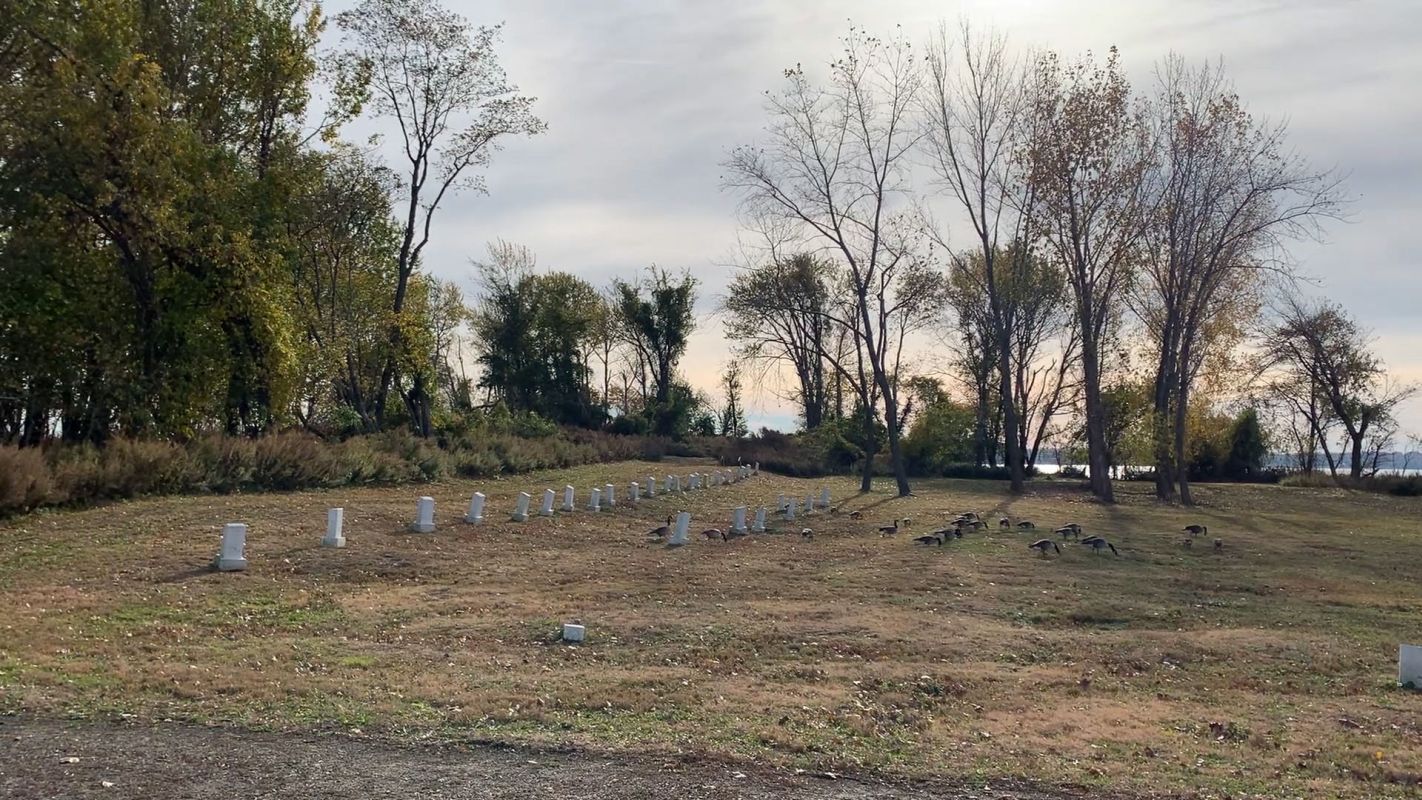
Anonymous AIDS graves on Hart Island, November 14, 2021. Photo credit: © 2021 Melinda Hunt. Courtesy of The Hart Island Project.
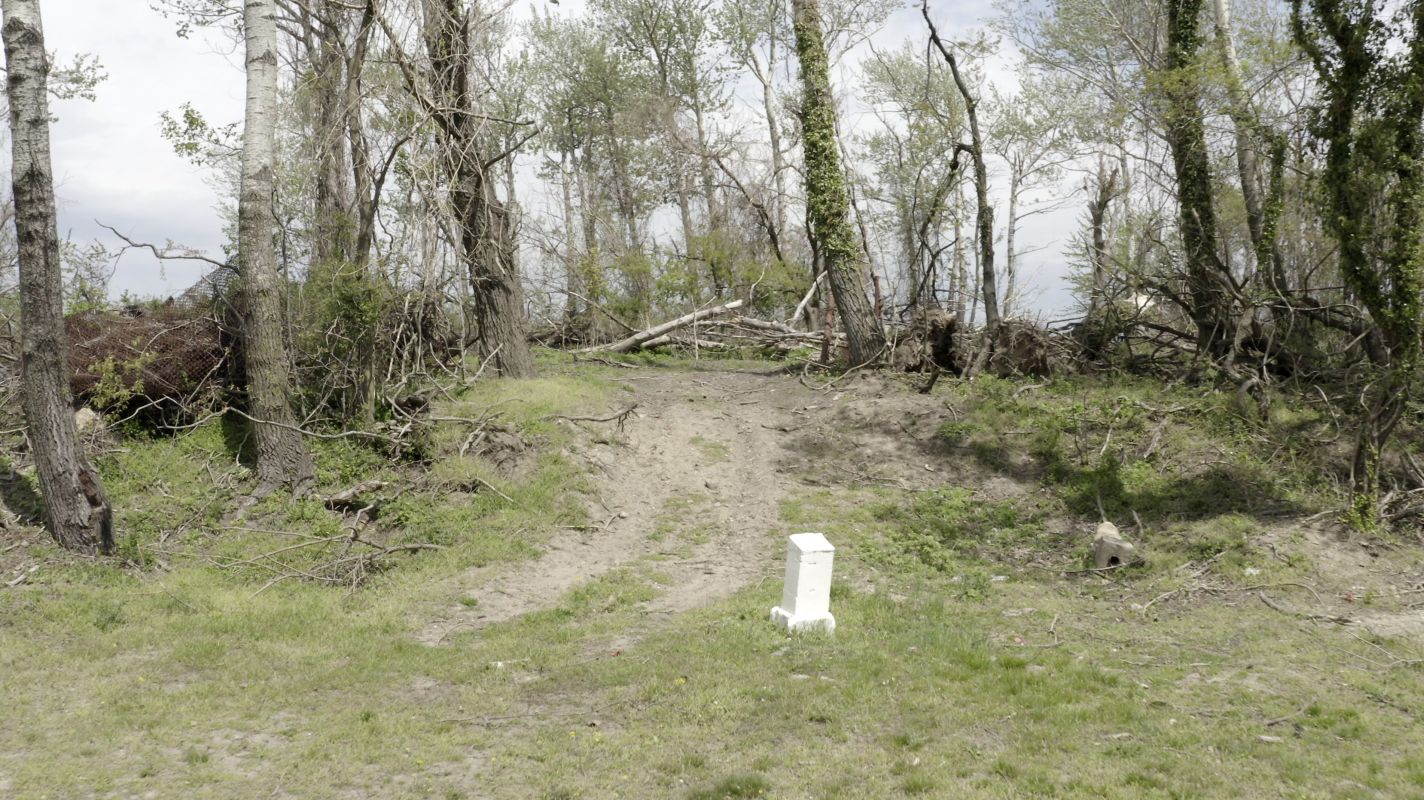
AIDS grave for a child, 1985. Photo credit: © 2021 Alon Sicherman & Sean Vegezzi. Courtesy of The Hart Island Project.
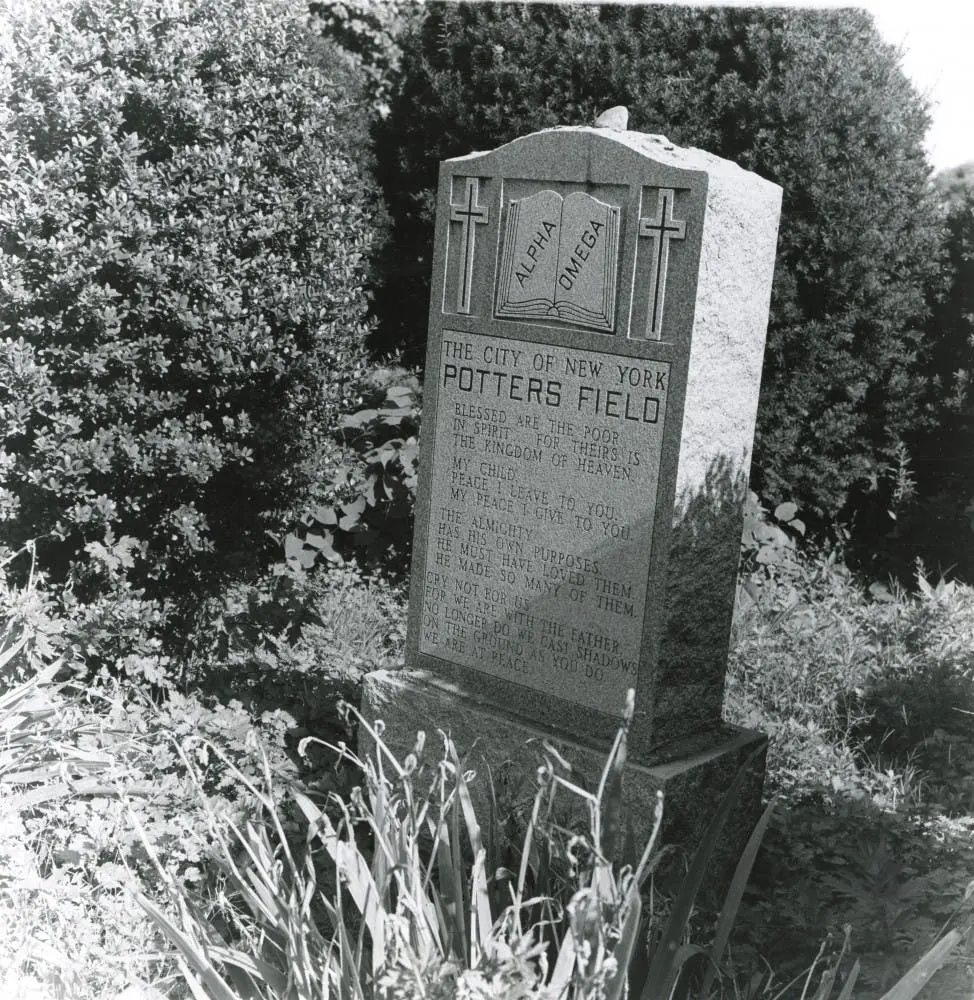
Claire Yaffa Children With AIDS Photograph Collection, PR 290, c. 1990s. Photo by Claire Yaffa. Source: New-York Historical Society.
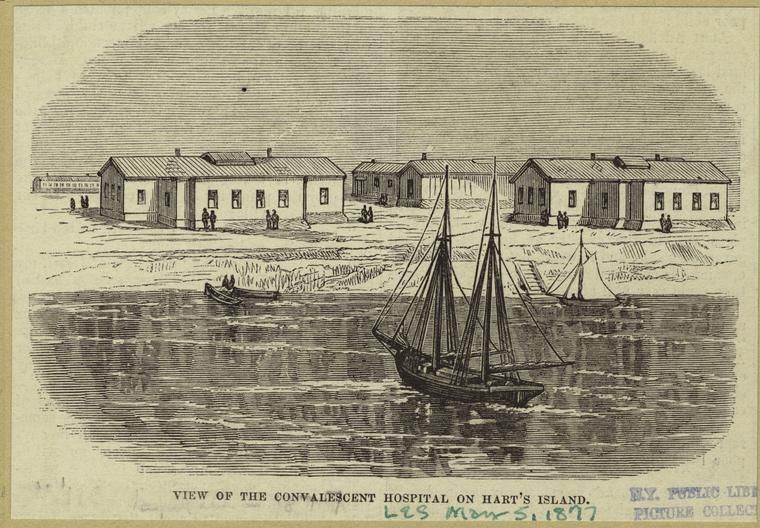
View of the Convalescent Hospital on Hart Island, 1877. Courtesy of The Miriam and Ira D. Wallach Division of Art, Prints and Photographs: Picture Collection, The New York Public Library.
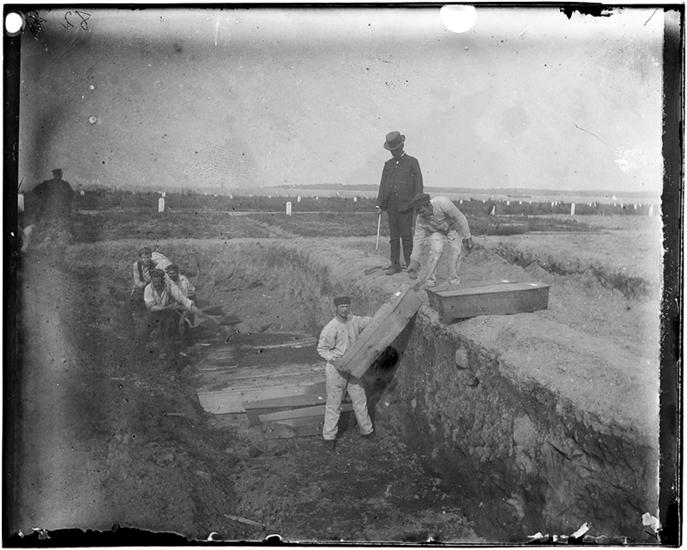
Laborers loading coffins into an open trench at the city burial ground, c. 1890. Photo by Jacob A. Riis. Courtesy of the Museum of the City of New York.
History
Located east of the Bronx mainland in the Long Island Sound, the 101-acre Hart Island is reportedly the largest publicly-funded cemetery in the world with upwards of one million people buried there. It is now officially known as the City Cemetery, and often referred to as the city’s Potter’s Field. In 1869, it began receiving burials of those who died indigent or whose bodies went unclaimed.
From the mid-1980s through the 1990s, the height of the AIDS epidemic in New York City, approximately 100,000 New Yorkers died of AIDS, representing a quarter of those who died of the disease nationally during the same period. In 2018, an examination by the New York Times estimated that thousands who died of AIDS were buried on Hart Island. The exact number, however, is unknown due to the lack of data from city agencies involved in the burials. If confirmed, the island would be the nation’s single largest burial ground for those who died of the disease. It is, as well, one of the most poignant embodiments of how many people who died of AIDS in the city were treated, marked by rejection, isolation, anonymity, and lack of commemoration.
Widespread fear of and discrimination towards people with AIDS as well as a general lack of understanding of how the disease spread characterized the years when the epidemic was at its height. As a result, even the care and burial of those who died of AIDS became controversial and exclusionary. In 1983, the New York State Funeral Directors Association issued guidelines to not embalm these bodies. Well into the 1980s, many funeral homes, as well as religious institutions, refused to accept bodies associated with AIDS deaths or charged higher prices for these services. Concurrently, general fear of the disease, stigma about homosexuality, and family estrangement, left many dying alone at home, in hospice, or at hospitals with their bodies unclaimed, leading to publicly-funded burials on Hart Island. In other cases, family members could not afford the cost of a private burial.
On Hart Island, the first documented burials of individuals who died from AIDS-related complications occurred between 1983 and 1986. During this period, 31 adults and one infant were buried individually in a separate four-acre section at the island’s southern tip, with burial permits labeled “AIDS.” This area was located outside the jurisdiction of the Department of Correction, which oversaw standard common burials. As a result, these burials were not recorded in the regular burial ledgers, and the identities of those buried are now unknown.
The possibility of contracting AIDS was of such deep concern that, unlike other city burials that took place in common graves, these bodies were buried individually in deep graves to ensure that they could never be exhumed or claimed. In addition, burial crews – then consisting of Rikers Island jail inmates supervised by correction officers – wore disposable protective jumpsuits, believed at the time to prevent infection. As fear of transmission persisted, the Department of Health stopped listing the cause of death on the burial permits. At the beginning of 1987, however, the bodies of those who died of AIDS were finally included in the routine common burials and recorded in the ledgers. By the 1990s, children who died of the disease were sent for private burial on Long Island.
During the height of the epidemic, many bodies were sent to Hart Island from New York City hospitals with the largest AIDS wards and treatment centers, including Bellevue Hospital Center, St. Luke’s-Roosevelt Hospital, Harlem Hospital Center, St. Vincent’s Hospital Manhattan, and St. Clare’s Hospital. Smaller numbers came from Rivington House and Terence Cardinal Cooke Health Care Center. Eventually, the medical examiner permitted members of the LGBTQ community to claim their friends and loved ones for private burial or cremation.
Up until 2014, Hart Island was inaccessible to the families of anyone buried there, and access still remains limited. In many cases, as of 2026, families are only now learning that a relative was buried on the island. The Hart Island Project and its AIDS initiative are working to identify the deceased, assist families in finding burial locations, advocate for access to the island as an open public cemetery, share the island’s history, and end mass burials. In 2021, control of Hart Island was transferred from the Department of Correction to the Department of Parks and Recreation due, in part, to the Hart Island Project’s advocacy. It is now open to the public once a month for tours led by park rangers. There are still no grave markers with names, or commemoration of any kind of the island’s AIDS history.
The entire island was deemed eligible for listing on the New York State and National Registers of Historic Places in 2016, although no mention of its significant association with the AIDS epidemic was made in the resource evaluation. In November 2025, the New York City Council passed legislation requiring relevant city agencies to conduct a study on the capacity for future burials on Hart Island, due by June 2027.
Entry by Ken Lustbader, project director (January 2023).
NOTE: Names above in bold indicate LGBT people.
Building Information
- Architect or Builder: n/a
- Year Built: 1869
Sources
Corey Kilgannon, “Dead of AIDS and Forgotten in Potter’s Field,” The New York Times, July 3, 2018, accessed January 4, 2023, bit.ly/3IpWKuH.
Daria Merwin, “Hart Island Historic District – Resource Evaluation,” New York State Office of Parks, Recreation, and Historic Preservation, October 4, 2016.
Derek Kravitz and Jacob Geanous, “Hart Island Burials Taken Over By Tree Landscapers, Uprooting Families’ Hopes for Transformation,” The City, November 18, 2021, accessed January 4, 2023, bit.ly/3Gkrgnf.
“Hart Island: The City Cemetery,” New York City Council, accessed January 4, 2023, bit.ly/3if1aKi.
The Hart Island Project, accessed January 4, 2023, www.hartisland.net/.
John Freeman Gill, “Streetscapes: Hart Island’s Last Stand,” The New York Times, July 16, 2021, accessed January 4, 2023, bit.ly/3ZcLojt.
Mary Jordan, “The Forgotten Dead: She died in a Manhattan penthouse but was buried on an island for the poor,” The Washington Post, July 2, 2022, accessed January 4, 2022, bit.ly/3ClhsYY.
Melinda Hunt, email correspondence with Ken Lustbader, December 2025 and January 2026.
Nina Bernstein, “Unearthing the Secrets of New York’s Mass Graves,” The New York Times, May 15, 2016, accessed January 4, 2023, bit.ly/3GGdUDa.
Sharon L. Bass, “Funeral Homes Accused of Bias on AIDS,” The New York Times, November 15, 1987, accessed January 4, 2023, bit.ly/3WKh1PP.
“Undertakers Unit Warns of AIDS,” The New York Times, June 18, 1983, accessed January 4, 2023, bit.ly/3VGqbf7.
Do you have more information about this site?
This project is enriched by your participation! Do you have your own images of this site? Or a story to share? Would you like to suggest a different historic site?