Julius’
also known at one point as Julius' Bar and Restaurant
overview
On April 21, 1966, a “Sip-In” was organized by members of the Mattachine Society, one of the country’s earliest gay rights organizations, to challenge the State Liquor Authority’s discriminatory policy of revoking the licenses of bars that served known or suspected gay men and lesbians.
The publicized event – at which they were refused service after intentionally revealing they were “homosexuals” – was one of the earliest pre-Stonewall public actions for LGBT rights as well as a big step forward in the eventual development of legitimate LGBT bars in New York City.
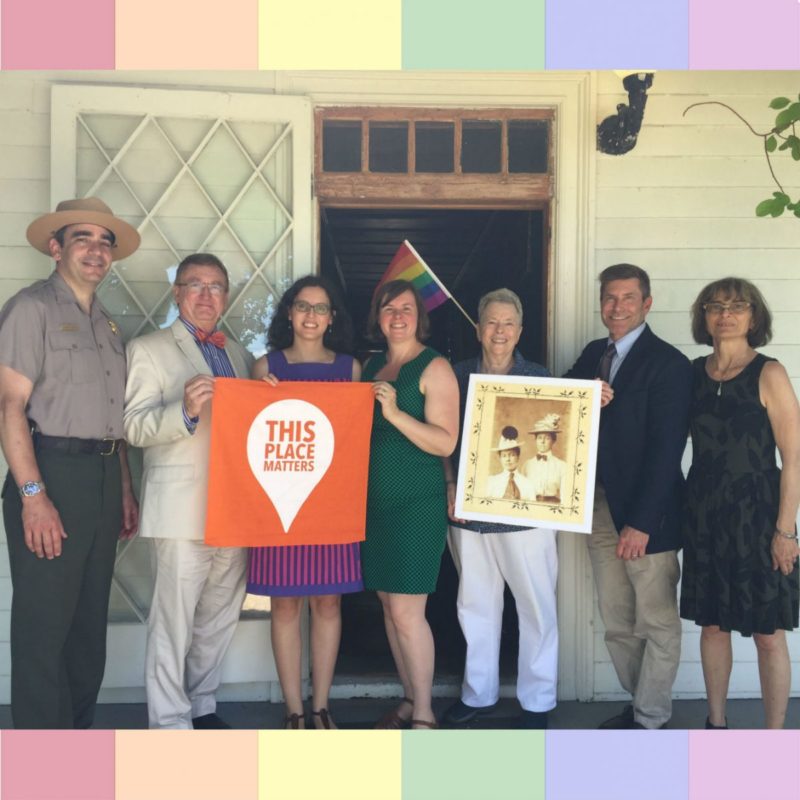
Through the efforts of the NYC LGBTQ Historic Sites Project, this site was listed on the New York State Register of Historic Places in 2015 and the National Register of Historic Places in 2016. The Project’s advocacy also led to the site’s designation as a New York City Landmark by the NYC Landmarks Preservation Commission in 2022.
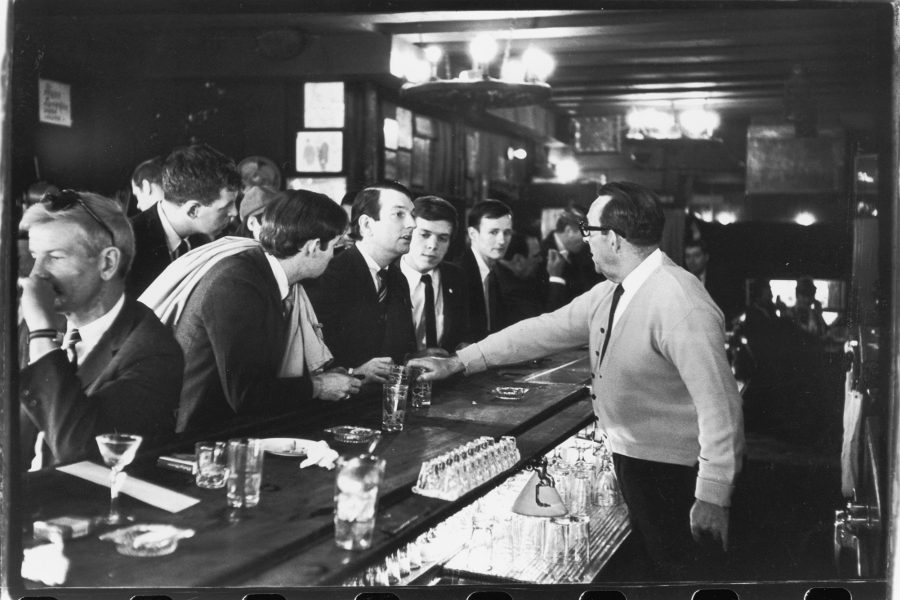
(left to right) Mattachine Society members John Timmons, Dick Leitsch, Craig Rodwell, and Randy Wicker being refused service by the bartender at Julius', April 21, 1966. Gift of The Estate of Fred W. McDarrah.
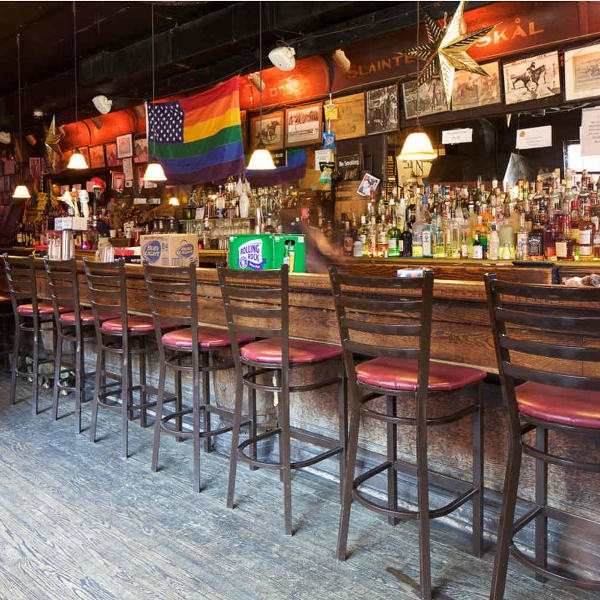
Julius' bar, 2015. Photo by Christopher D. Brazee/NYC LGBTQ Historic Sites Project.
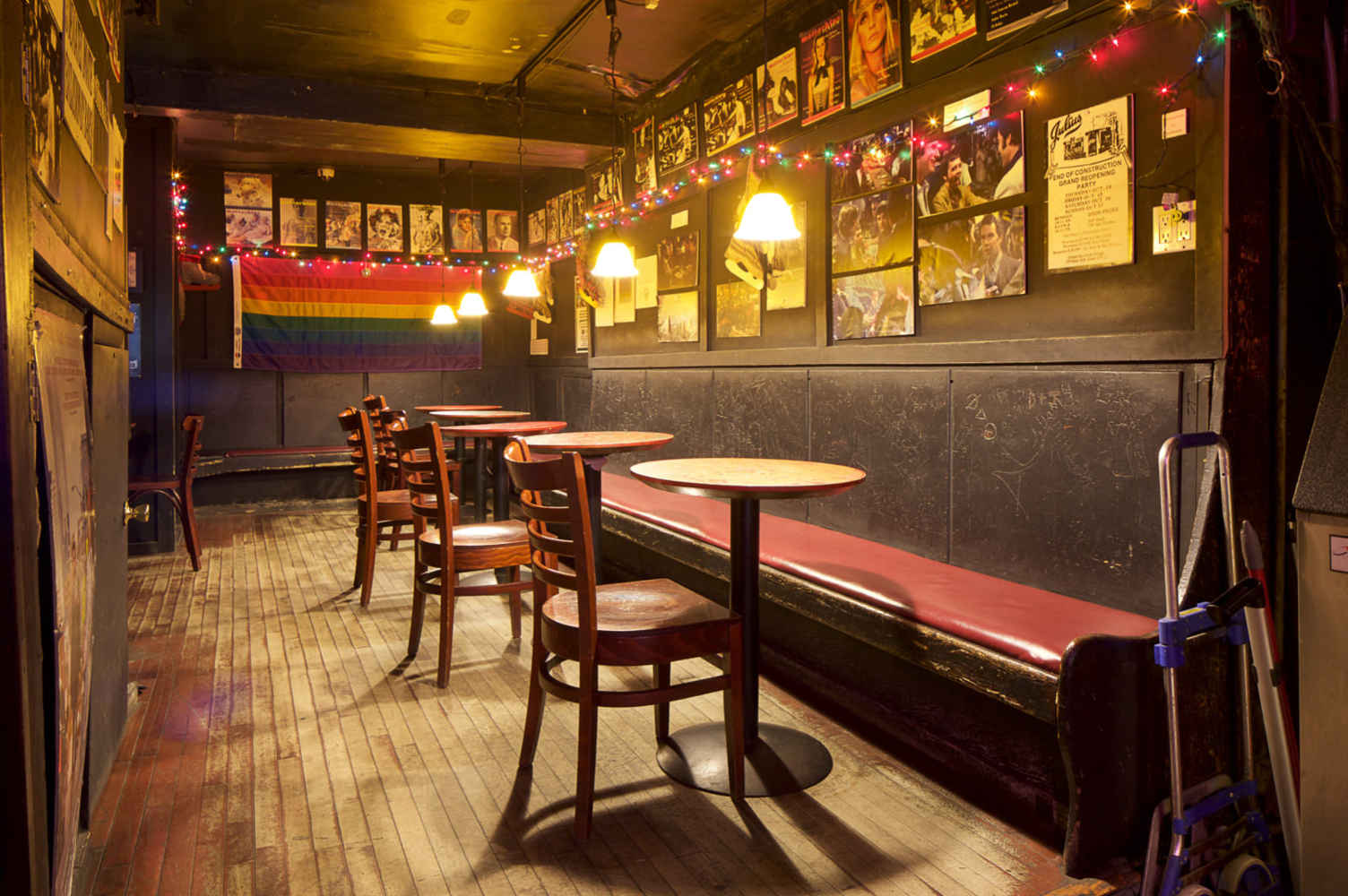
The backroom, 2015. Photo by Christopher D. Brazee/NYC LGBTQ Historic Sites Project.
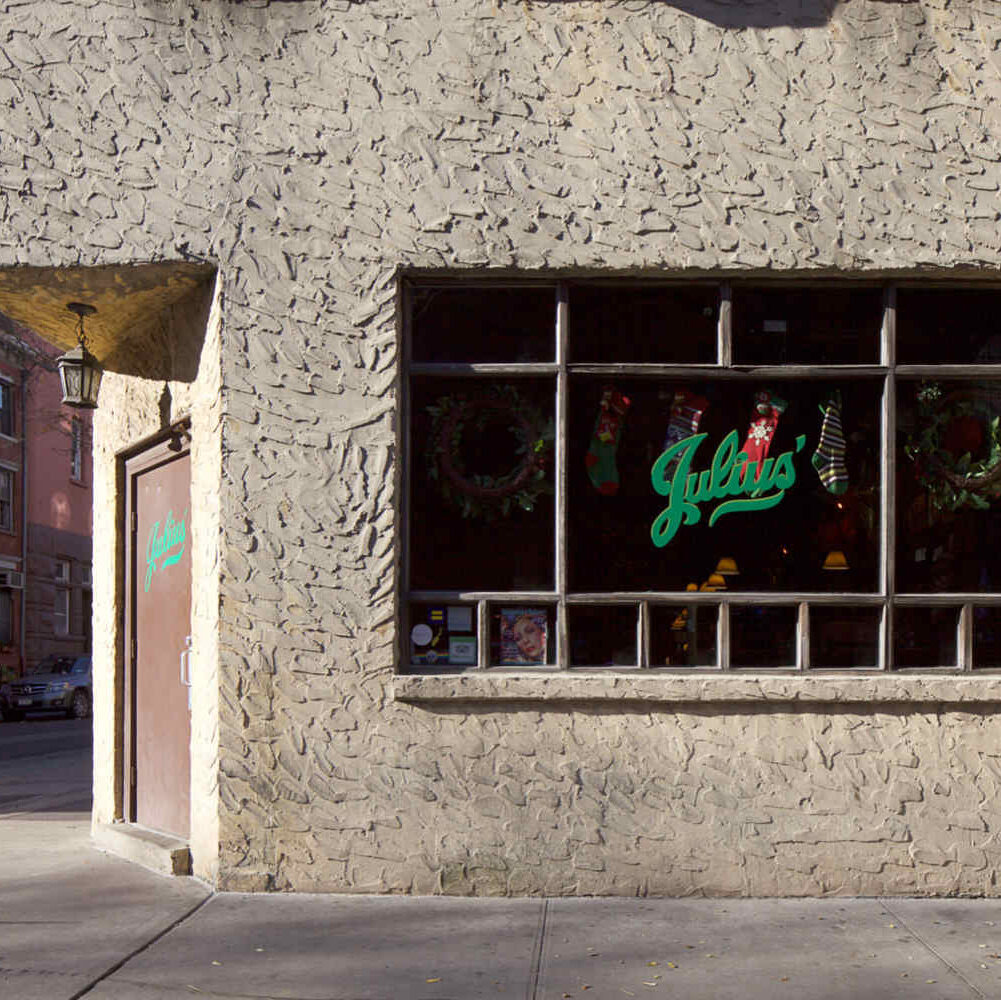
Julius' bar, 2016. Photo by Christopher D. Brazee/NYC LGBTQ Historic Sites Project.
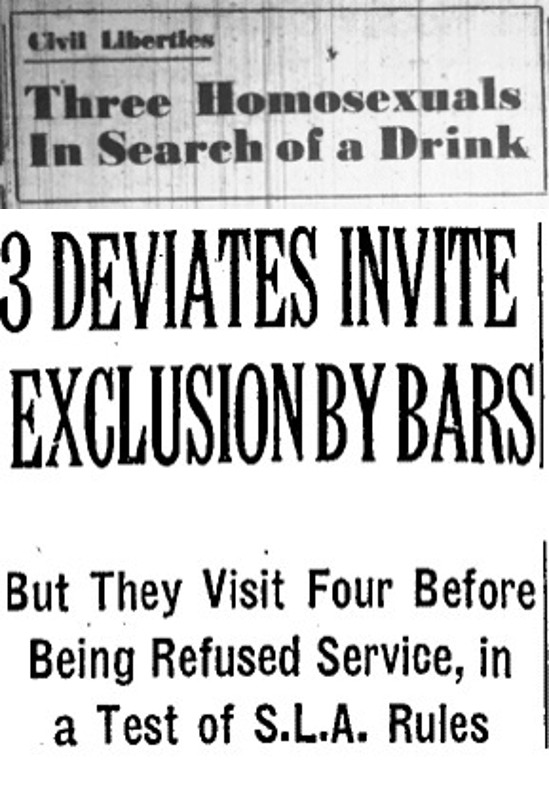
Coverage of the April 21, 1966 Sip-In. (top) The Village Voice (bottom) The New York Times.
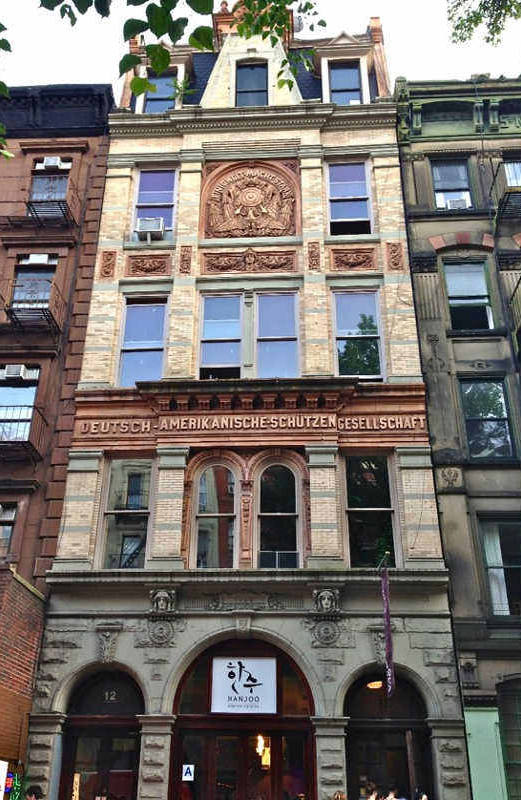
Before Julius', the Mattachine Society members tried three other locations. First, the Ukrainian-American Village Restaurant at 12 St. Mark's Place in the East Village.
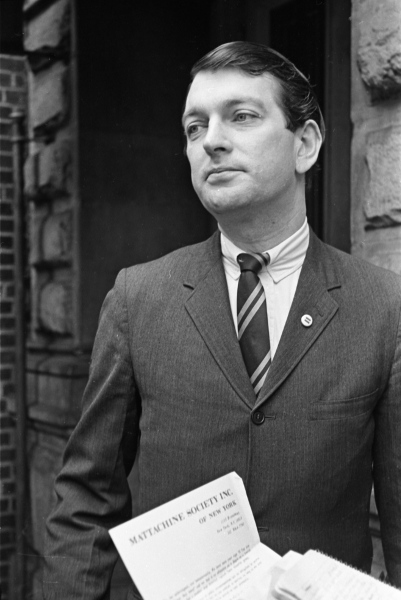
Dick Leitsch outside the Ukrainian-American Village Restaurant at 12 St. Mark's Place, April 21, 1966. Gift of The Estate of Fred W. McDarrah.
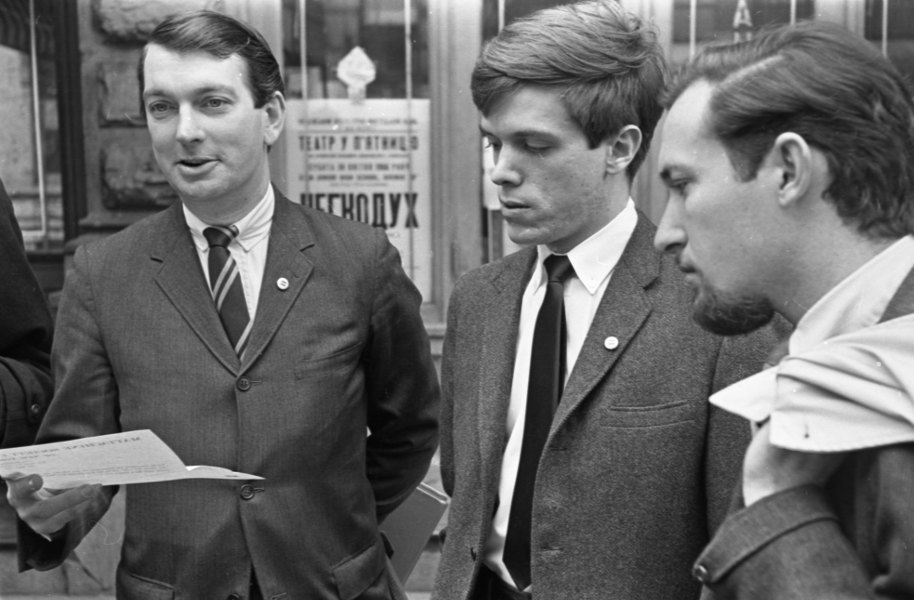
Dick Leitsch, Craig Rodwell, and John Timmons in front of the Ukrainian-American Village Restaurant at 12 St. Mark's Place in the East Village, April 21, 1966. Gift of The Estate of Fred W. McDarrah.
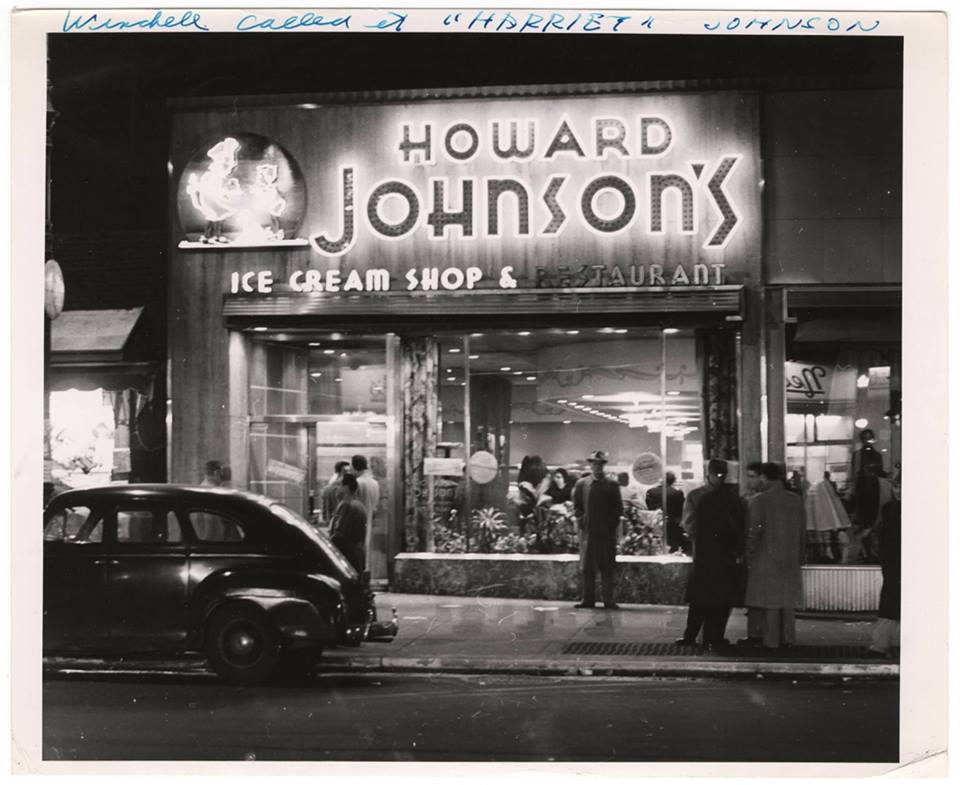
Second stop: Howard Johnson's at 415 Sixth Avenue in Greenwich Village, c. 1965. Photo by Weegee. Source unknown.
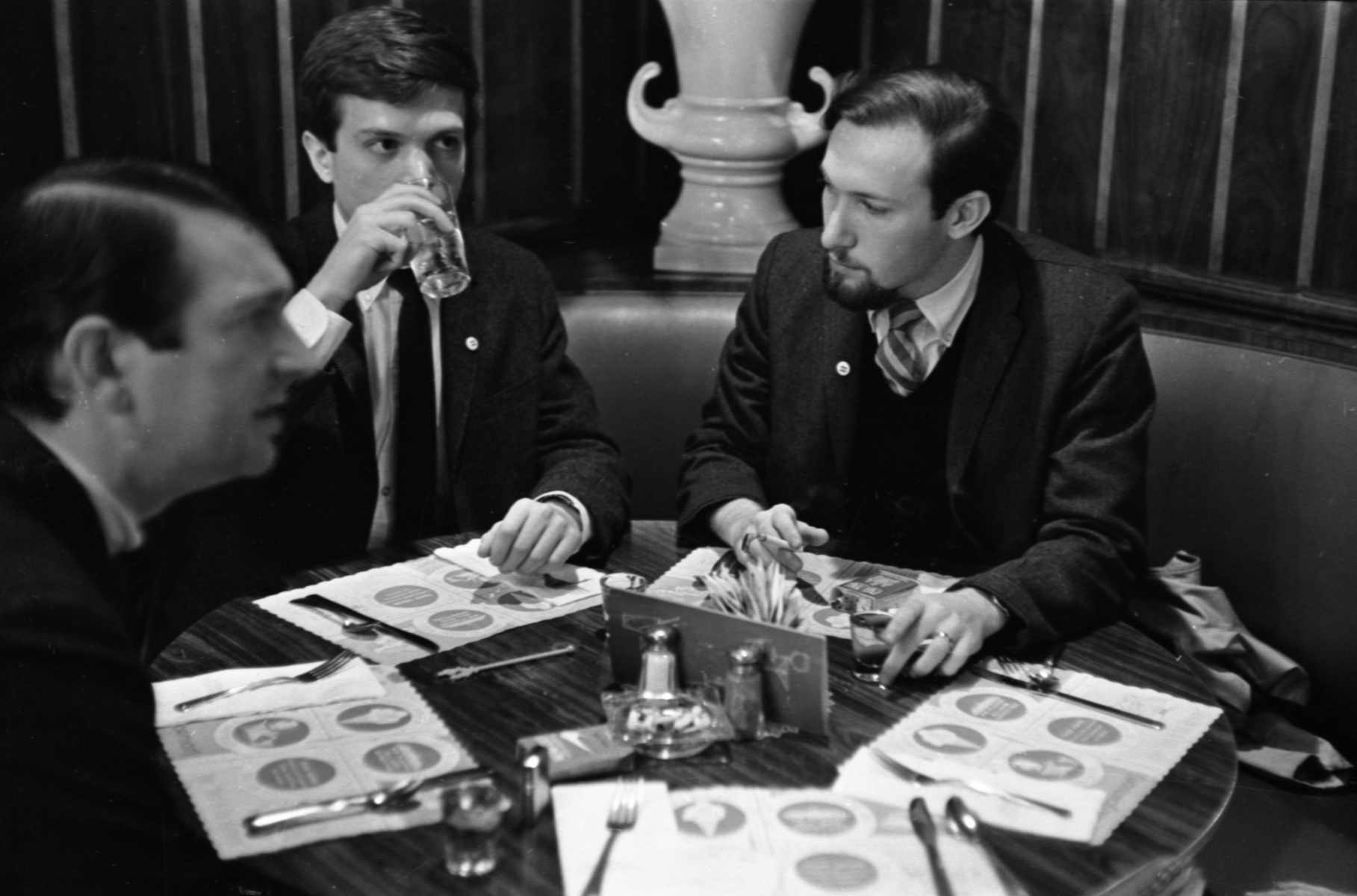
Mattachine Society members Dick Leitsch, Craig Rodwell, and John Timmons at Howard Johnson's, 415 Sixth Avenue, April 21, 1966. Gift of The Estate of Fred W. McDarrah.
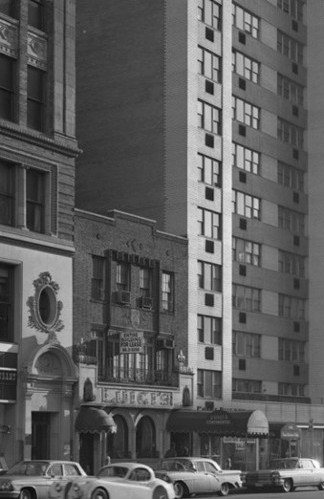
Third stop: The Waikiki at 432 Sixth Avenue in Greenwich Village, c. 1965. Photo by John Barrington Bayley. Courtesy of the NYC Landmarks Preservation Commission.
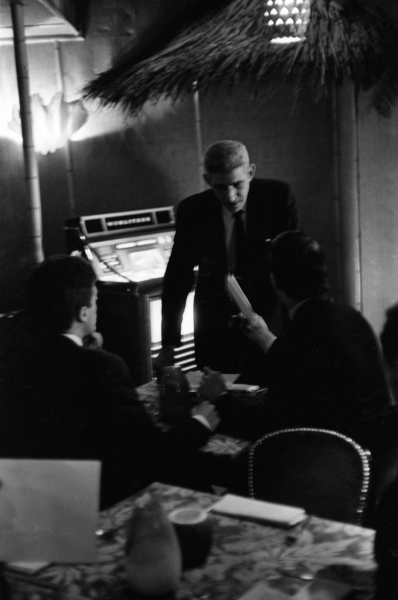
The manager (standing) of the Waikiki, 432 Sixth Avenue, speaking to the Mattachine Society members, April 21, 1966. Gift of The Estate of Fred W. McDarrah.
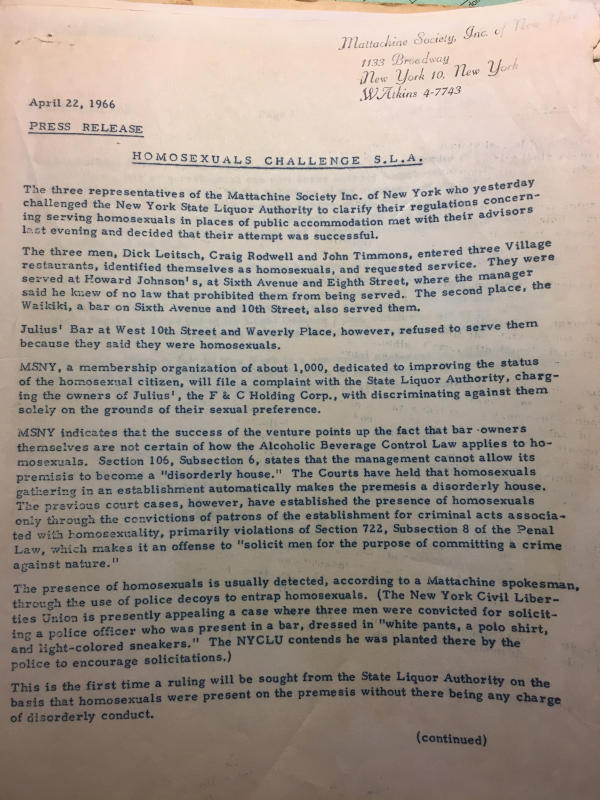
(1 of 2) Press release written by Craig Rodwell on April 22, 1966, following the action at Julius'. Courtesy of the Craig Rodwell Papers, The New York Public Library.
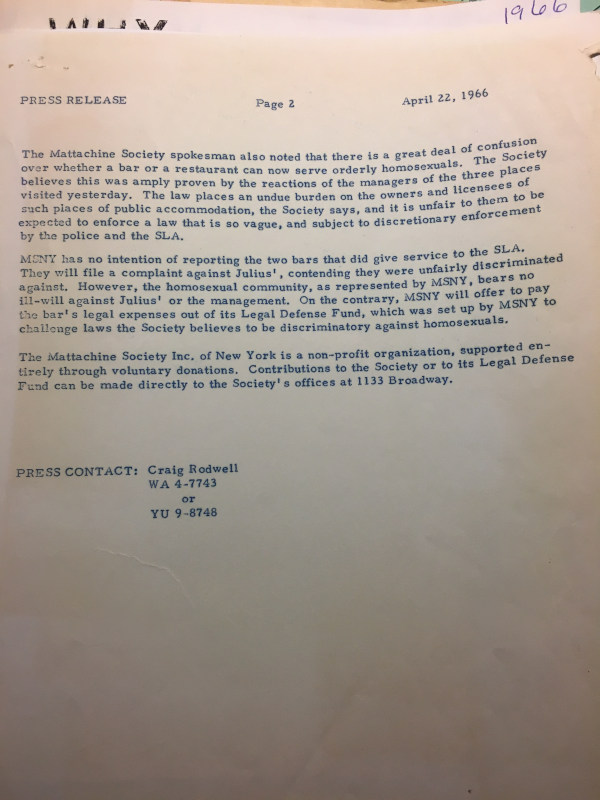
(2 of 2) Press release written by Craig Rodwell on April 22, 1966, following the action at Julius'. Courtesy of the Craig Rodwell Papers, The New York Public Library.
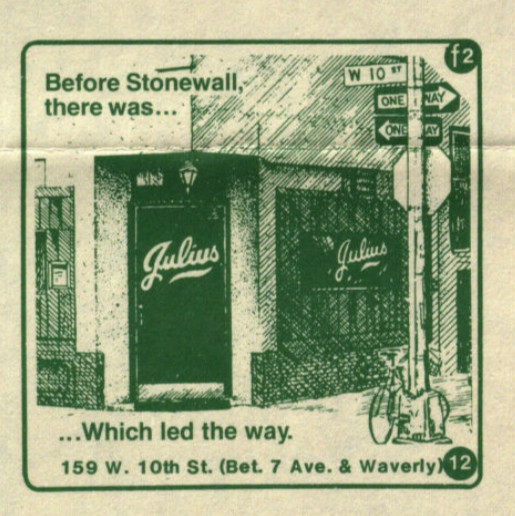
Julius' ad appearing in map of gay Manhattan businesses, 1980s. Source: Archives of Sexuality and Gender.
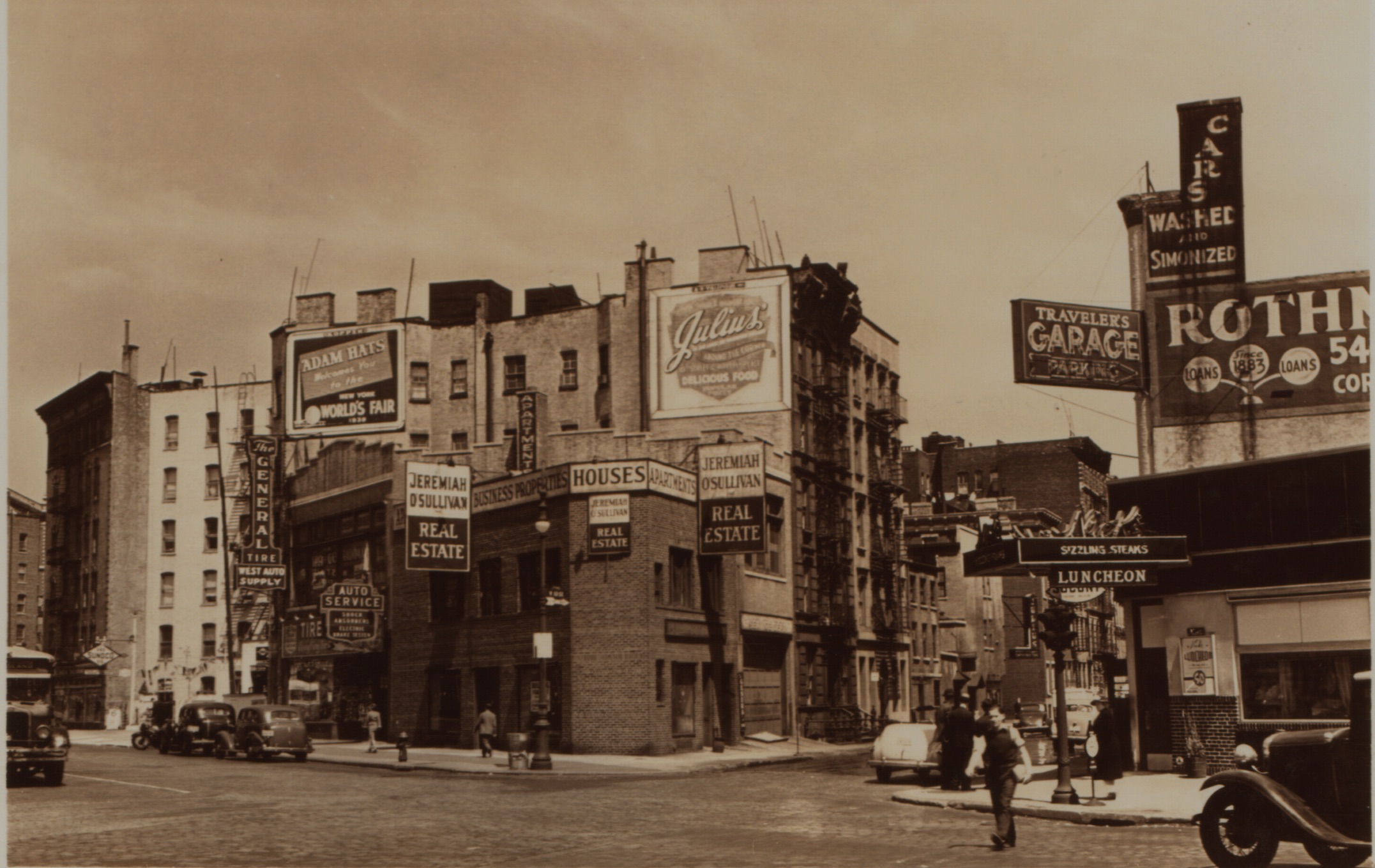
Looking northeast on Seventh Avenue at 10th Street with a painted advertisement for Julius' reading "Around the Corner...Serving Delicious Food," c. 1932. Courtesy of the New York Public Library.
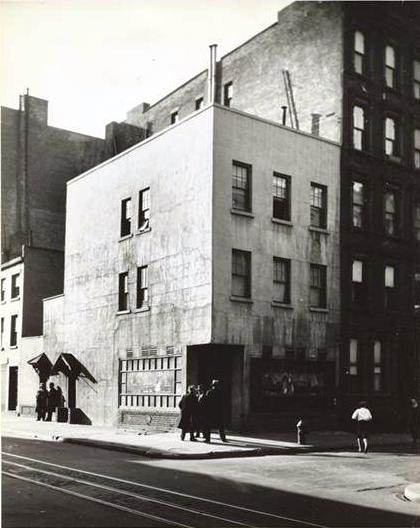
Exterior of the building, 1932. Courtesy of Ellen Williams via "Daytonian in Manhattan" blog.
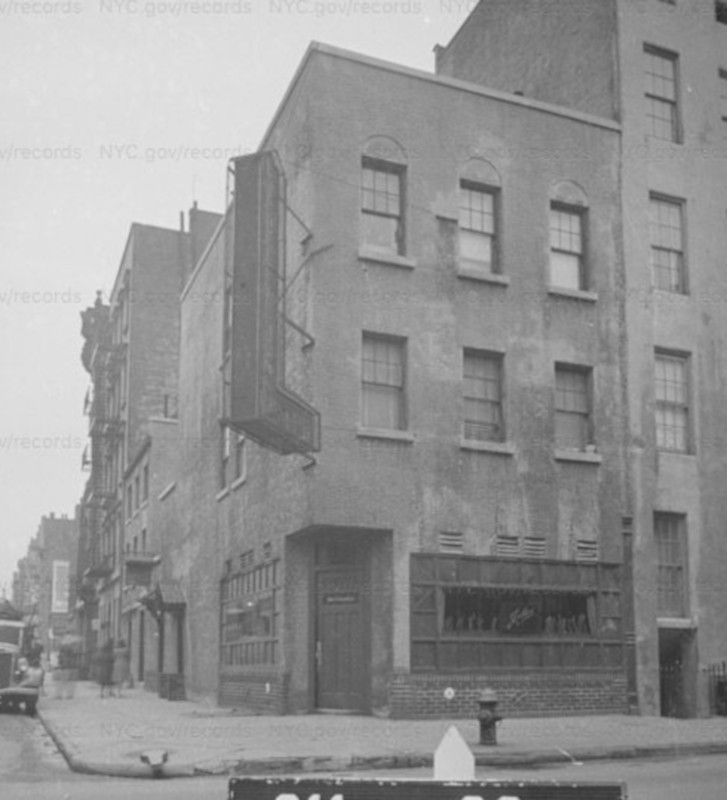
Tax photo of 159 West 10th Street, showing Julius' on the ground floor, c. 1939. Courtesy of the NYC Municipal Archives.
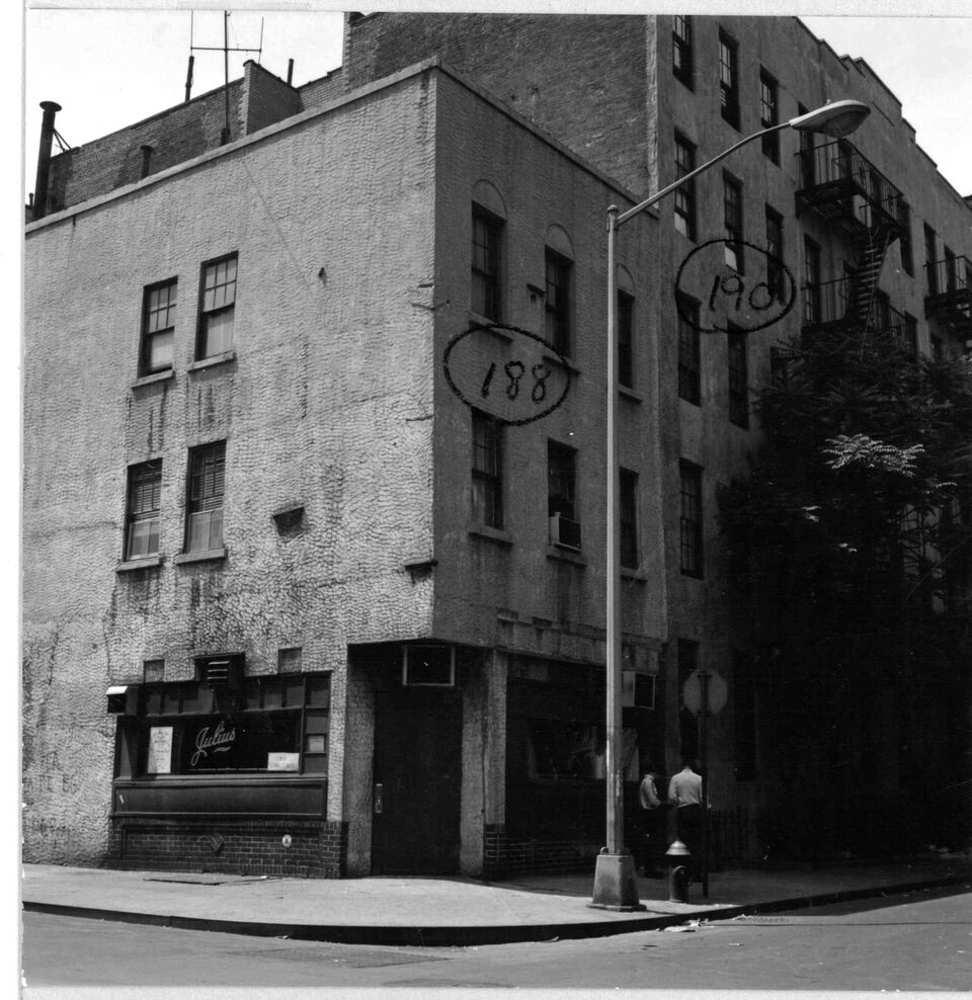
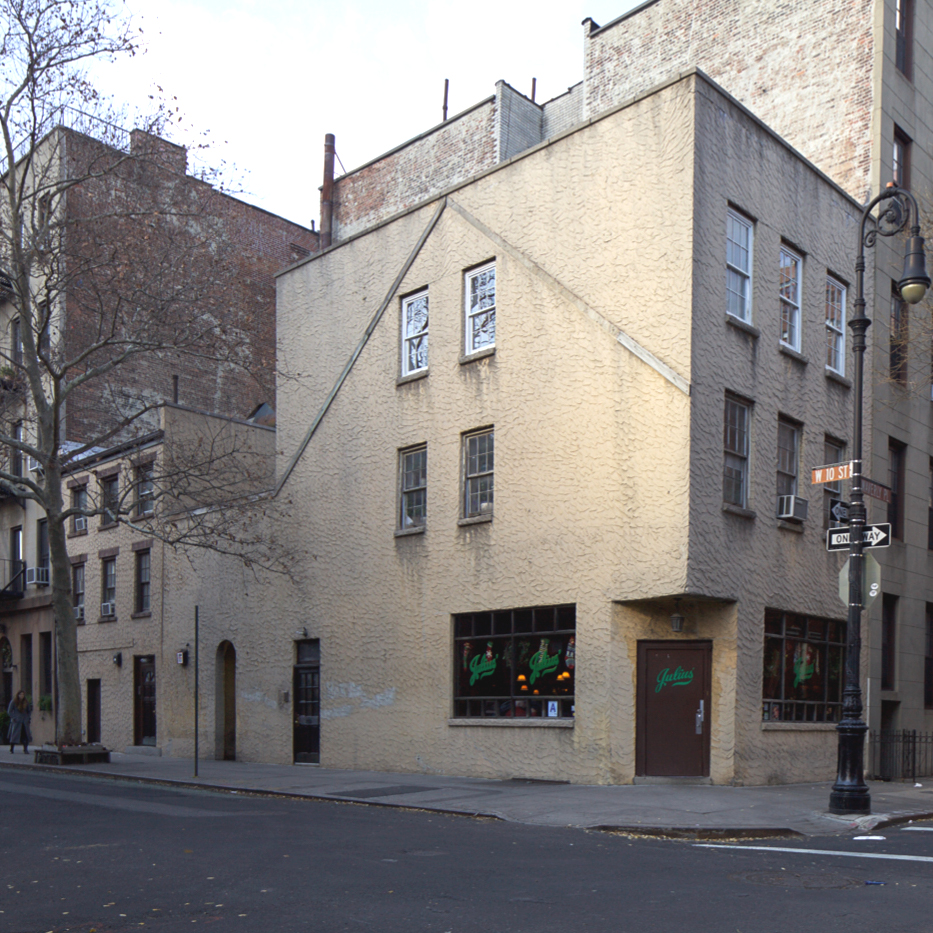
Exterior of the building, c. 1966-67. Photo by John Barrington Bayley. Courtesy of the NYC Landmarks Preservation Commission.
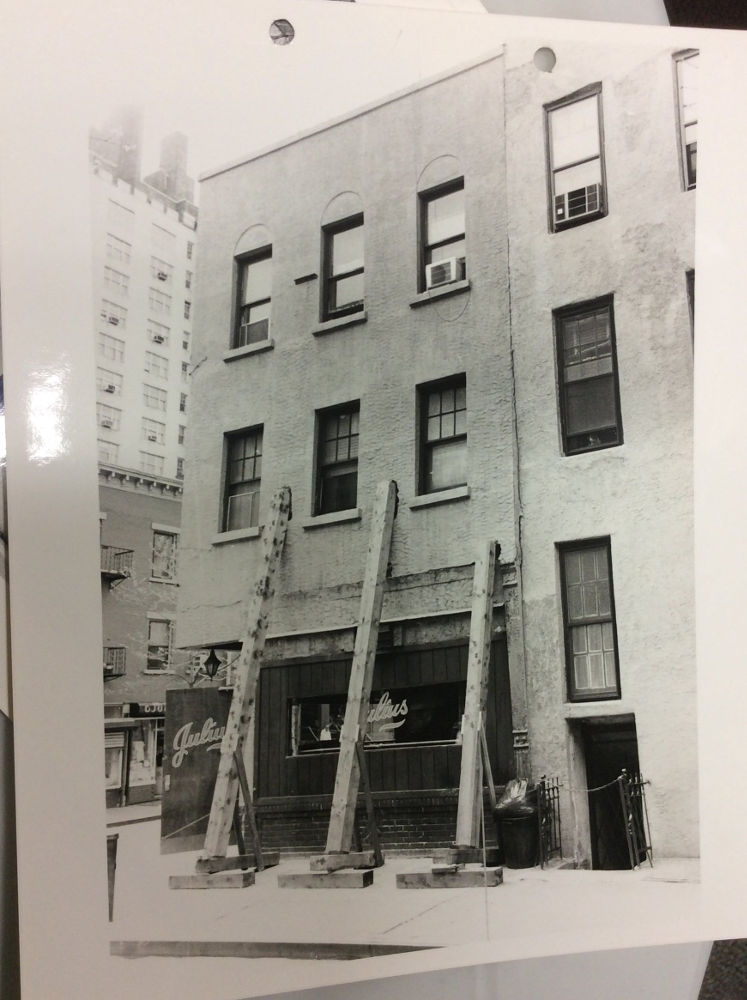
Exterior of the building, early 1980s. Courtesy of the NYC Landmarks Preservation Commission, building file.
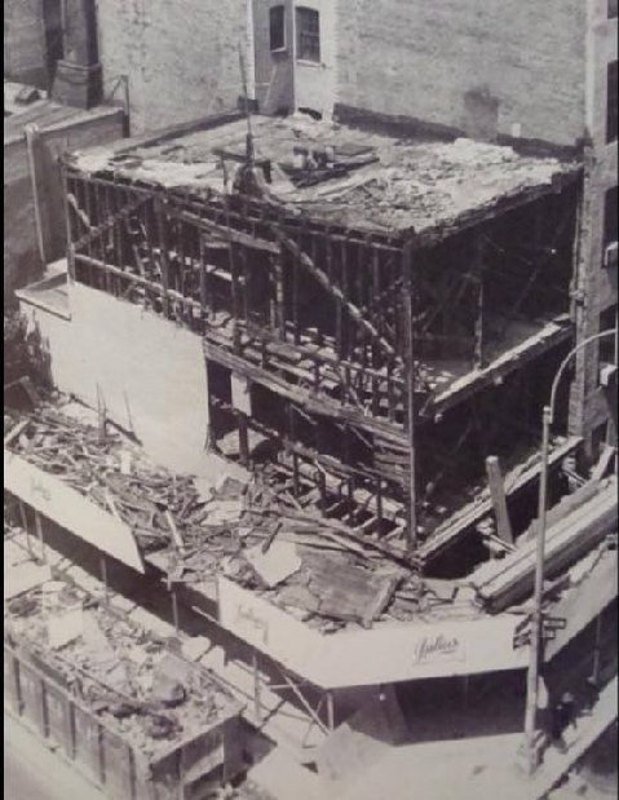
Deconstruction of the exterior to address structural issues, 1982. Julius' remained open. Photographer and source unknown.
History
There has been a bar on the corner of Waverly Place and West 10th Street since the mid-19th century. The name Julius’ dates from c. 1930 when the bar began to become popular with sports figures and other celebrities.
By about 1960, Julius’ began attracting gay men, although it was not exclusively a gay bar and some gay men did not feel welcomed by the staff. In 1964, Beth Bryant’s The Inside Guide to Greenwich Village discussed Julius’, using euphemisms that would have been understood by those in the know, noting that it “now attracts an amazing quantity of attractive men, theater notables.” In 1966, Petronius, the pseudonymous author of New York Unexpurgated described the scene at Julius’. Although this discussion is in a chapter with the contemptuous title, “The Fag World,” it is extremely knowledgeable about gay bars and other venues. The author notes “Couples in the back, mixed: mainly college boys in the front…Not always from gay universities, but ‘that way.’”
In the 1960s, it was illegal for a bar to serve a known homosexual. The State Liquor Authority (SLA), established in 1934 by the New York State Legislature following the end of Prohibition, required that all bars be licensed. A bar could lose its license if it permitted the premises to become “disorderly.” The SLA considered the mere presence of a homosexual to be disorderly and state courts upheld this ruling, leading to the closing of hundreds of gay bars from the 1930s through the 1960s, especially after gay men were entrapped by attractive plainclothes police officers. The SLA regulations were one of the primary governmental mechanisms of oppression against the gay community and they precluded the right to free assembly. The fact that Julius’ was a mixed bar in the 1960s and the fact that its gay patrons tended to dress and behave in a conservative manner may explain why this establishment avoided being shut down.
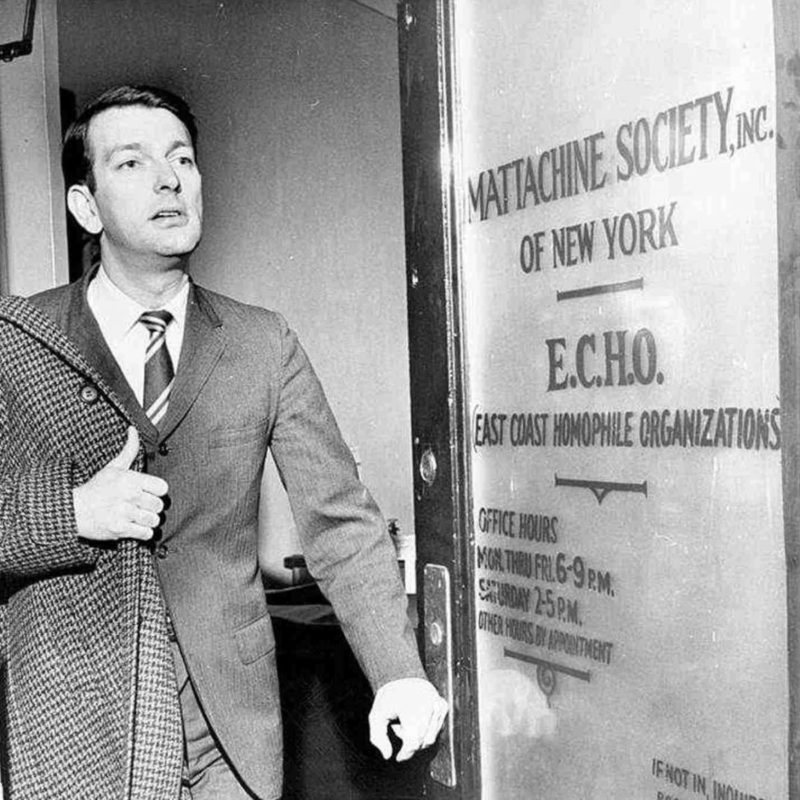
Inspired by the Black civil rights movement’s nonviolent efforts to change government policies, on April 21, 1966, a few members of the New York chapter of the Mattachine Society, an early national homophile group, organized an action to challenge the SLA’s rulings. What has come to be known as the “Sip-In” was a brilliantly conceived public relations effort led by Dick Leitsch, Craig Rodwell, and John Timmons, who planned on visiting a bar accompanied by newspaper reporters and photographers, hoping to gain publicity when the three conservatively dressed men (they wore jackets and ties) were denied drinks because they were gay; the New York Post reporter wrote that the three “were dressed like Madison Av. executives.”
The entourage met outside the Ukrainian-American Village Restaurant on St. Mark’s Place (notorious for its prominently displayed sign on the bar that said “if you are gay, please stay away”), but it had been warned about the action and closed. At their next two attempts, at a Howard Johnson’s and at the Hawaiian-themed Waikiki (where they were joined by activist Randy Wicker as witness), they announced that they were homosexuals, requested drinks, and were served.
Finally, they then moved on to Julius’. The Mattachine members were fairly certain that they would be denied drinks at Julius’, since the bar owners were litigating a case in court to contest the possible suspension of their liquor license because of a November 1965 disorderly conduct case where a patron was arrested for alleged solicitation. Thus, its management would be sensitive about serving gay men.
…when we walked in, the bartender put glasses in front of us, and we told him that we were gay and we intended to remain orderly, we just wanted service. And he said, hey, you’re gay, I can’t serve you, and he put his hands over the top of the glass.
The bartender’s action capturing discrimination was preserved in a now iconic image taken by Village Voice photographer Fred W. McDarrah.
News about the event appeared in the Village Voice (with a sympathetic and witty article), the New York Times (extremely negative) and the New York Post (guardedly positive), thus garnering the publicity about the unjust and inconsistently applied SLA rules that the Mattachine members had sought. The reaction by the SLA was to falsely deny that they ever forbade bars from serving homosexuals and stating that “it was up to bartenders to use their discretion in deciding whom to serve.”
The Sip-In at Julius’ was a key event pre-Stonewall leading to the growth of legitimate gay bars and the development of the bar as the central social space for urban gay men and lesbians.
Landmark Designations for LGBT Significance
In April 2016, through the NYC LGBTQ Historic Sites Project’s extensive research and writing, Julius’ was listed on the National Register of Historic Places by the U.S. Department of the Interior, following the site’s listing, in December 2015, on the New York State Register of Historic Places. In December 2022, based on recommendations by the Project, the NYC Landmarks Preservation Commission (LPC) designated Julius’ a New York City Landmark. The National Register report, LPC designation report, and Project testimony are available in the “Read More” section below.
Entry by Andrew S. Dolkart, project director (March 2017; last revised March 2026).
NOTE: Names above in bold indicate LGBT people.
Building Information
- Architect or Builder: Unknown
- Year Built: 1826
Sources
Beth Bryant, The Inside Guide to Greenwich Village, Winter-Spring 1964-1965 (New York: Oak Publications, 1964). [quote, p7]
Charles Grutzner, “S.L.A. Won’t Act Against Bars Refusing Service to Deviates,” The New York Times, April 26, 1966. [source of Times quote]
David Carter, Stonewall: The Riots that Sparked the Gay Revolution (New York: St. Martin’s Griffin, 2004).
Jack Lait and Lee Mortimer, New York Confidential: The Lowdown on the Big Town (Chicago: Ziff-Davis Publishing Co., 1948).
Jay Levin, “Homosexuals Plan a Legal Crusade,” New York Post, April 22, 1966. [source of Post quote]
John D’Emilio, Sexual Politics, Sexual Communities: The Making of a Homosexual Minority in the United States, 1940-1970 (Chicago: University of Chicago Press, 1983; second edition, 1998).
Lucy Komisar, “Three Homosexuals in Search of a Drink,” The Village Voice, May 3, 1966, 15. [source of Komisar pull quote]
Petronius (pseud.), New York Unexpurgated (New York: Matrix House, 1966). [quote, p103]
Scott Simon, “Remembering a 1966 ‘Sip-In’ for Gay Rights,” NPR, June 28, 2008, n.pr/1kQ69t2. [source of Leitsch pull quote]
Thomas Johnson, “3 Deviates Invite Exclusion by Bars,” The New York Times, April 22, 1966, 43.
Do you have more information about this site?
This project is enriched by your participation! Do you have your own images of this site? Or a story to share? Would you like to suggest a different historic site?