German-American Steuben Parade
overview
The first German-American Steuben Parade, celebrating German American heritage, was held in 1958. Named for the hero of the American Revolution, Baron Friedrich Wilhelm Augustus von Steuben, it inadvertently honors a gay man of the 18th century.
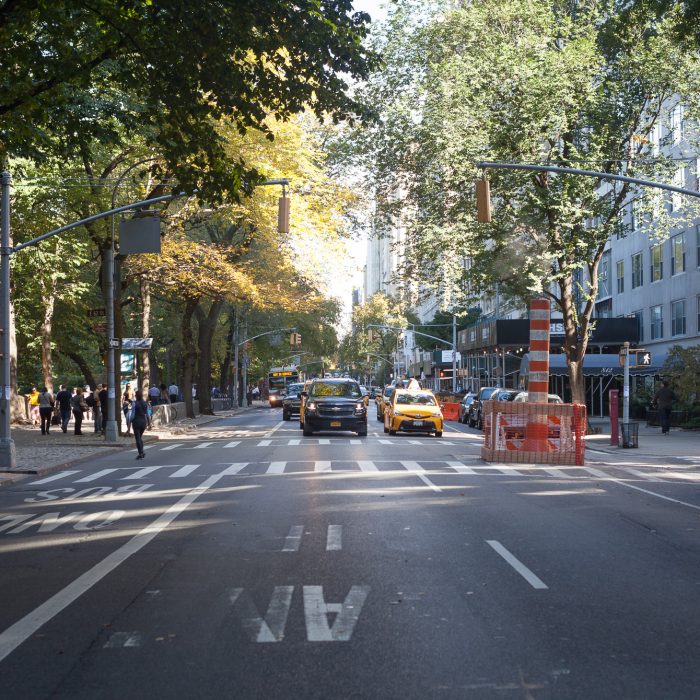
Starting at East 61st Street, the parade marched up Fifth Avenue and turned onto East 86th Street into Yorkville.
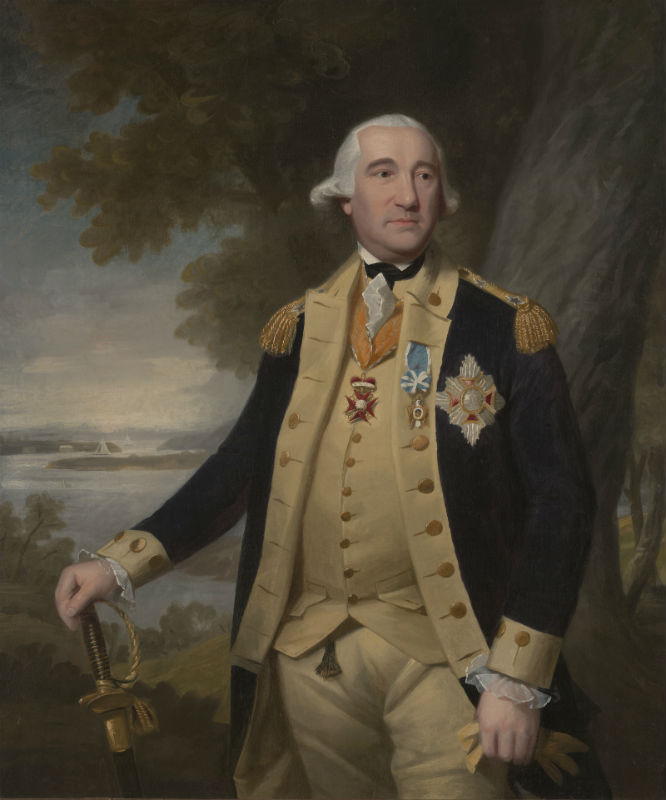
Major General Friedrich Wilhelm Augustus, Baron von Steuben by Ralph Earl, c 1786. Source: Yale University Art Gallery.
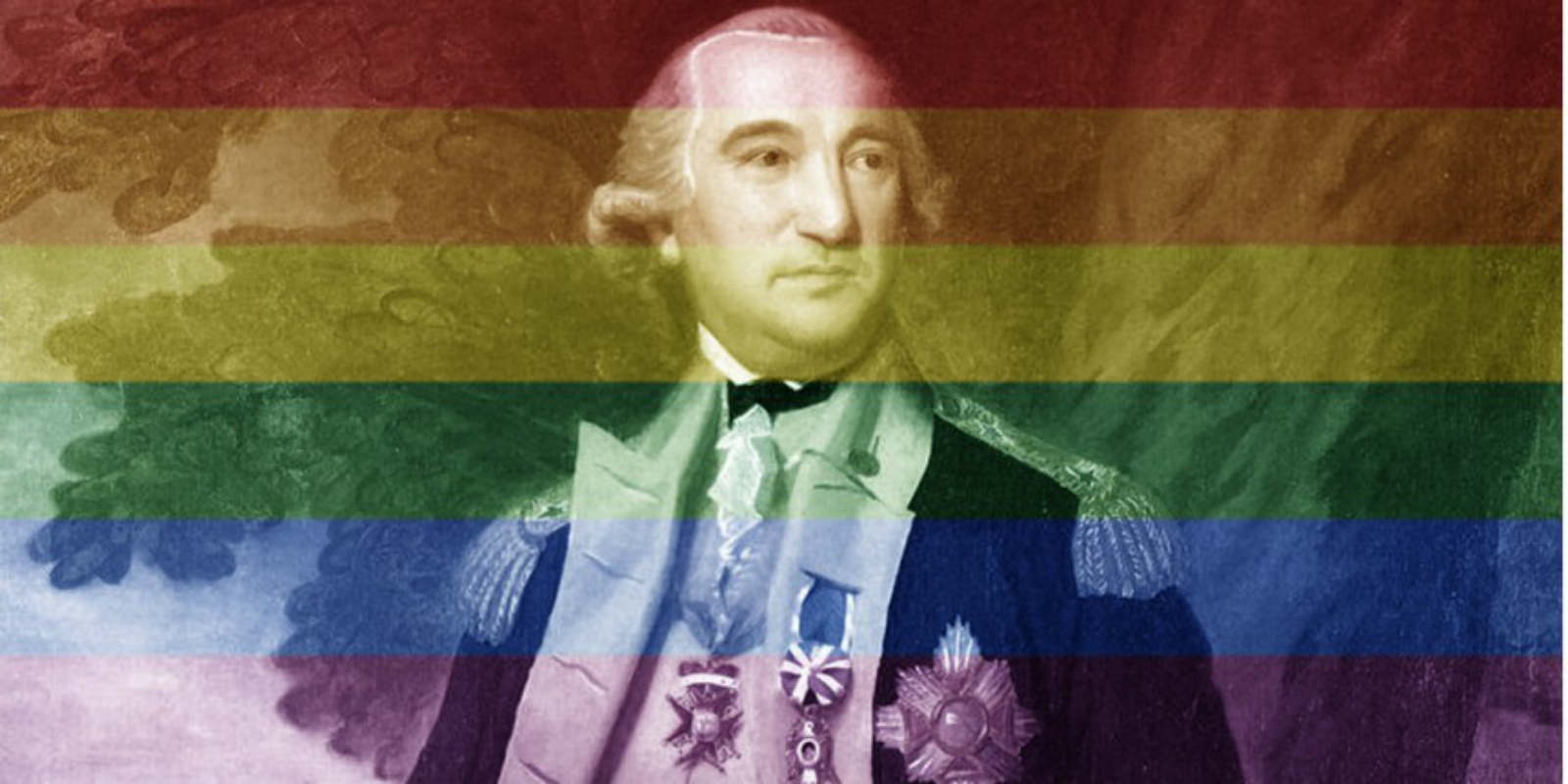
Rainbow Baron von Steuben. Source: LGBT Germany.
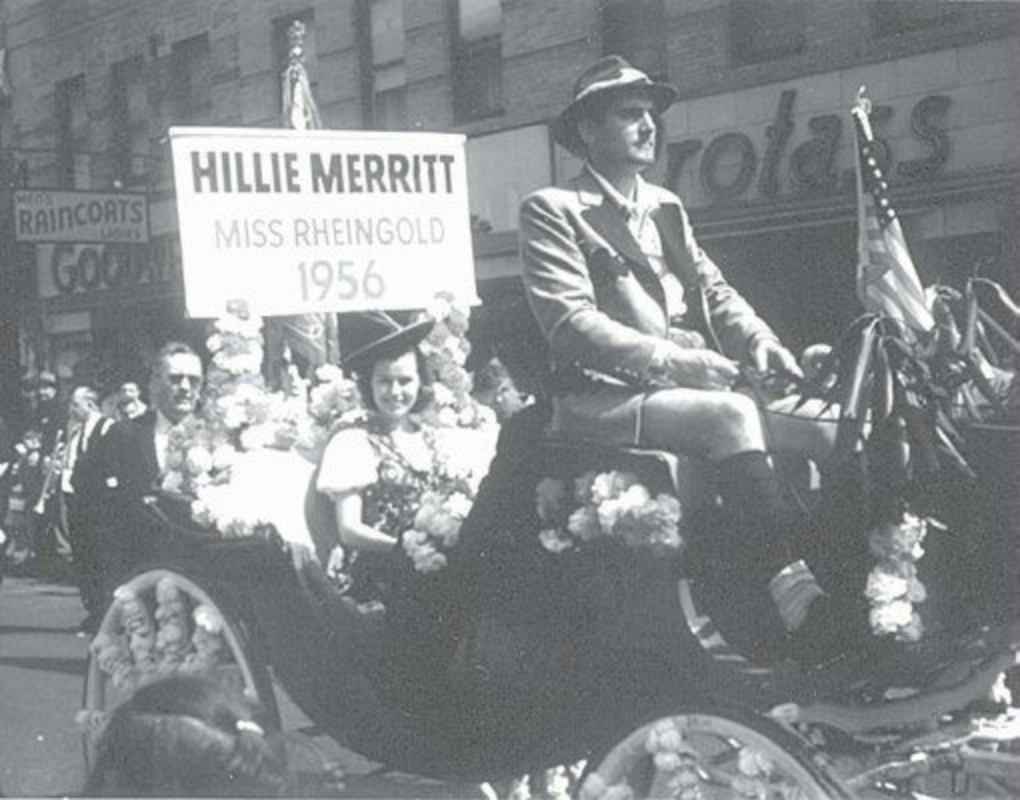
The German-American Parade in Ridgewood, Queens, 1957. Source unknown.
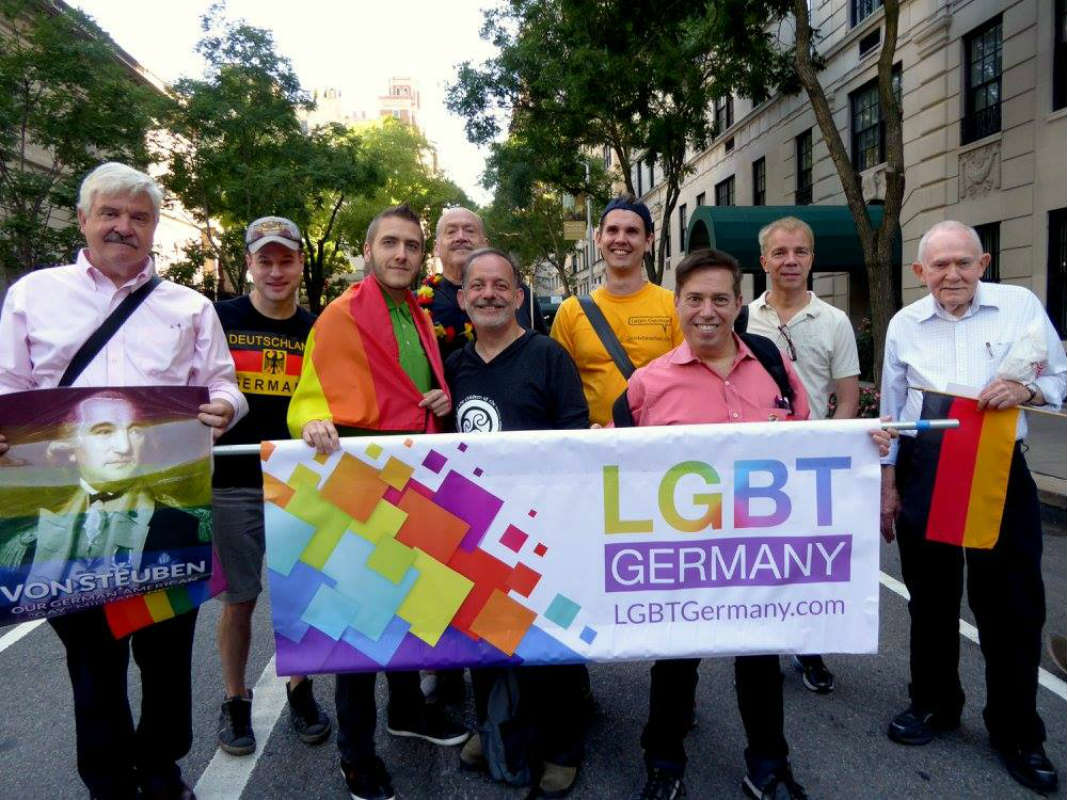
LGBT Contingent in the German-American Steuben Parade, September 17, 2016. Photo by Jon Nalley. Source: LGBT Germany.
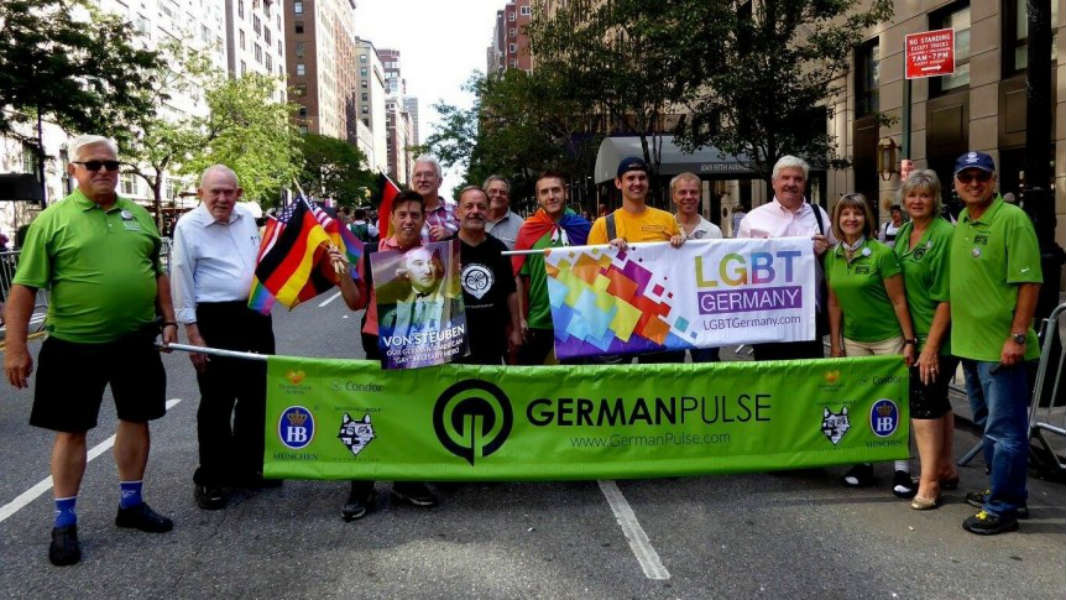
LGBT Contingent in the German-American Steuben Parade, September 17, 2016. Photo by Jon Nalley. Source: LGBT Germany.
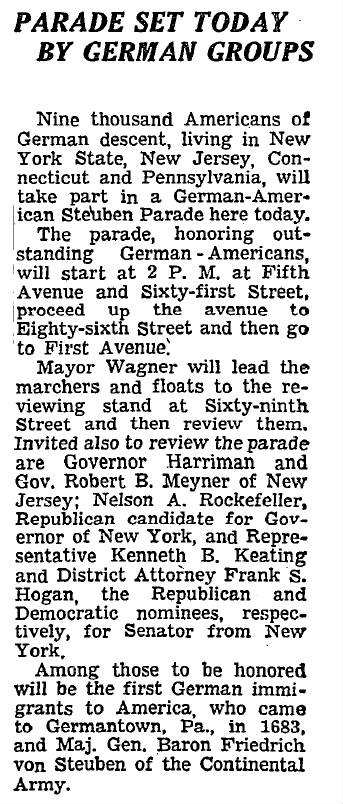
Article on the first German-American Steuben Parade, appearing in the New York Times, September 20, 1958.
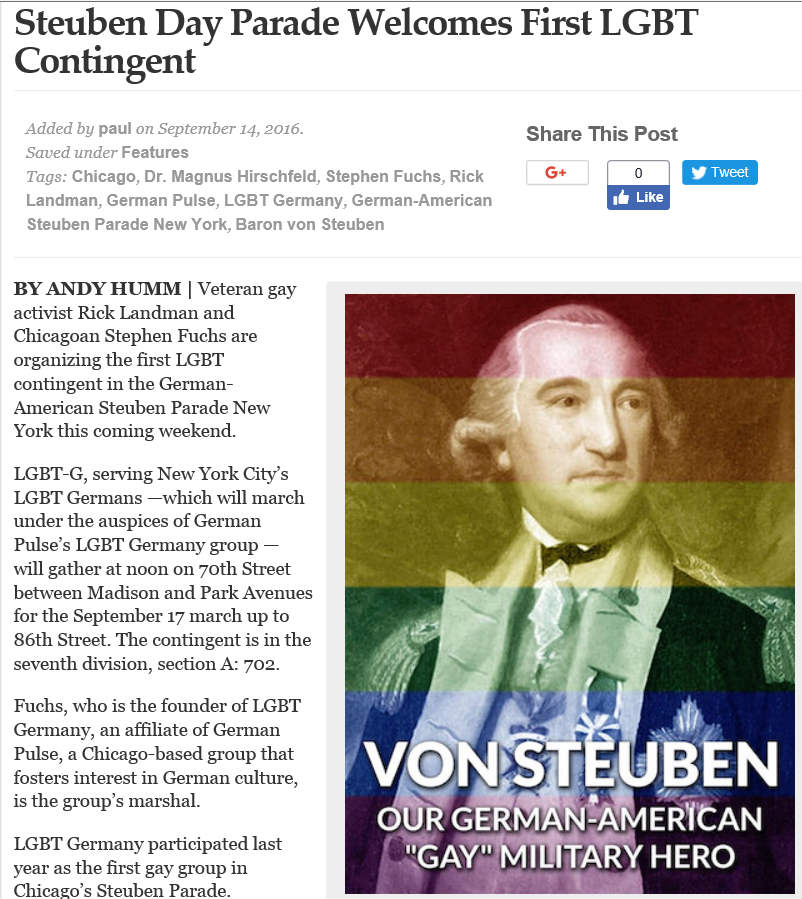
Article on the first LGBT contingent in the German-American Steuben Parade, appearing in Gay City News, September 14, 2016.
History
By the mid-19th century, New York City had the third largest German-speaking population of any city in the world, which was roughly one quarter of New York’s total population. The German community had a highly significant cultural and economic impact on many aspects of the life of the city. During World War I, however, German Americans came under severe attack, and their loyalty as Americans was questioned. What vestiges of German American culture in the city that lingered were virtually eliminated by the realities of World War II.
By the late 1950s, the German American community in the metropolitan area wanted a holiday to celebrate its heritage, after decades of not being able to openly do so. The first German-American Parade was held in 1957 on Myrtle Avenue in Ridgewood, Queens. The decision was made to move the parade the following year to Yorkville, a historically German immigrant neighborhood, in Manhattan. Desiring to name the September event for a prominent German-American, the organizers selected the birthday of Baron Friedrich Wilhelm Augustus von Steuben (1730-1794), a hero of the American Revolution. The German-American Steuben Parade thus inadvertently honors a gay man of the 18th century.
In 1763, after 17 years in the Prussian military, von Steuben was dismissed, possibly due to the scheming of a rival. After service elsewhere, he attempted to join the army again in 1777, but an anonymous complaint was filed alleging his homosexuality. (Many historians today agree that von Steuben was, in fact, homosexual). In Paris that year, he met Benjamin Franklin, who, though likely aware of these rumors, knew that George Washington was desperate for an officer to assist in instilling discipline and training in the rag-tag Continental Army. Franklin provided von Steuben with letters of introduction to Washington and leaders of the American Congress. Von Steuben began his service at Valley Forge and was made an inspector general in 1778 by Washington. He succeeded in instilling discipline in the soldiers, developing one standard of drills for the troops, and raising morale. In 1779 he codified his regulations into a training manual. Von Steuben’s service is widely credited as a critical factor in the American army winning the Revolutionary War. After the war, von Steuben became an American citizen and first moved to Manhattan, and was later awarded a pension and properties in New Jersey and New York State.
The first German-American Steuben Parade in 1958, starting at East 61st Street, marched up Fifth Avenue and turned onto East 86th Street. New York’s parade, the largest in the United States celebrating German heritage, follows a similar route today. The first LGBT contingent marched in September 2016 under the banners of LGBT Germany and German Pulse.
Entry by Jay Shockley, project director (September 2018, last revised December 2025).
NOTE: Names above in bold indicate LGBT people.
Sources
“About the Parade,” German-American Steuben Parade New York, bit.ly/2QsCjQf.
Andy Humm, “Steuben Day Parade Welcomes First LGBT Contingent,” Gay City News, September 14, 2016.
Erick Trickey, “The Prussian Nobleman Who Helped Save the American Revolution,” Smithsonian, April 26, 2017.
Erin Blakemore, “The Revolutionary War Hero Who Was Openly Gay,” History, June 14, 2018 (updated January 31, 2025), bit.ly/4pkU83E.
“Friedrich Wilhelm von Steuben, Gay Revolutionary War Hero,” homohistory.com, May 24, 2014.
Harry Schenawolf, “Baron Von Steuben: Gay Warrior Who Taught Washington’s Army How to Fight,” Revolutionary War Journal, July 25, 2015.
“LGBT History Month: Baron Friedrich Wilhelm von Steuben: Gen. Washington’s ‘Don’t Ask, Don’t Tell’ Case,” Philadelphia Gay News, Oct. 25, 2012.
Petula Dvorak, “Was this Revolutionary War hero America’s first openly gay general?,” Washington Post, June 20, 2025.
Richard Bell, “The Underappreciated True Story of the Brash Prussian Military Officer Who Whipped the Patriots Into Shape at Valley Forge,” Smithsonian, September-October 2025.
Do you have more information about this site?
This project is enriched by your participation! Do you have your own images of this site? Or a story to share? Would you like to suggest a different historic site?