Spivy’s Roof
also known as Spivy’s Night Club or La Vache sur le toit ("The Cow on the Roof")
overview
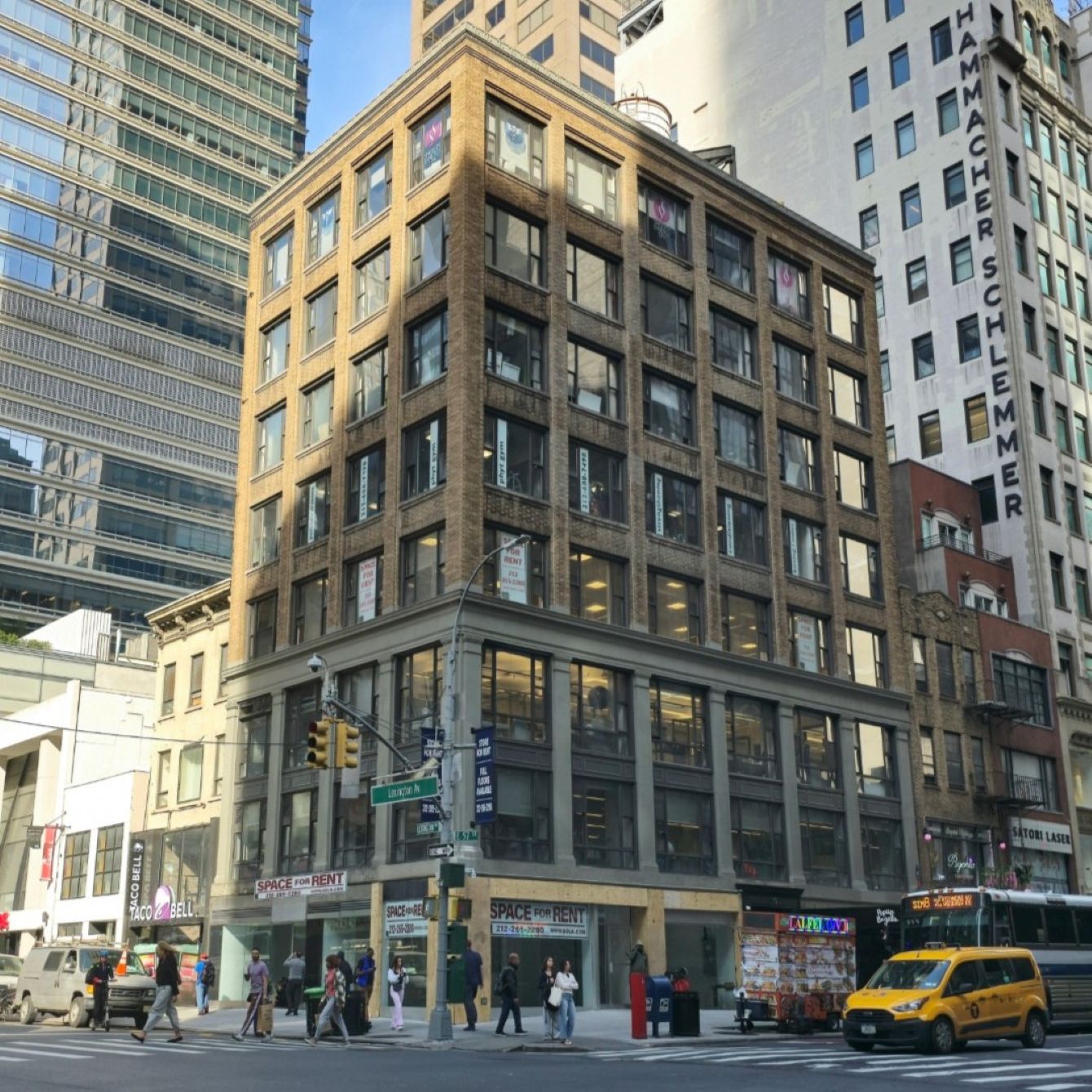
Spivy, a Jewish lesbian chanteuse, owned and operated a popular Midtown Manhattan nightclub called Spivy’s Roof in the terraced penthouse of this nine-story office building from 1940 until 1951.
Spivy’s Roof was a tolerant space for LGBTQ people, and it hosted many performers who were LGBTQ, including Arthur Blake, John Bernard Myers, Judy Holliday, Patsy Kelly, Paul Lynde, and Liberace.
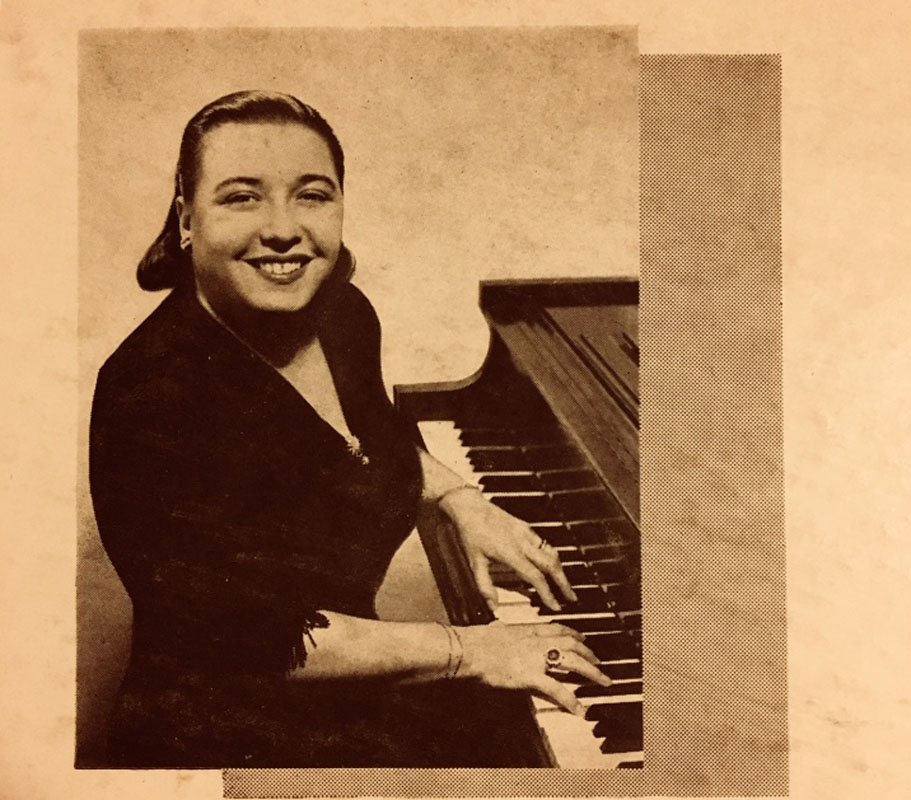
Promotional photo of Spivy used on some versions of the album cover for Seven Gay Sophisticated Songs by Spivy (1939). Photographer and source unknown.
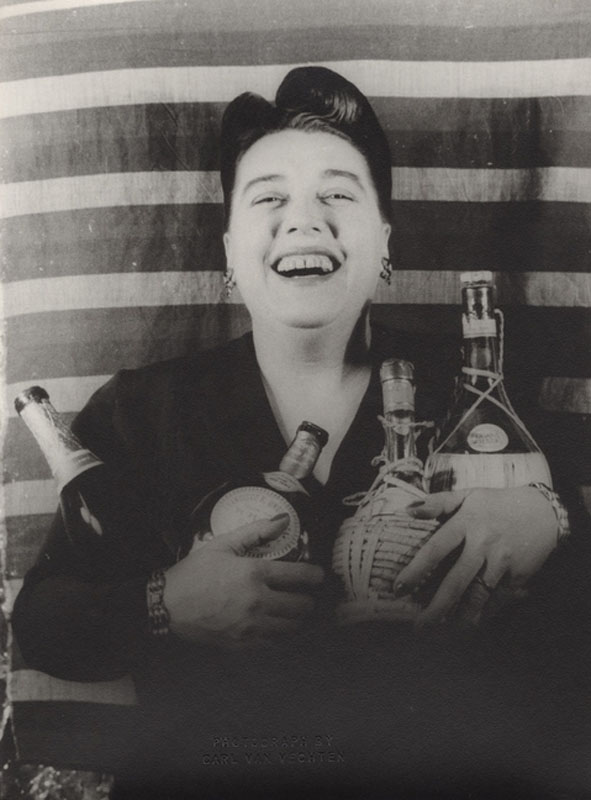
Portrait of Madame Spivy by Carl Van Vechten, 1944. © Van Vechten Trust. Source: Beinecke Rare Book and Manuscript Library, Yale University.
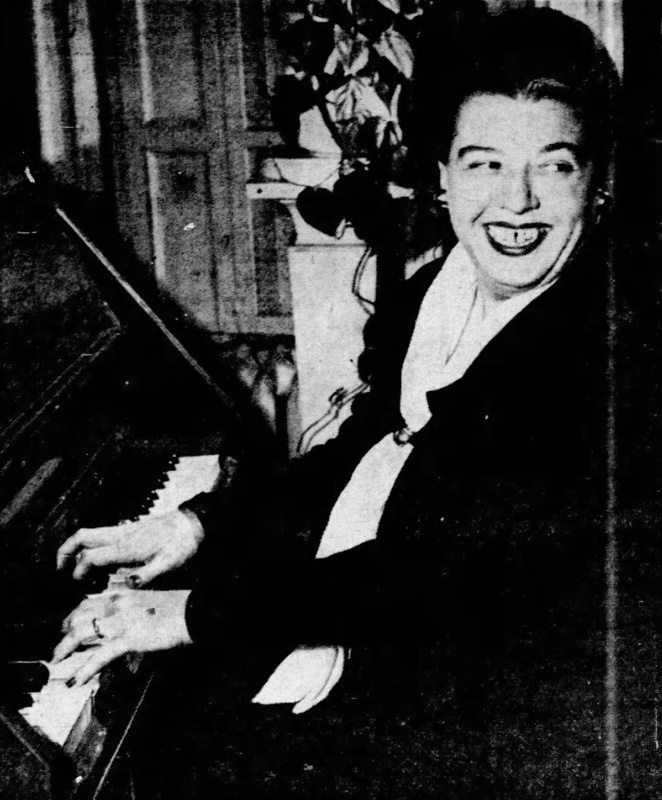
Spivy playing the piano in her apartment at 70 East 56th Street (demolished), 1948. Source: World Wide Photo.
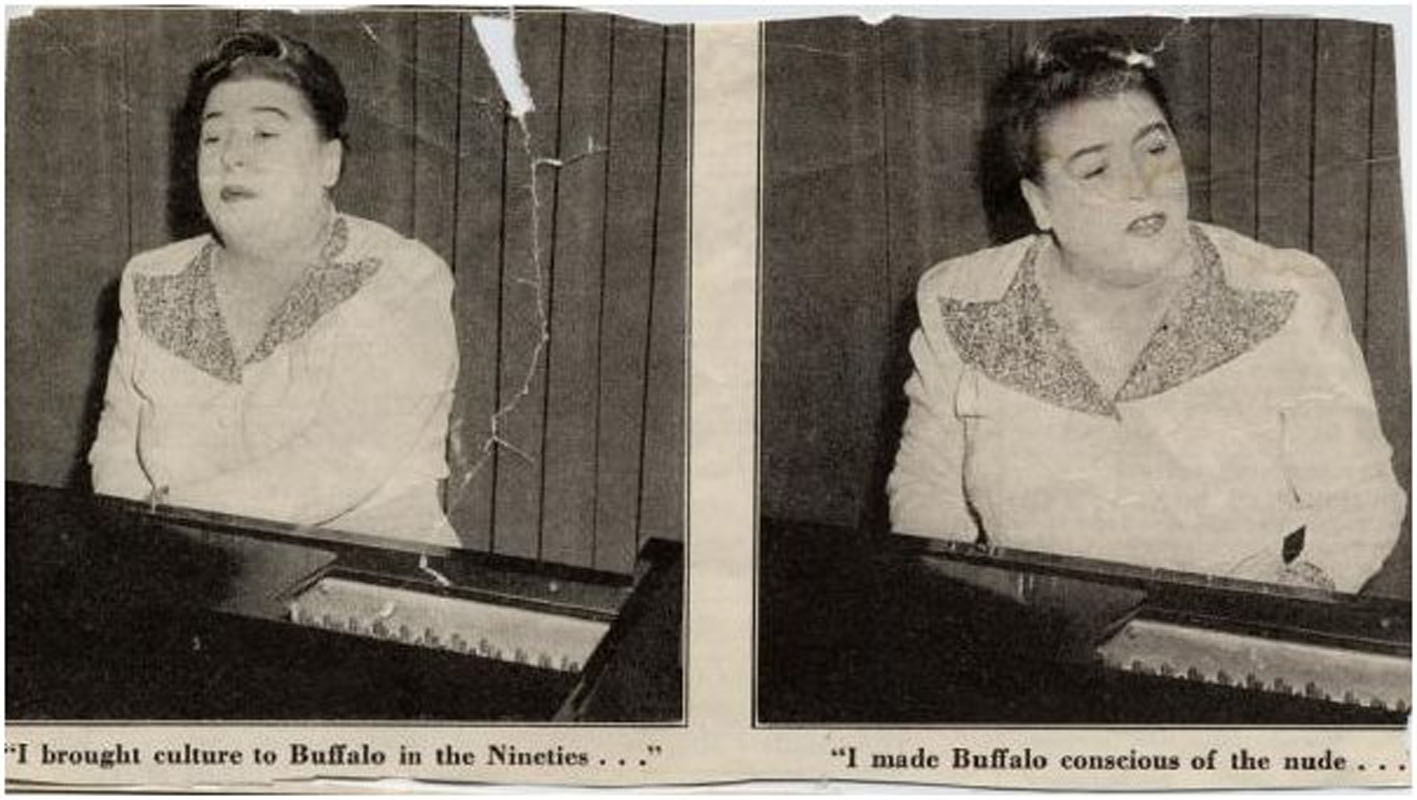
Newspaper clipping showing Spivy performing one of her most popular songs, “I Brought Culture to Buffalo in the 90s,” n. d. Photographer and source unknown.
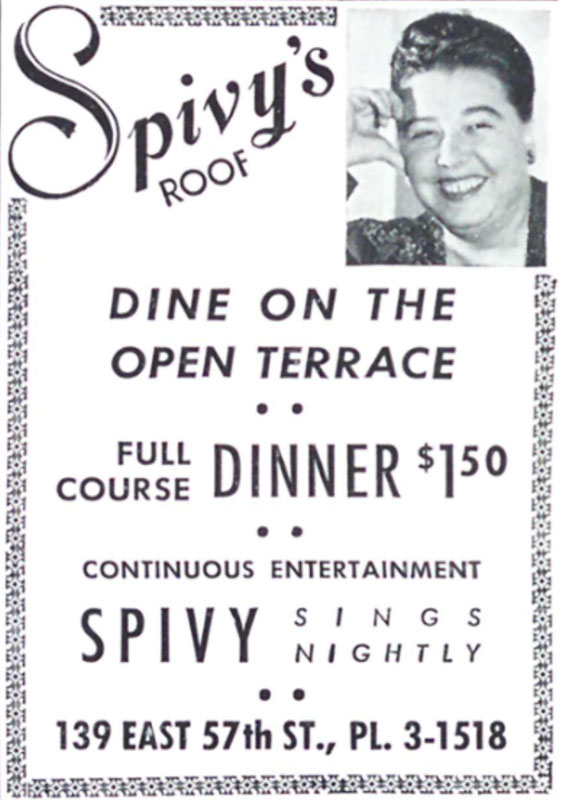
Ad for Spivy’s Roof, 1941. Source: Esquire Magazine, June 1, 1941.
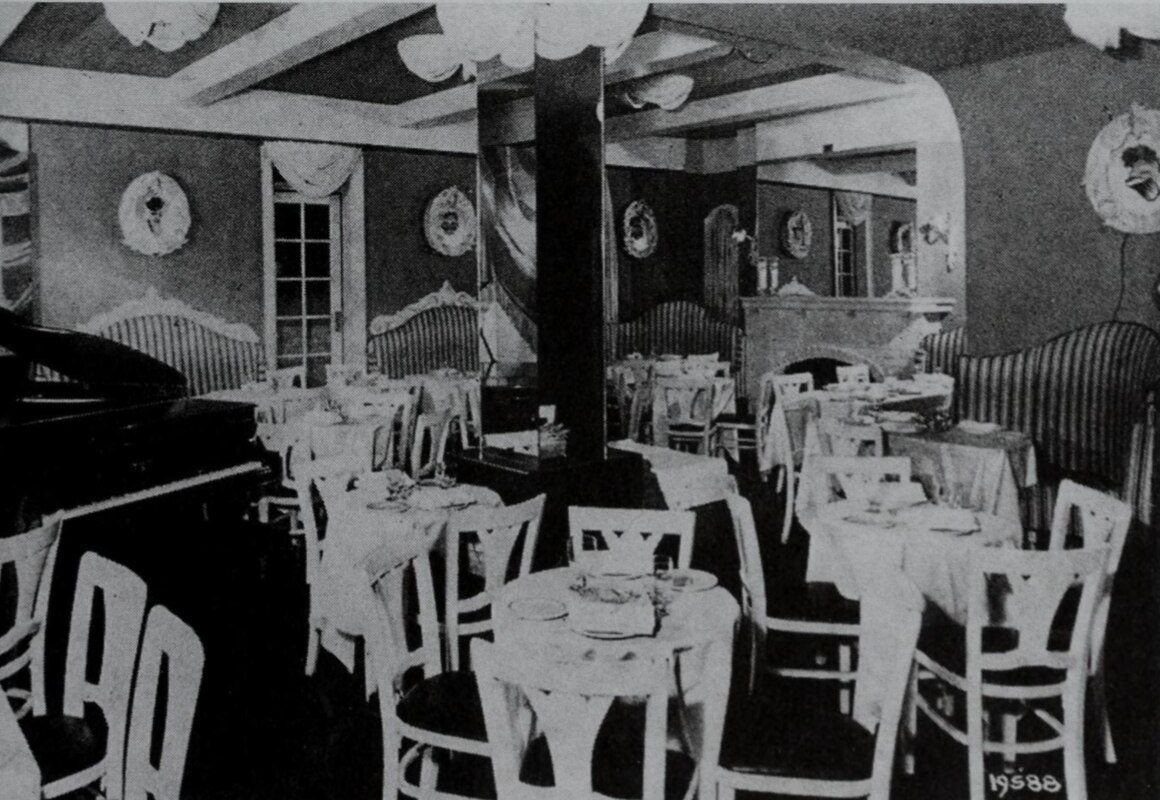
Interior of Spivy's Roof, with Jack Eisner's sculpted paper caricature of comic and actress Martha Raye at the right, 1942. Photographer unknown. Source: Interior Design and Decoration 18, no. 2.

Jack Eisner's sculpted paper caricature of First Lady Eleanor Roosevelt, similar to those Eisner created for Spivy's Roof. Source: Mechanix Illustrated 39, no. 6.
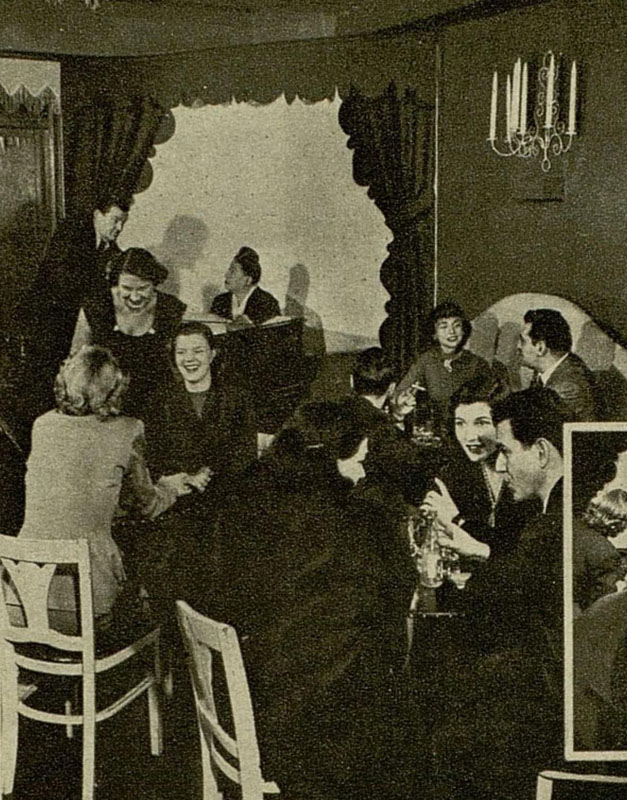
Interior of Spivy’s Roof, with Spivy sitting at the piano, during a party for the cast of the radio show Big Town, 1949. Photo by Ike Vern. Source: Liberty Magazine.
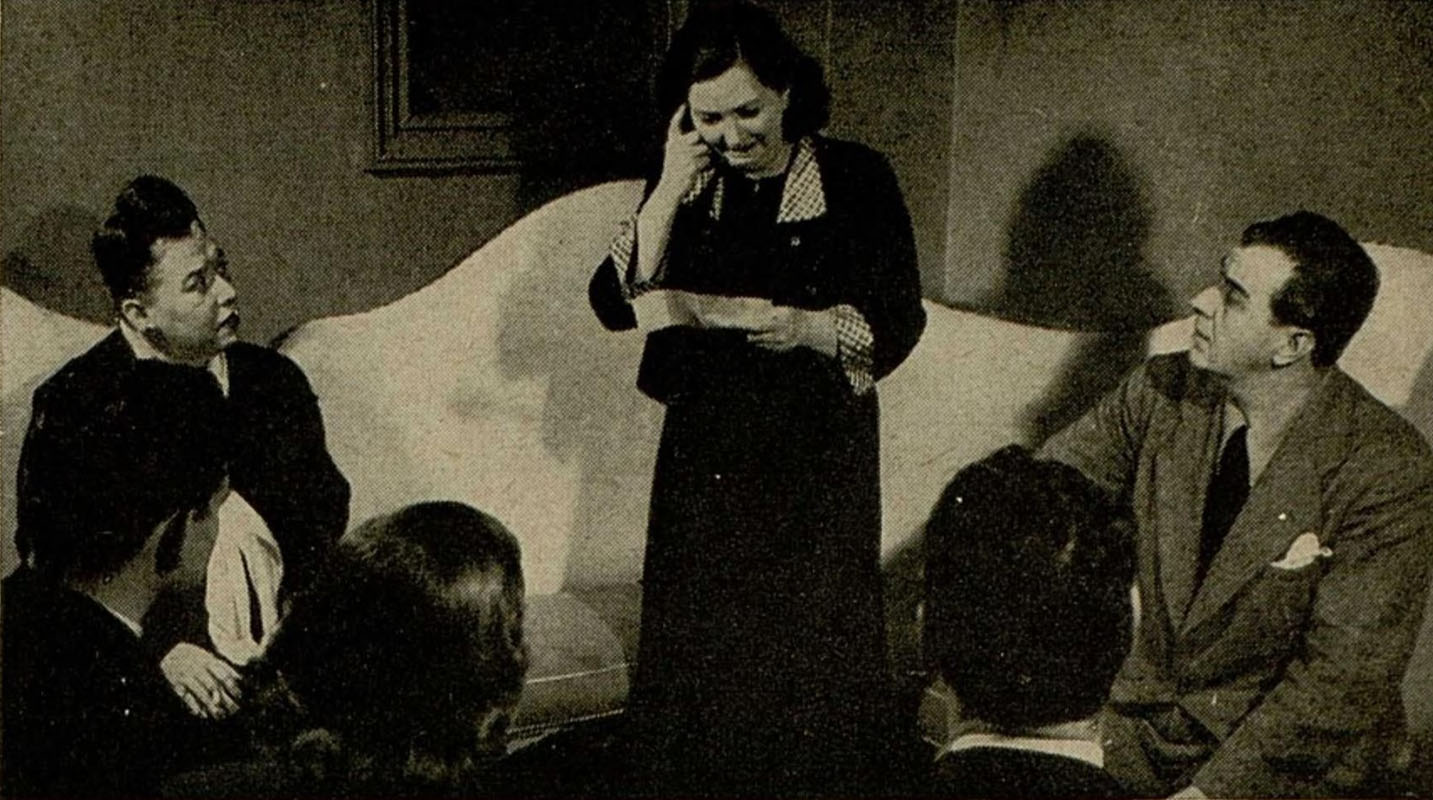
Patsy Kelly (standing) in Spivy’s Roof during a party for the cast of the radio show Big Town, 1949. Photo by Ike Vern. Source: Liberty Magazine.
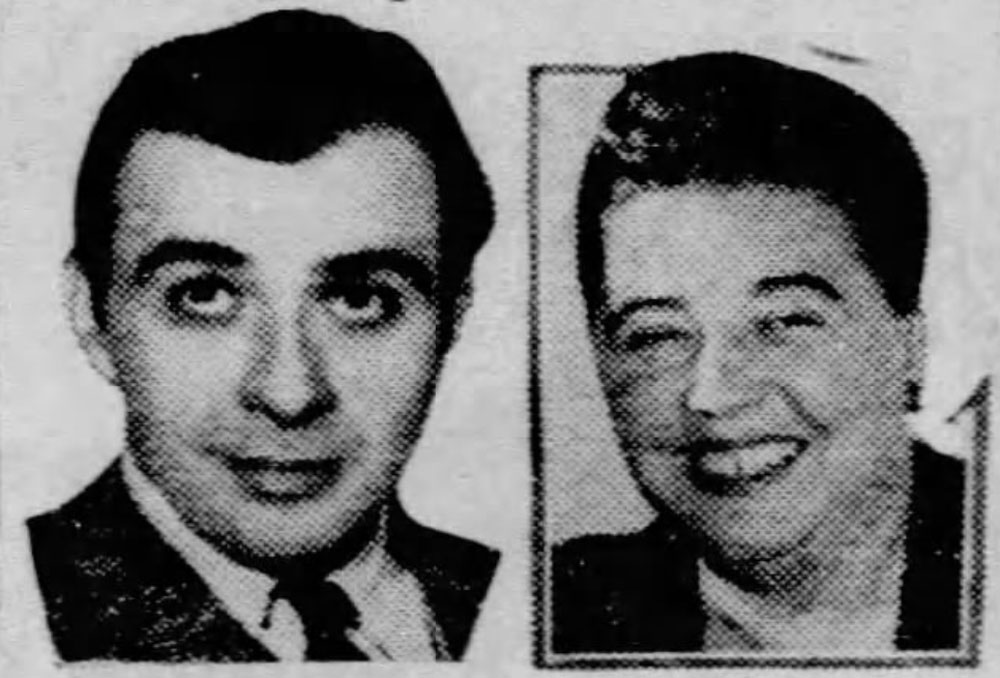
Fred Keating (left) and Spivy (right) in an article about a Merchant Marine Canteen Show they hosted weekly at the Hotel George Washington, 23 Lexington Avenue. Source: Daily News, October 14, 1942.
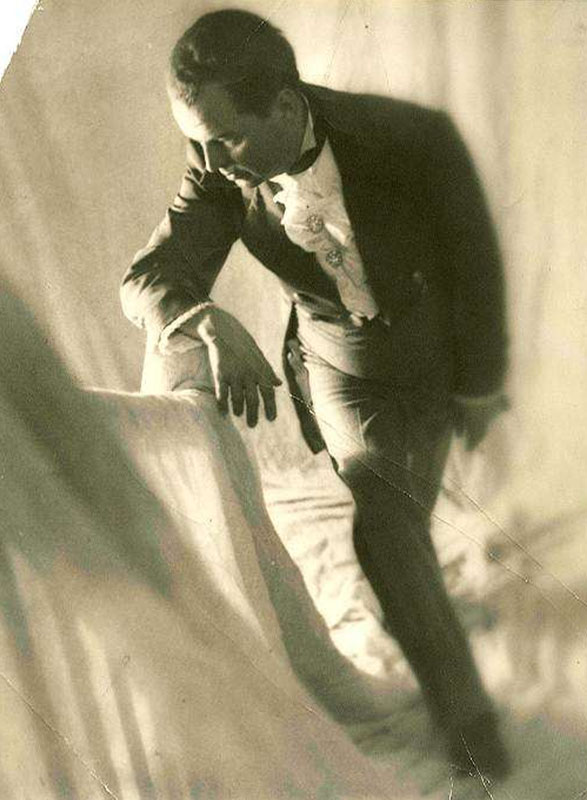
George Freedley, Director of the Arts Project of Cherry Grove, dressed as the character Artaud from Hamilton Forrest’s opera Camille (1929) in the only known photograph from the Halloween Costume Party at Spivy’s Roof, 1948. Photo by Richard Avedon. Courtesy of the Billy Rose Theatre Division, The New York Public Library.
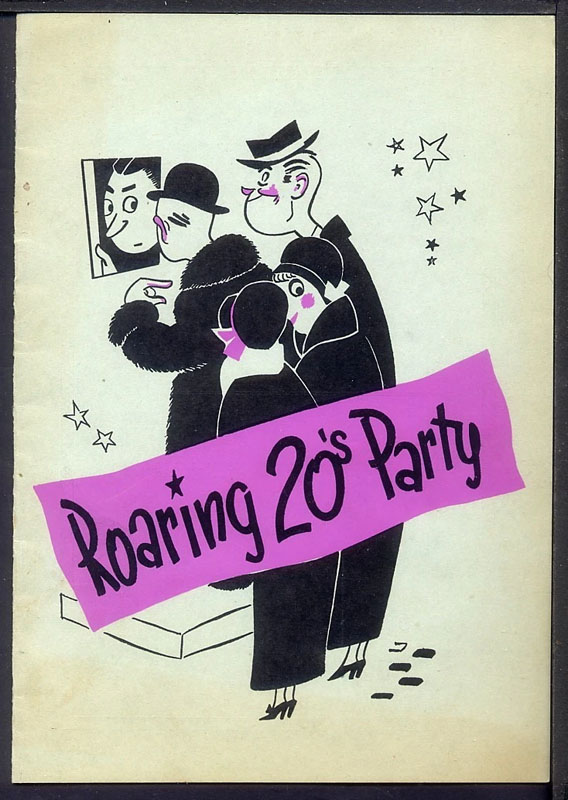
Cover of the advertising journal for the “Roaring ‘20s Party” held at Spivy’s Roof in 1948 to sponsor building a theater addition to the Cherry Grove Community House. Source: Collection of Carl Luss.
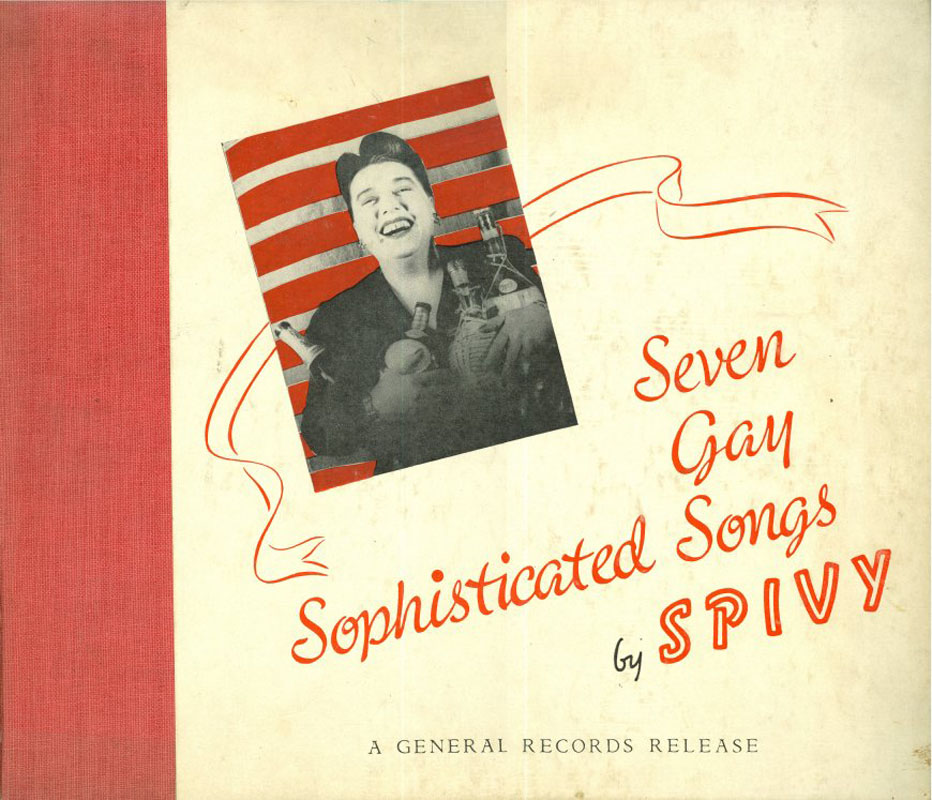
Album cover for Seven Gay Sophisticated Songs by Spivy (1939). Source: Queer Music Heritage.
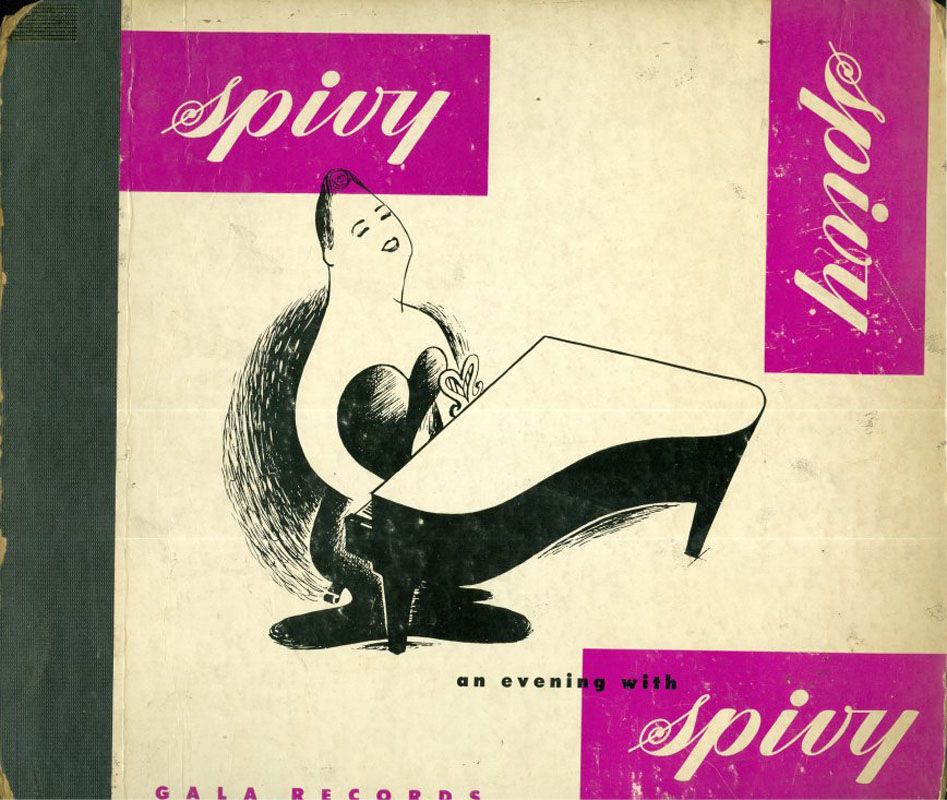
Album cover for An Evening with Spivy (1947). Source: Queer Music Heritage.
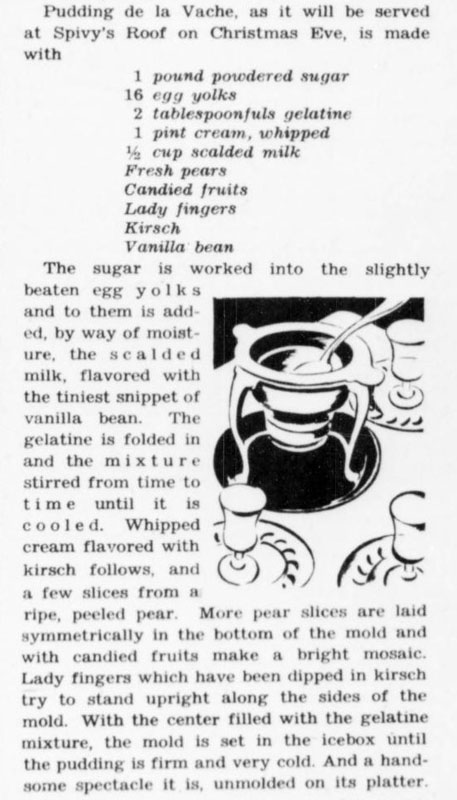
Recipe for Pudding de la Vache, served at Spivy's Roof on Christmas Eve 1940. Source: New York Times Magazine, December 15, 1940.
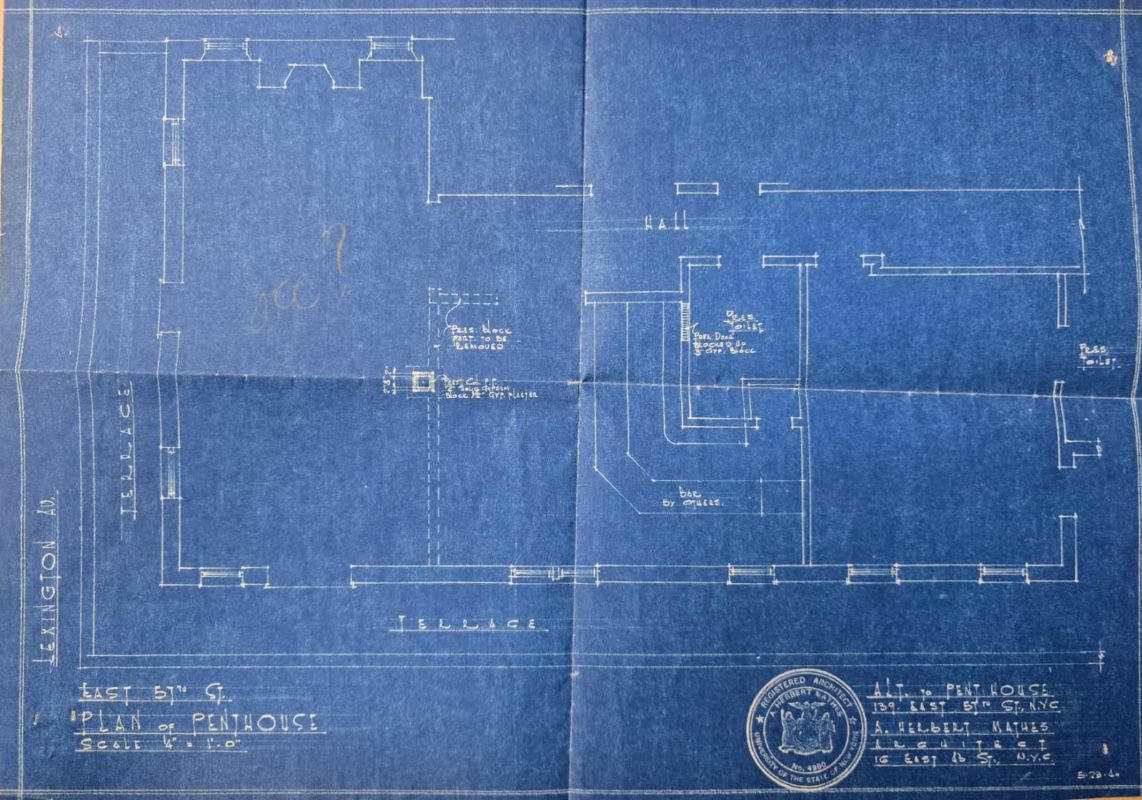
Blueprint showing alteration plans for the penthouse when opened as Spivy's Roof, 1940. Blueprint by Abraham Herbert Mathes. Source: NYC Department of Buildings.
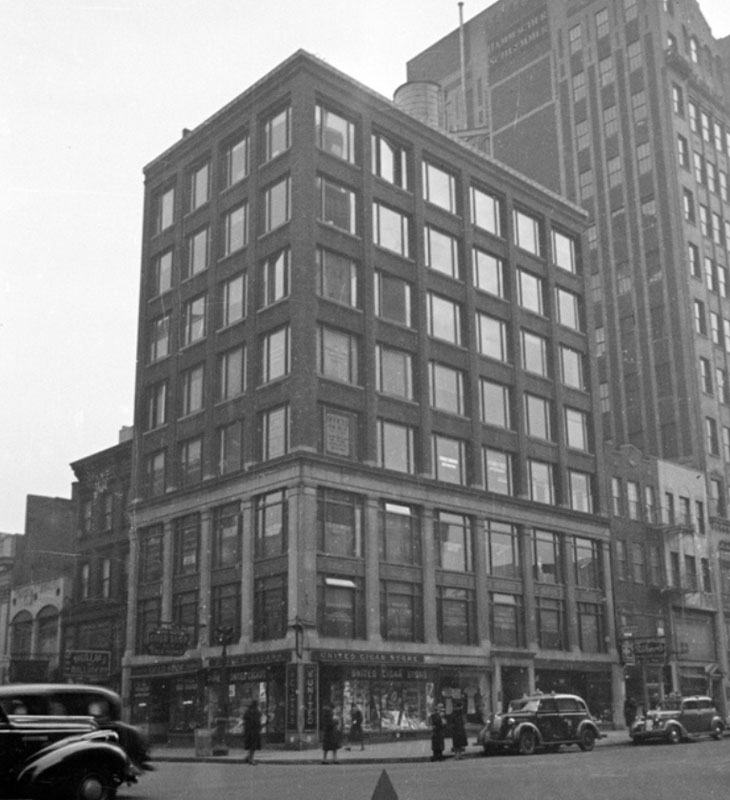
Tax photo of 139 East 57th Street, c. 1939. Courtesy of the NYC Municipal Archives.
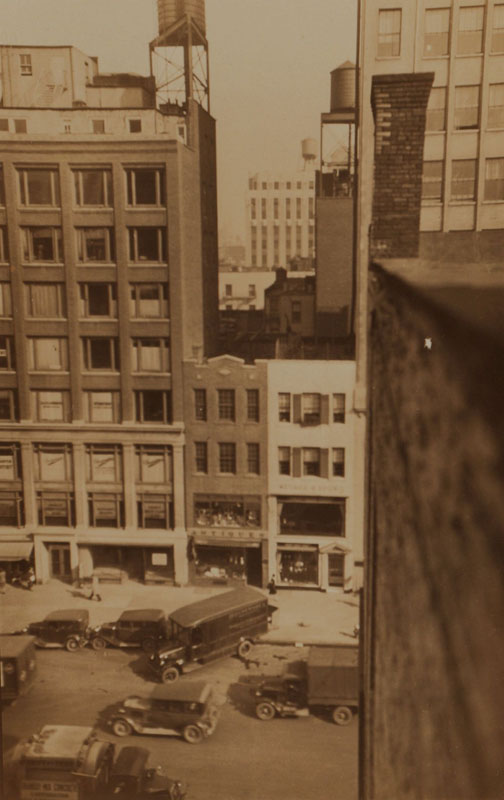
View of 139–141 East 57th Street, with no. 139 at the left. Photo by P. L. Sperr, 1930. Courtesy of the New York Public Library.
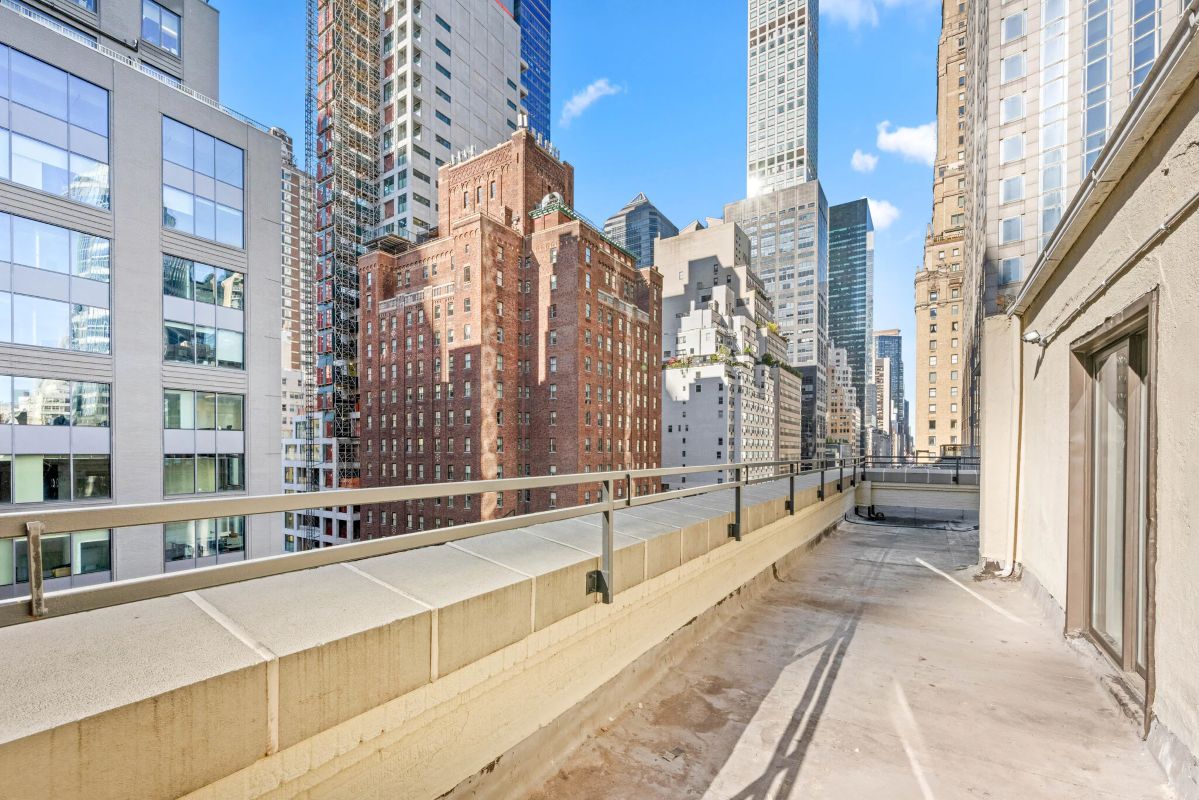
Ninth floor terrace of 139 East 57th Street formerly part of Spivy's Roof, 2025. Source: Okada & Company.
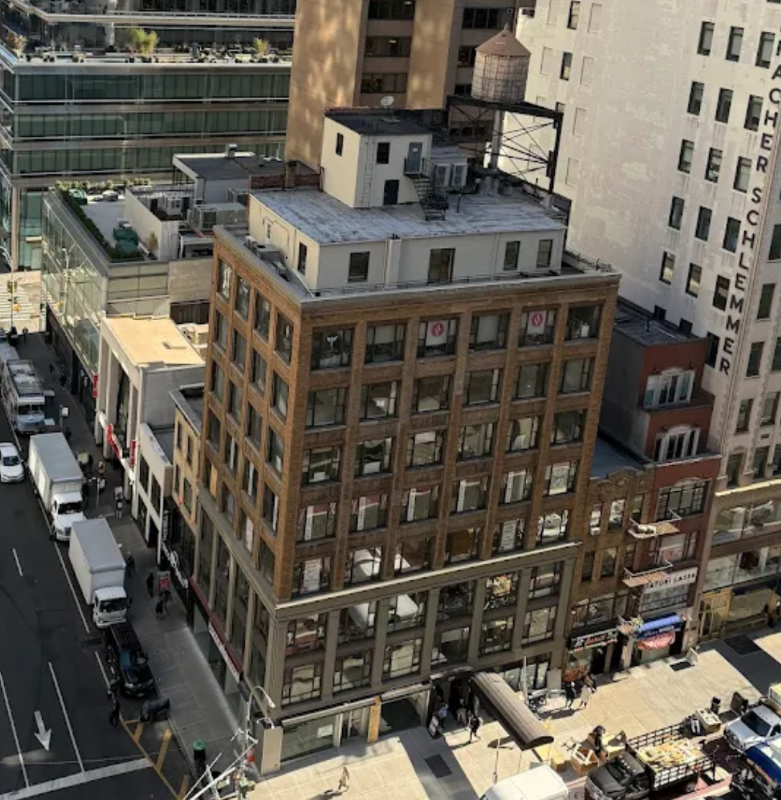
Aerial view of 139 East 57th Street from Hotel 57, at 130 East 57th Street, 2025. Photo by Tyson Brown. Source: Google Maps.
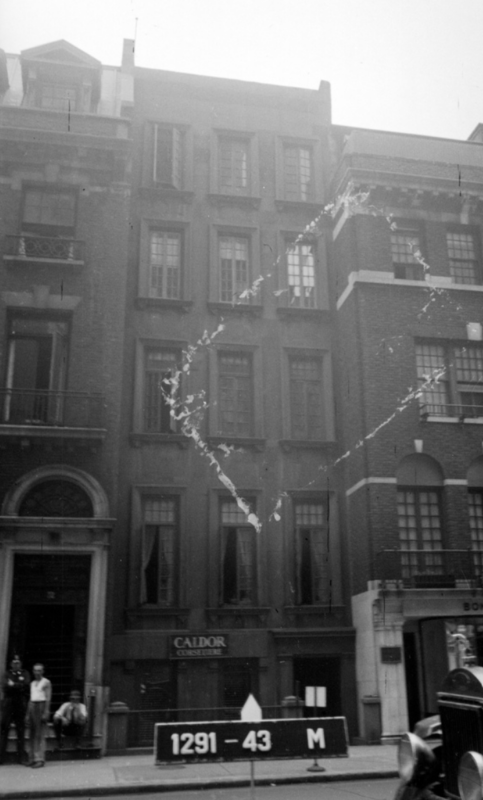
c. 1939 tax photo of 70 East 56th Street (demolished), where Spivy resided from 1942 to 1950. Courtesy of the NYC Municipal Archives.
History
Born in Brooklyn to working-class Jewish immigrant parents of Polish-Russian origin, Spivy (aka Madame Spivy Le Voe; née Bertha Levine; 1906-1971) began her career as a church and theater organist before performing in Prohibition-era speakeasies. After returning in 1936 from a stint in Paris, she gained a following among gay businessmen in the backroom of Tony’s Restaurant, at 59 West 52nd Street (demolished). In 1940, at 139 East 57th Street, Spivy opened her own club in the penthouse, which had been converted into a restaurant in 1934. Spivy initially named it La Vache sur le toit (“The Cow on the roof”) in reference to the famed Parisian cabaret-bar Le Bœuf sur le toit and, many presumed, a self-deprecating joke about her large size (her nickname was “the Bulldog Bull Dyke”). She renamed it Spivy’s Roof for ease shortly after.
The interior of Spivy’s Roof was designed by then-prominent nightclub designer Vernon MacFarlane, with extensive input from impressionist Sheila Barrett and actresses Tallulah Bankhead and Patsy Kelly (both rumored lovers of Spivy’s). The main room, which officially seated about 100 but often “squeezed in” 300, featured peppermint-striped banquettes, red carpeting, white drapes, and blue walls adorned with paper sculptures by Jack Eisner depicting caricatures of such celebrities as Beatrice Lillie, Katharine Cornell, and Martha Raye.
During supporting acts, Spivy held court with her closest friends and lovers at reserved tables in the back. When she decided to perform, Spivy exited onto the L-shaped terrace, walked via a path concealed by plants, and then reentered through another door. At a baby grand piano atop a raised platform, she sang satirical, risque songs mostly written by John Latouche, which she recorded on two albums in 1939 and 1947. Critics applauded her “witty, acid, and tragicomic” material and likened her “rapscallion, yet dignified gaiety” and “triple-entendre sophistication” to Dwight Fiske and Noël Coward.
According to former Spivy’s pianist Buster Davis,
Spivy was the patron saint of the fags. . . . [The club] wasn’t certifiably gay, but there were a lot of young men at the bar, and since it was so dark, a little fumbling-around went on.
Historian George Chauncey explains that Spivy’s welcomed LGBTQ patrons provided “their numbers or overtness [didn’t] threaten the club’s reputation.” This policy, which led some lesbian women and gay men to visit as couples, was likely a cautionary measure to retain the club’s license at a time when the State Liquor Authority targeted premises with LGBTQ clienteles as “disorderly.” Regardless, it “encountered little opposition,” Chauncey notes, “for as successful businesspeople, many of Spivy’s patrons had every reason to hide their sexual identities.” LGBTQ patrons included First Lady Eleanor Roosevelt, performers Clifton Webb, Elisabeth Bergner, Libby Holman, and Martha Raye, writers Elsa Maxwell, Irving Drutman, and Patricia Highsmith, actress and interior designer Elsie de Wolfe, lyricist and librettist Marshall Barer, composer Ned Rorem, and businessman Morris Golde.
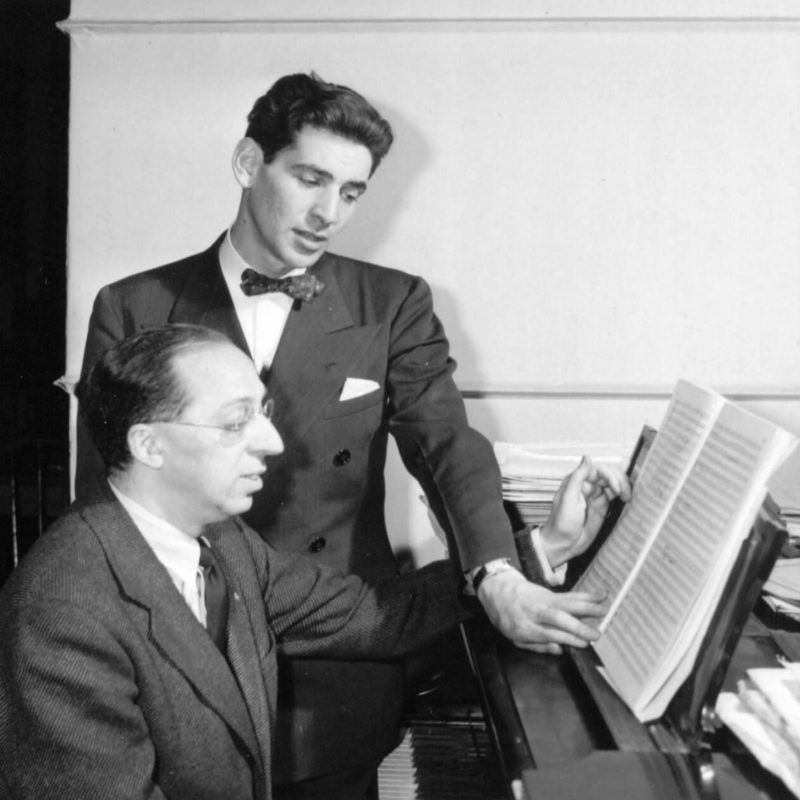
Although Spivy was the main attraction, she booked numerous supporting acts. Many of them were LGBTQ, including musicians Bart Howard, Elsie Houston, Libby Holman, Martha Raye, and Liberace; comedians Mary McCarty and Paul Lynde; actress and singer Pola Negri; impressionist Sheila Barrett; female impersonators Arthur Blake and Rae Bourbon; a vaudeville duo featuring Patsy Kelly and Fred Keating; the Revuers, an improvisational comedy troupe that included singer-comedian Judy Holliday and a young Leonard Bernstein as piano accompanist; and John Bernard Myers, who performed multiple puppet playlets written by Jane Bowles and Charles Henri Ford, with music by Paul Bowles.
In 1948, Spivy’s hosted two fundraising events for the theater addition to the Cherry Grove Community House on Fire Island. According to that site’s nomination to the National Register of Historic Places, the theater ultimately played an “enormous role…in shaping…‘America’s First Gay and Lesbian Town.’” Photographer Richard Avedon sold photographs of the first event, a Halloween Costume Party, to raise funds. The second event, a Roaring ‘20s Party sponsored by Martinson’s Coffee, “made history by scoring the first national brand sponsorship of a ‘gay’ fundraising event.”
Spivy resided nearby throughout the years she operated the club, initially at 105 West 55th Street, where the 1940 United States Census listed Spivy as a male living with a divorced woman named Elsie Wilson (no evidence confirms that Spivy, though androgynous, identified as a man or that Wilson was a lover), and then at 70 East 56th Street (demolished) from 1942 to 1950. In 1942, Spivy and actor-magician Fred Keating announced their engagement. However, no marriage records exist and many columnists viewed it as a joke from the start, so it is suspected that this was a lavender marriage, a publicity stunt, or simply a running gag in their routine.
Spivy’s Roof closed in 1951 due to mounting financial difficulties and increased competition. Spivy returned to Europe, operating her eponymous club in Paris and Ada “Bricktop” Smith‘s club in Rome. Upon returning in 1958, she performed at the Blue Angel, at 152 East 55th Street (demolished), appeared in Auntie Mame (1957) at the Broadhurst Theater, and then pursued a character acting career in Los Angeles, where she died in 1971.
Entry by Ethan Brown (project consultant), February 2026.
NOTE: Names above in bold indicate LGBT people.
Building Information
- Architect or Builder: Bloch & Hesse (building architects); John E. Kleist (penthouse conversion architect); Abraham Herbert Mathes (penthouse alteration architect)
- Year Built: 1924; 1934 (penthouse conversion); 1940 (penthouse alteration)
Sources
Bill Lipsky, “Spivy: ‘The Last of the Fleur de Levys,’” San Francisco Bay Times, 2019, bit.ly/4pp3VpT.
Carl Luss, “Cherry Grove Community House & Theatre,” National Register of Historic Places Nomination Form (Washington, DC: U.S. Department of the Interior, National Park Service, 2013). [source of “enormous role” and “made history” quotes, p. 23]
Carl Luss, “Out South Shore: Spivy La Voe,” Fire Island & Great South Bay News, August 4, 2024, bit.ly/3EIlkaw.
Dorothy Kilgallen, “The Voice of Broadway,” Trenton Evening Times, January 26, 1944, 8.
Esther Newton, Cherry Grove, Fire Island: Sixty Years in America’s First Gay and Lesbian Town (Boston, MA: Beacon Press, 1993).
George Chauncey, Gay New York: The Making of the Gay Male World, 1890–1940 (New York: Basic Books, 1994). [source of Chauncey quotes, p. 350]
George Tucker, “Man About Manhattan,” Poughkeepsie Journal, November 2, 1942, bit.ly/3Xs8AeH. [source of “squeezed in” quote]
George Tucker, “The Speakeasies Were Dreary: Spivy Said ‘Amen’ to Hymns Long Ago,” Rochester Democrat and Chronicle, November 28, 1948, bit.ly/3X1S30s.
James Gavin, Intimate Nights: The Golden Age of New York Cabaret (Back Stage Books, 2006). [source of pull quote, p. 32]
M. Oakley Christoph, “Informing You,” The Hartford Daily Courant, April 18, 1944, 9.
“Spivy, 64, Actress and Entertainer: Owner of Nightclubs Here and Abroad Is Dead,” New York Times, January 10, 1971, nyti.ms/3EPaRtA.
“Spivy’s New Night-Club,” Vogue, July 15, 1940, p. 68.
“Subtle Exit,” Down Beat, May 1, 1945, p. 1.
T. S., “News of Night Clubs: Various Matters Concerned With Places to Be Visited After Dark,” New York Times, November 19, 1939, nyti.ms/4hSvx3E. [source of “witty, acid, and tragicomic” quote]
Do you have more information about this site?
This project is enriched by your participation! Do you have your own images of this site? Or a story to share? Would you like to suggest a different historic site?