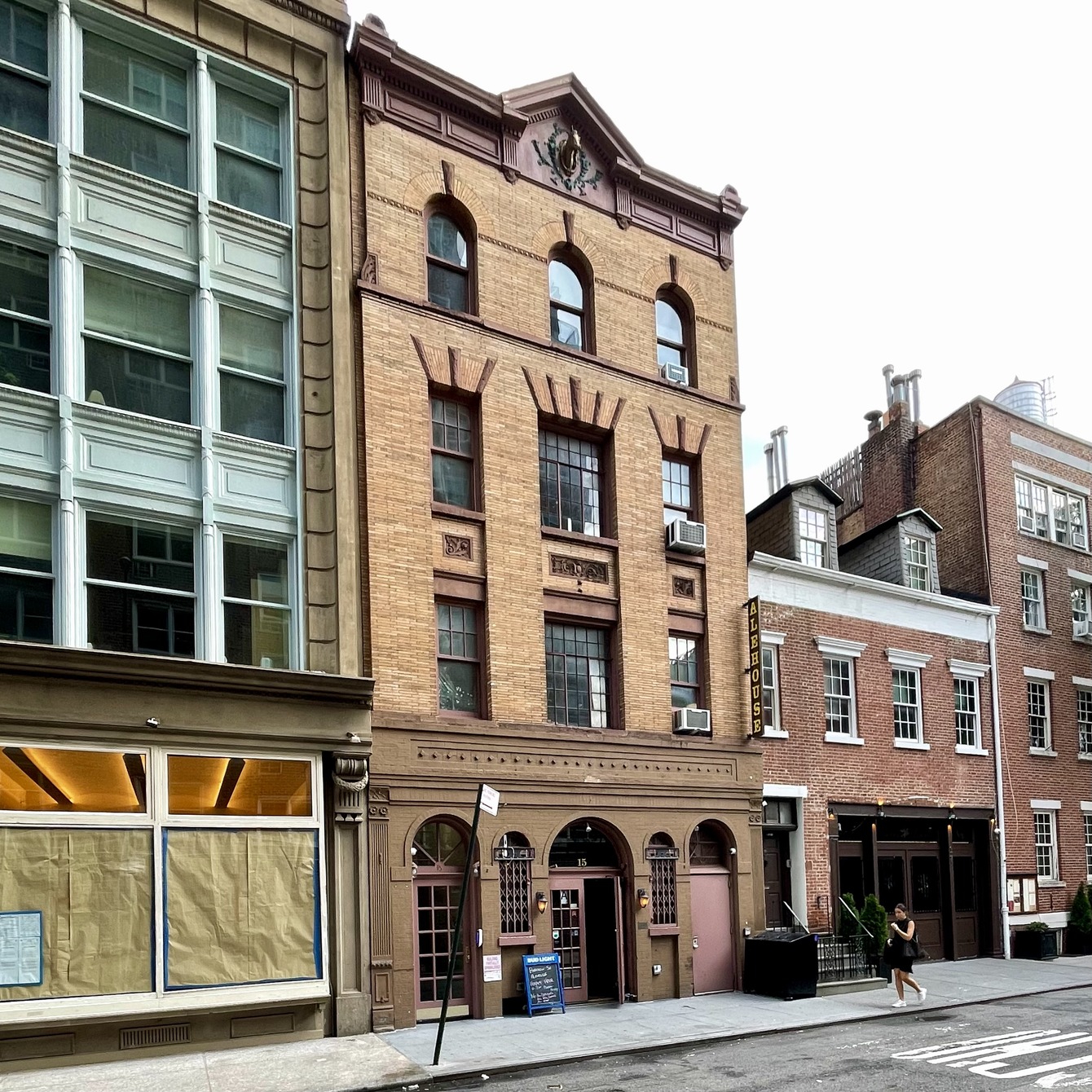
Café Bohemia / The Bohemian
overview
Café Bohemia was a popular lesbian nightlife destination in Greenwich Village from the early 1960s and into the 1970s.
Originally one of the city’s leading progressive jazz clubs, the venue came under scrutiny from the New York State Liquor Authority after it emerged as a popular gathering place for lesbian patrons.
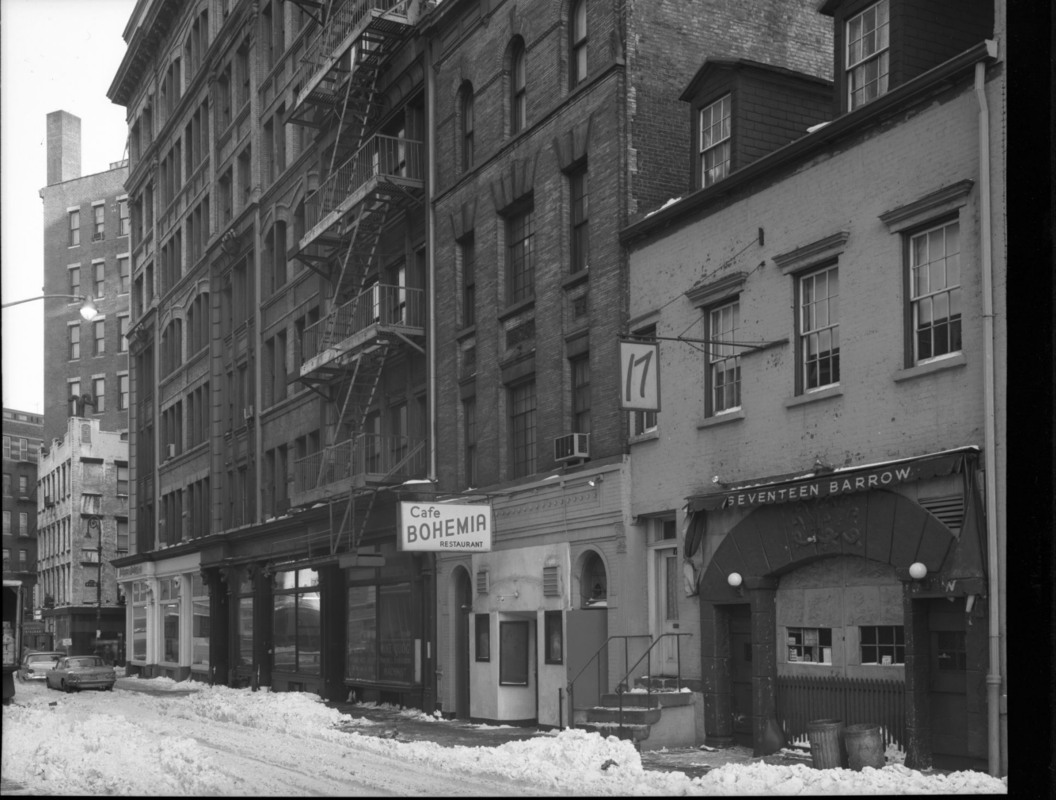
Café Bohemia in Barrow Street, c. 1965. Courtesy of the New York City Landmarks Preservation Commission.
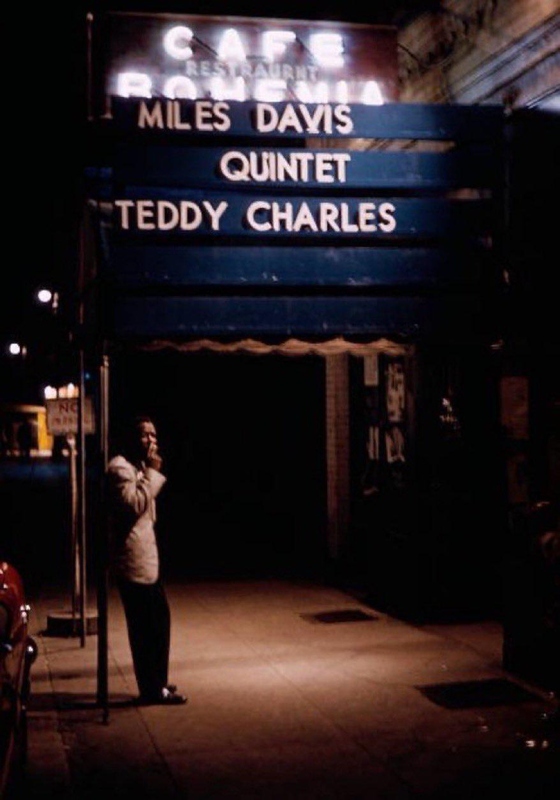
Miles Davis at Café Bohemia. Photograph taken by Marvin Koner, 1957.
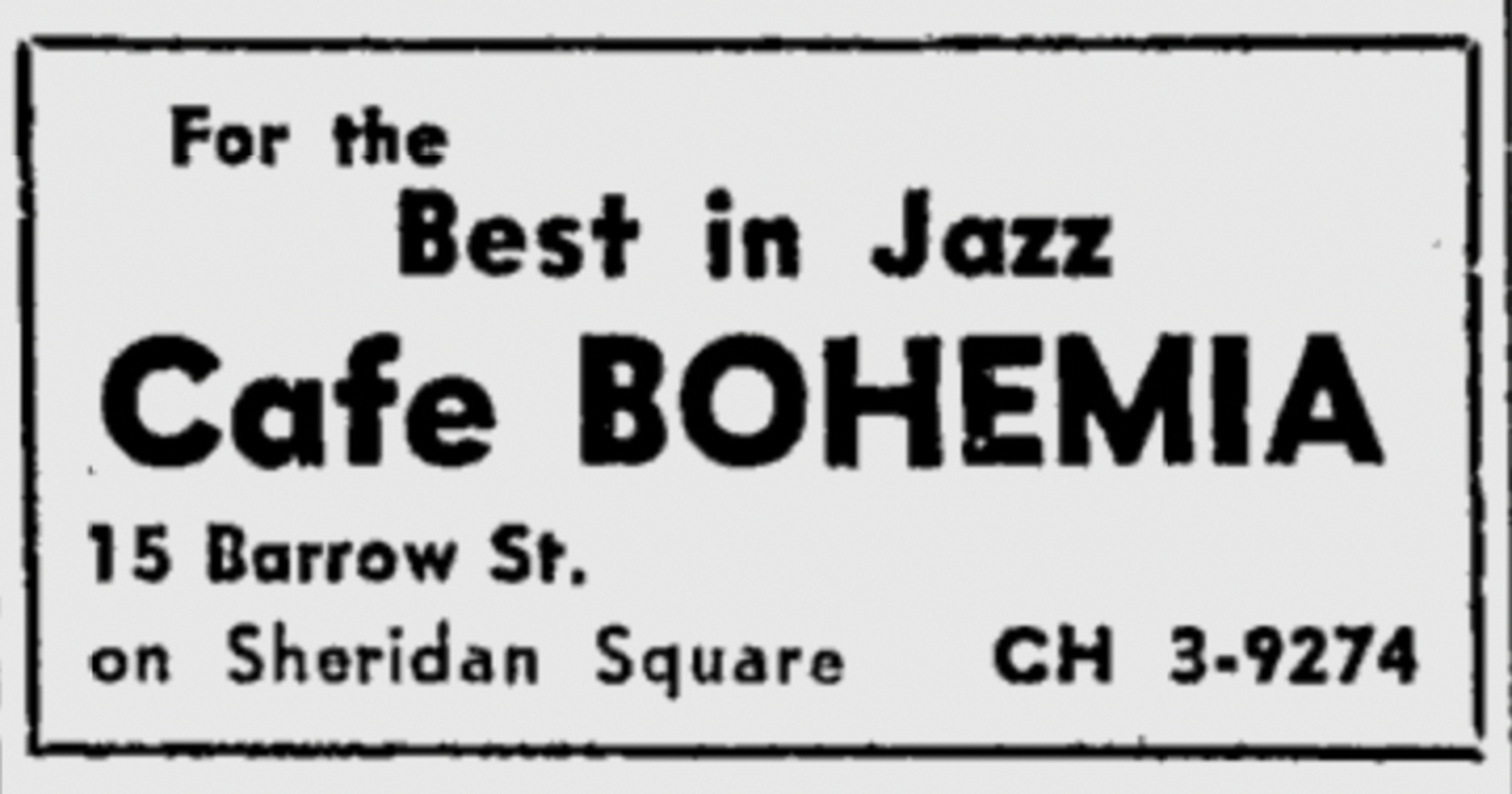
Café Bohemia ad in The Village Voice, May 1, 1957.
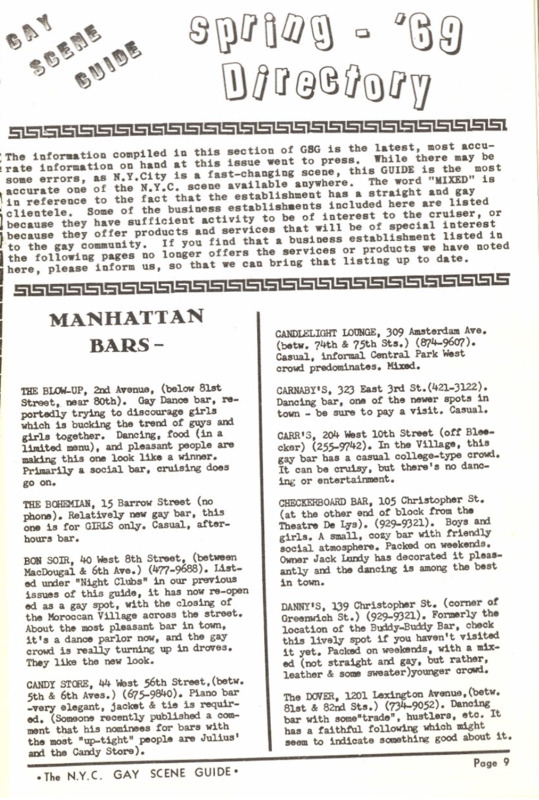
New York City Gay Scene Guide Vol. 2 (1969). Courtesy of the LGBT Community Center National History Archive.
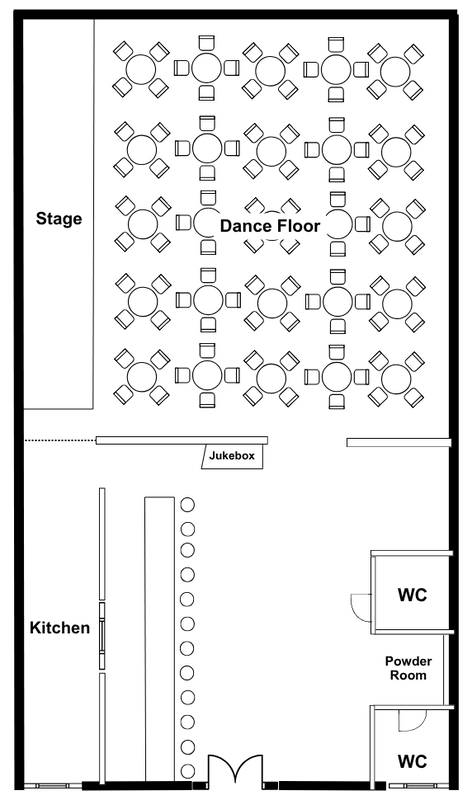
Approximate reconstruction of Café Bohemia’s interior based on witness testimony presented during the 1961-1962 State Liquor Authority proceedings. Reconstruction by Daniela Lilly Rodiles.
History
Café Bohemia was one of Greenwich Village’s best-known progressive jazz clubs during the 1950s before becoming a gathering place for New York’s lesbian community in the early 1960s. Vincent “Jimmy” Garofolo leased the ground-floor establishment at 15 Barrow Street in 1945 and initially operated it as a neighborhood bar and grill, later transforming it into a dance venue that briefly featured an “all-Black revue.” In 1955, Garofolo reinvented the space as Café Bohemia, whose reputation included challenging the exclusive booking practices of Birdland, then one of the city’s premier jazz clubs. Featuring performances by Charlie Parker, Miles Davis, Cannonball Adderley, and other leading musicians, the club quickly earned a national reputation, with Down Beat magazine calling it “the most invaluable jazz club in the East.” The club also attracted artists and writers—including Larry Rivers, Joyce Johnson, Jack Kerouac, among other members of the Beat Generation.
In 1960, Garofolo brought Café Bohemia’s jazz era to an end amid growing concerns that arrests and narcotics activity at the club threatened its financial stability. Within a short time, however, the venue acquired a new identity as a gathering place for New York’s lesbian community. Writer and activist Michael Harrington later recalled visiting Café Bohemia during one of its “lesbian phases,” providing one of the earliest published accounts of the establishment’s reputation within Greenwich Village’s lesbian nightlife scene. Harrington’s recollection is corroborated by the extensive court record generated after the New York State Liquor Authority (SLA) charged Café Bohemia in 1961 with violating Section 106(6) of the Alcoholic Beverage Control Law. The SLA alleged that the establishment had become “disorderly” by permitting “homosexuals to congregate and loiter on the licensed premises.” Garofolo and his employees, however, resisted the assumptions through which the SLA identified the club’s lesbian clientele, repeatedly questioning whether homosexuality could be determined from dress and language alone.
[Cafe Bohemia] was in a lesbian phase. . . . I got into conversation with an attractive young woman, but then her girlfriend appeared, angry with my heterosexual poaching. ‘You don’t belong here, buddy,’ she said. ‘You’re a San Remo type.’
The hearing testimony provides a detailed description of Café Bohemia’s interior. The establishment consisted of a narrow front barroom with a forty-foot bar, stools, and a jukebox, separated by a partition from a larger rear dining and entertainment room containing thirty to thirty-five tables arranged around a dance floor and stage. Although the rear room contained a dance floor, testimony noted that the establishment no longer held a cabaret license, and tables had been arranged to prevent dancing. Restrooms and a powder room were located off the main barroom. Garofolo emphasized that the layout was designed to maintain clear sightlines throughout the premises, with few concealed corners and visibility extending from the entrance into both rooms.
The layout became central to the legal proceedings in 1962 because the SLA argued that Garofolo should have been able to observe and prevent the conduct described by investigators. According to testimony from plainclothes male and female police officers, investigators observed patrons at Café Bohemia “who appeared to be lesbians,” dressed in male clothing, wearing short hair, and allegedly having “kissed each other, fondled each other and conducted themselves in an indecent and objectionable manner.” Garofolo, however, maintained that the premises’ open layout allowed employees to supervise patrons throughout the establishment and insisted that Café Bohemia served the diverse clientele characteristic of Greenwich Village—including artists, musicians, writers, intellectuals, and beatniks—rather than functioning as a so-called “bust-out operation,” a bar designed to exploit homosexual patrons for short-term profit.
The SLA, however, rejected Garofolo’s defense. It concluded that he “did not exercise adequate and proper supervision and control over the licensed premises,” finding that Café Bohemia had become a “hangout for lesbians.” The premises received the harshest penalty by having its liquor license cancelled, while other Greenwich Village bars mentioned at the hearing—including the Pony Stable Inn—received ten-day suspensions for operating disorderly premises. The decision also drew attention from the Mattachine Society, which reported on a New York City Liberties Union (NYCLU) amicus brief challenging the SLA’s treatment of homosexual “congregating” as grounds for revoking a liquor license.
Despite losing its liquor license, Café Bohemia’s association with New York’s lesbian community endured into the 1970s. The bar appeared in the 1969 Gay Scene Guide, where 15 Barrow Street—listed as “The Bohemian”—was described as a “relatively new gay bar” that was “for GIRLS only.” Its place in New York’s lesbian nightlife was further documented in the Lesbian Herstory Archives Newsletter, where, in response to a 1981 call for the names of former lesbian bars across the country, 15 Barrow Street was identified as one of the city’s lesbian bars of the 1970s.
Entry by Daniela Lilly Rodiles, project contributor (September 2026).
NOTE: Names above in bold indicate LGBT people.
Building Information
- Architect or Builder: Henry A. Hasenstein
- Year Built: 1896
Sources
Anonymous, “The Bohemian (Cafe Bohemia),” Lost Womyn’s Space, January 5, 2012, bit.ly/4yKnvkC.
Bill Morgan, Beat Generation in New York: A Walking Tour of Jack Kerouac’s City (San Francisco: City Lights Publishers, 1987).
Jack Kerouac and Joyce Johnson, Door Wide Open: A Beat Love Affair in Letters, 1957-1958 (Viking Penguin, 2000).
John Wilcock, “Getting By on 40 a Week,” in On Bohemia: The Code of the Self-Exiled, edited by Cesar Graña (Routledge, 1990).
Lesbian Herstory Archives Newsletter, no. 7 (December 1981).
Michael Harrington, “We Few, We Happy Few, We Happy Bohemians: A Memoir of the Culture Before Counterculture,” Esquire, August 1, 1972, bit.ly/3VgQZYB.
New York City Gay Scene Guide, vol. 2 (Apollo Book Co., 1969).
New York Mattachine Newsletter 8, no. 4 (April 1963).
Re Vincent J. Garofolo, Jr., d/b/a Café Bohemia, Record on Review, 18 A.D.2d 1052 (N.Y. App. Div. 1st Dep’t 1963).
“The Beat Generation in the Village,” Daily News (New York), February 19, 1958.
The “Bohemia After Dark” Project, “The ‘Café Bohemia’ Story (15 Barrow Street, NYC).”
The Encyclopedia Yearbook of Jazz (United States: Horizon Press, 1956).
Do you have more information about this site?
This project is enriched by your participation! Do you have your own images of this site? Or a story to share? Would you like to suggest a different historic site?