Molly Dewson & Polly Porter Apartment / Marion Dickerman & Nancy Cook Apartment
overview
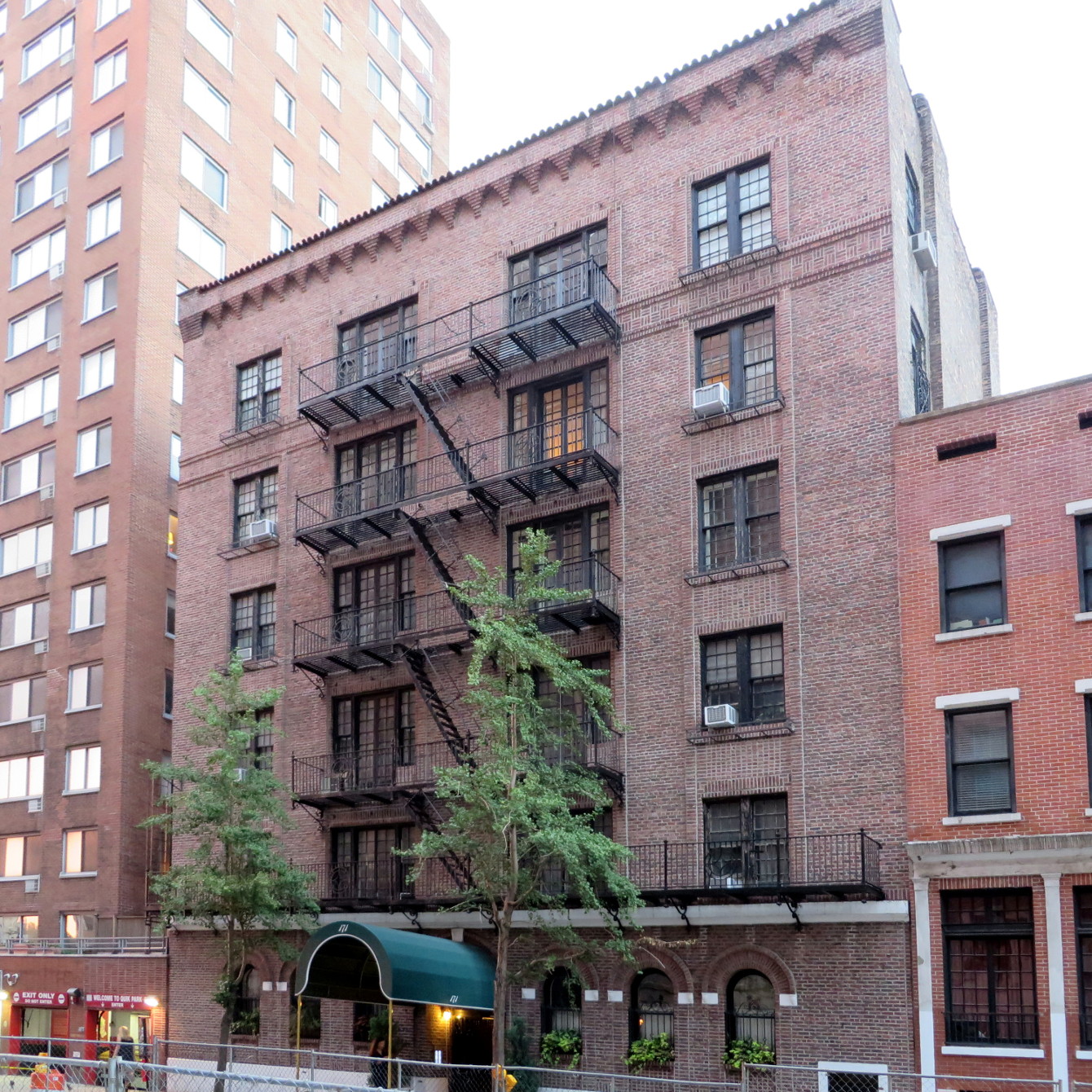
This building was one of many apartment houses in Greenwich Village that attracted same-sex couples.
After its completion in 1923, this was home to a number of women involved in progressive politics within the circle of Eleanor Roosevelt, notably partners Molly Dewson and Polly Porter and partners Marion Dickerman and Nancy Cook.
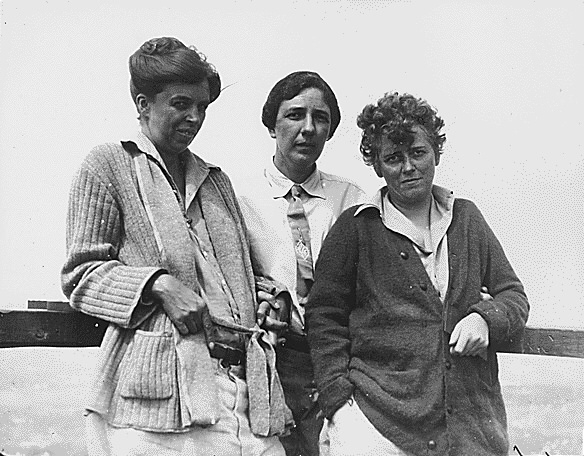
Eleanor Roosevelt, Marion Dickerman, and Nancy Cook in Campobello, June 1926. Photographer and source unknown.
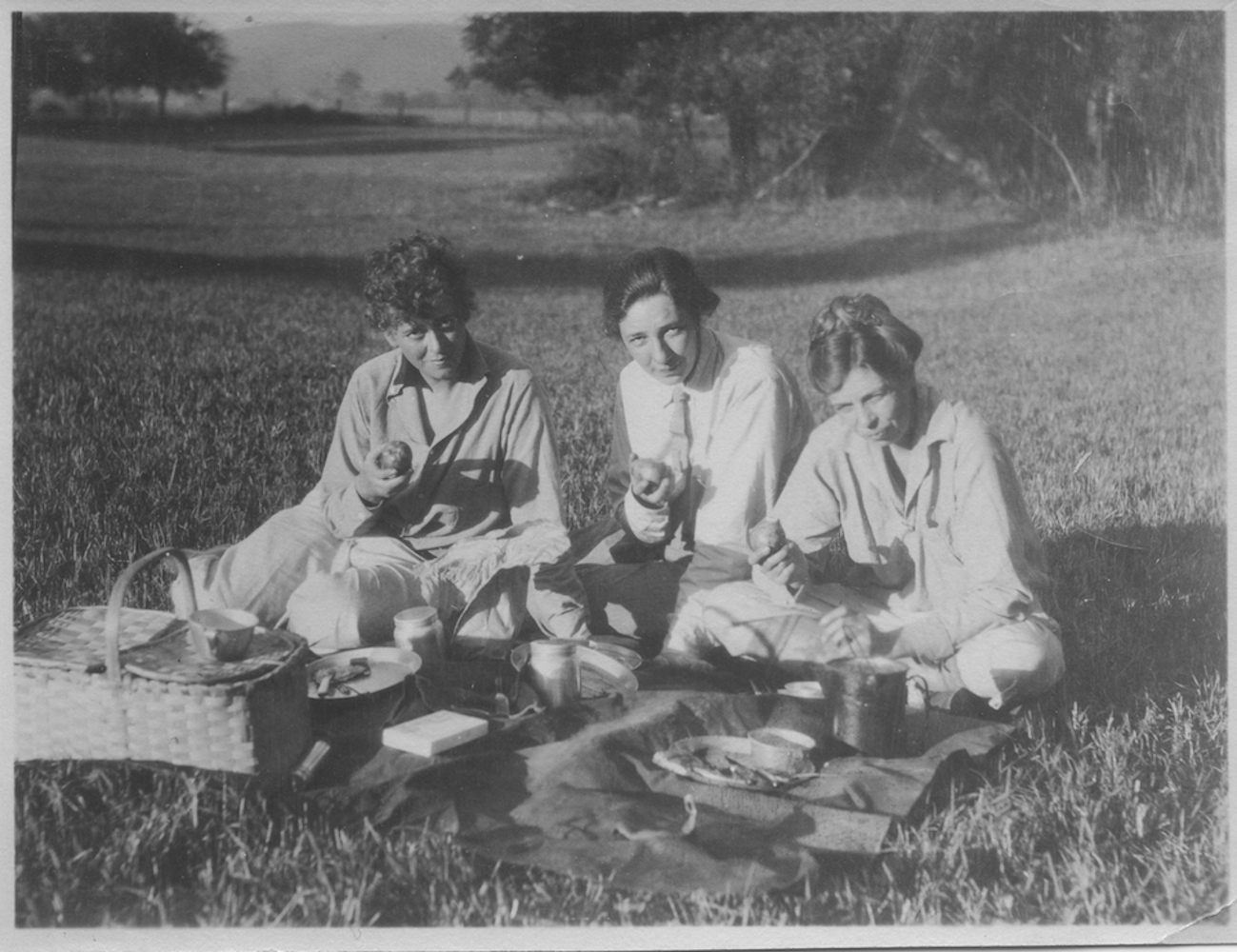
Eleanor Roosevelt with Marion Dickerman and Nancy Cook at Val-Kill in an undated photo. Source: National Park Service.
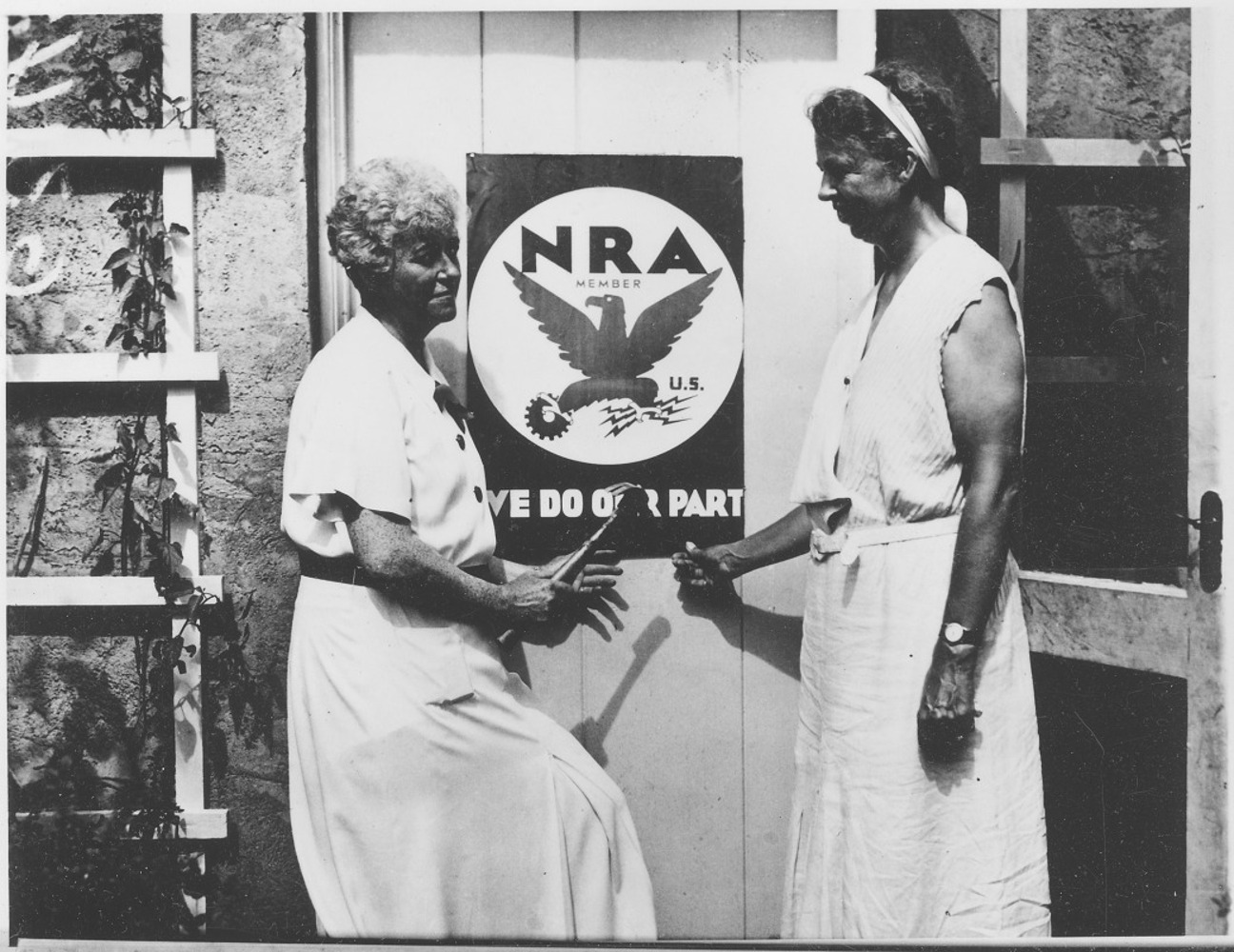
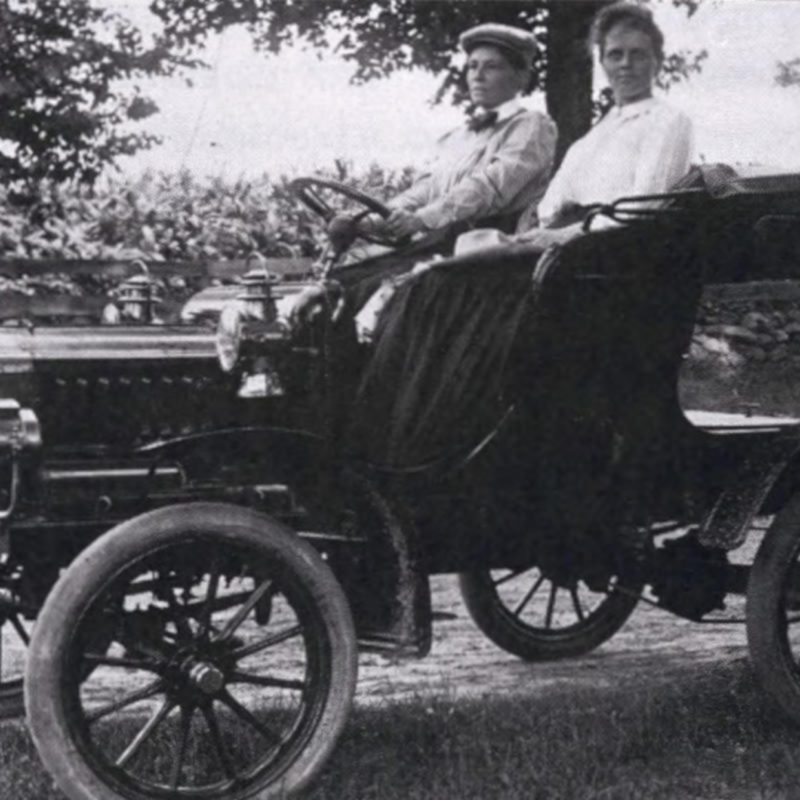
Nancy Cook and Eleanor Roosevelt at Val-Kill in an undated photo. Source unknown.
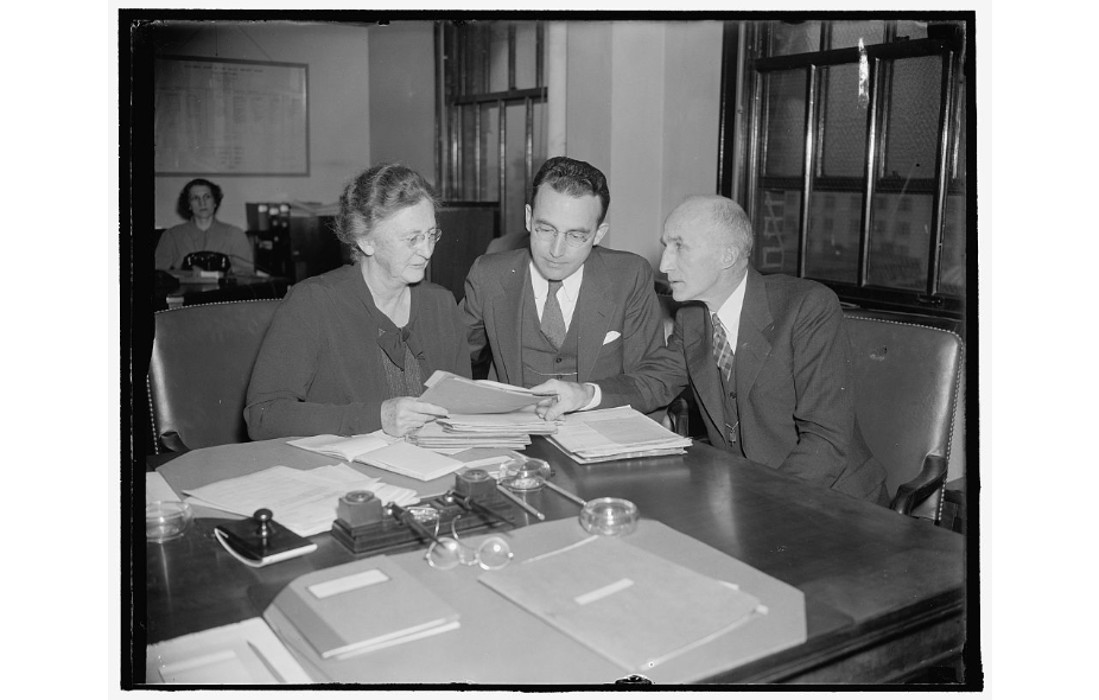
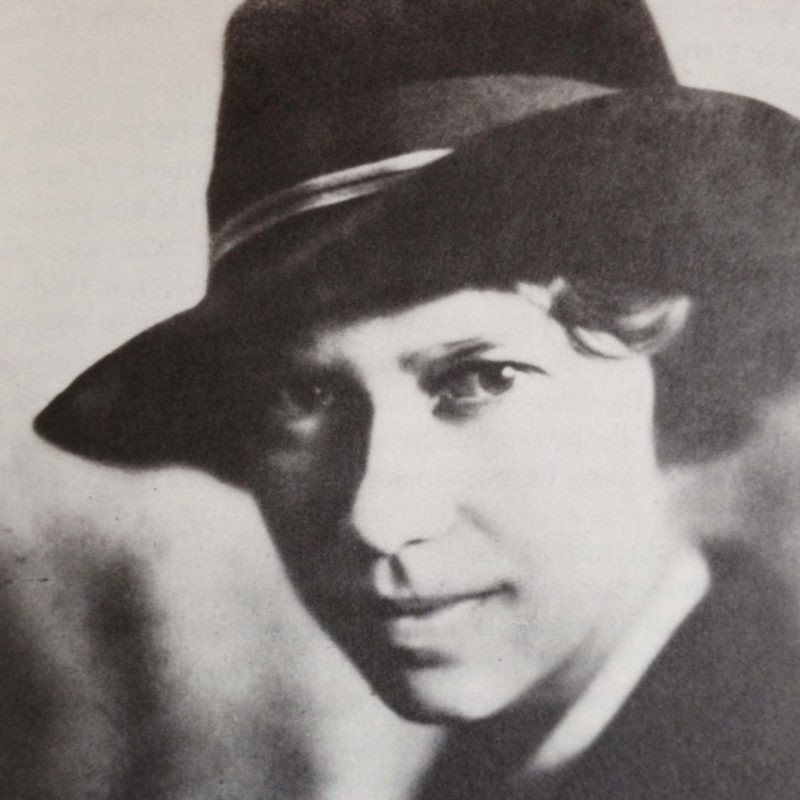
Molly Dewson at the Social Security Board, 1937. Source: Library of Congress Prints and Photographs Division.
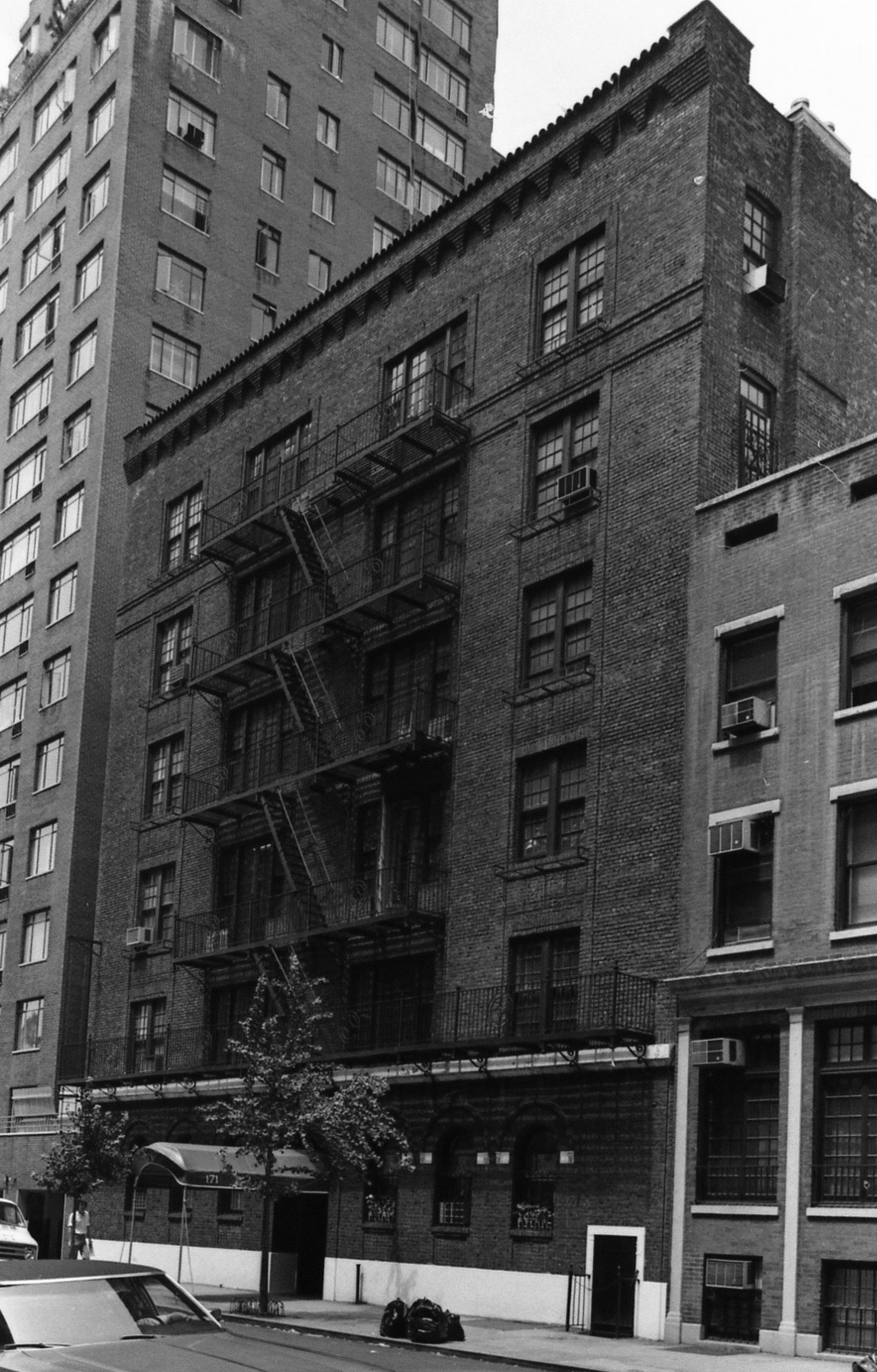
171 West 12th Street, c. 1965. Photo by John Barrington Bayley. Courtesy of the NYC Landmarks Preservation Commission.
History
The small apartments that proliferated in Greenwich Village in the 1920s attracted single men and women and childless couples, including many same-sex couples. The apartment house at 171 West 12th Street, built in 1922, was home to several lesbian couples active in progressive politics and linked to Eleanor Roosevelt.
Molly Dewson & Polly Porter Residence
Among the first residents of the building were Molly Dewson (Mary Dewson; 1874-1962) and her partner Polly Porter (Mary Gurley Porter; 1884-1972) who lived in a small two-bedroom unit on the sixth floor. The two social reformers met in 1912 while working in the probation department at the Lancaster [Massachusetts] State Industrial for Girls. During their 52-year long relationship they referred to themselves as “The Porter Dewsons.” Porter was independently wealthy, as an heir to the International Harvester fortune. She worked briefly as a social worker in New York but then decided not to seek professional employment. In contrast, Dewson, also from an affluent background, was described by her biographer Susan Ware as the “first female political boss” in America. She served as the director of the Women’s Division of the Democratic National Committee (DNC) from 1933-1937.
Dewson met Eleanor Roosevelt (ER) through her work with the New York Consumers’ League, where she and ER successfully campaigned for a 1930 law limiting women to a 48-hour work week. Through ER, Dewson was appointed to the DNC, where she worked to get women to vote for Franklin D. Roosevelt (FDR). Once FDR was elected, Dewson advocated for the appointment of women in key roles in his administration. She also established a friendship with Frances Perkins and was key to Roosevelt’s appointment of Perkins as Secretary of Labor.
Molly Dewson worked so hard to get Frances Perkins into the cabinet because the appointment would fulfill one of her major political goals:. . . to show that FDR took women’s contributions to politics and public life seriously and that he was willing to entrust women with unprecedented power and responsibility.
Dewson resigned from the DNC when she was appointed to the new Social Security Board in 1937, serving for a little over a year before choosing to return to New York for her health and to be with Porter, who refused to move to Washington, D.C.. The Porter Dewsons spent their summers in Castine, Maine, and moved there in 1952. They are buried together in a local cemetery.
Marion Dickerman & Nancy Cook
Living across the hall from Dewson and Porter were Marion Dickerman (known to friends as Dickie; 1890-1983) and Nancy Cook (known as Nan; 1884-1962). Although their careers and friendships overlapped with Dewson and Porter, they were never close. Dickerman and Cook formed a lifelong partnership when they met as graduate students at Syracuse University. According to the National Park Service, they shared “a life dedicated to politics, education, and progressive reform.” Dickerman was primarily an educator who in 1922 began teaching at the Todhunter School at 66 East 80th Street, a progressive school for affluent girls. In 1927, Dickerman, Cook, and Eleanor Roosevelt (ER) purchased the school. Dickerman served as principal and ER as assistant principal who also taught history, literature, and current events. In 1927, they left their 12th Street apartment and moved to 115 East 86th Street.
Nancy Cook was drawn to politics, serving as the chair of the Woman’s Division of the New York Democratic Party, where she was involved in the gubernatorial and presidential campaigns of Al Smith and Franklin D. Roosevelt (FDR) and became close with ER. FDR gave ER, Marion, and Nan, who he called the “three graces,” eight acres of his property in Hyde Park, New York, where they built Stone Cottage. Here they established Val-Kill Industries, manufacturers of Colonial Revival style furniture designed by Cook as well as pewter items and weavings.
Beginning in 1936, the close relationship between Cook, Dickerman, and ER deteriorated, Val-Kill Industries closed in 1939, and ER converted the factory into a house for her own use. ER also stopped supporting the Todhunter School, which merged with the Dalton School in 1939 (Dickerman stayed on as an administrator for several years). Dickerman and Cook sold their interest in the Val-Kill property to ER in 1947 and moved to New Canaan, Connecticut, where Dickerman became involved in what would become the Mystic Seaport Museum. Dickerman and Cook are buried together in a cemetery in Westfield, New York, where Dickerman was born.
Stone Cottage and the Val-Kill factory/ER residence have been restored by the National Park Service as part of the Eleanor Roosevelt National Historic Site.
Census records from 1925 to 1950 show other pairs of women at 171 West 12th Street (including, in 1925, Willa Roberts who would later become the editor of Woman’s Home Companion magazine), but nothing is known about any of their relationships.
Landmark Designations for LGBT Significance
In 1992, the NYC Landmarks Preservation Commission’s (LPC) first edition of Guide to New York City Landmarks was written by architectural historian Andrew S. Dolkart. The book included two LGBTQ mentions, 171 West 12th Street and Stonewall, making them the LPC’s earliest explicit acknowledgment of LGBTQ sites. Dolkart went on to co-found the NYC LGBTQ Historic Sites Project in 2015.
Entry by Andrew S. Dolkart, project director (March 2017; last revised September 2026).
NOTE: Names above in bold indicate LGBT people.
Building Information
- Architect or Builder: Emilio Levy
- Year Built: 1922-23
Sources
Blanche Weisen Cook, Eleanor Roosevelt, 3 volumes (New York: Viking, 1992, 1999, 2016).
Emily Herring Wilson, The Three Graces of Val-Kill: Eleanor Roosevelt, Marion Dickerman, and Nancy Cook and The Place They Made Their Own (Chapel Hill: University of North Carolina Press, 2017).
“Marion Dickerman,” National Parks Service, bit.ly/4wL2K7o.
Susan Ware, Partner and I: Mary Dewson, Feminism and New Deal Politics (New Haven: Yale University Press, 1987). [source of pull quote, p. 176-77]
Do you have more information about this site?
This project is enriched by your participation! Do you have your own images of this site? Or a story to share? Would you like to suggest a different historic site?