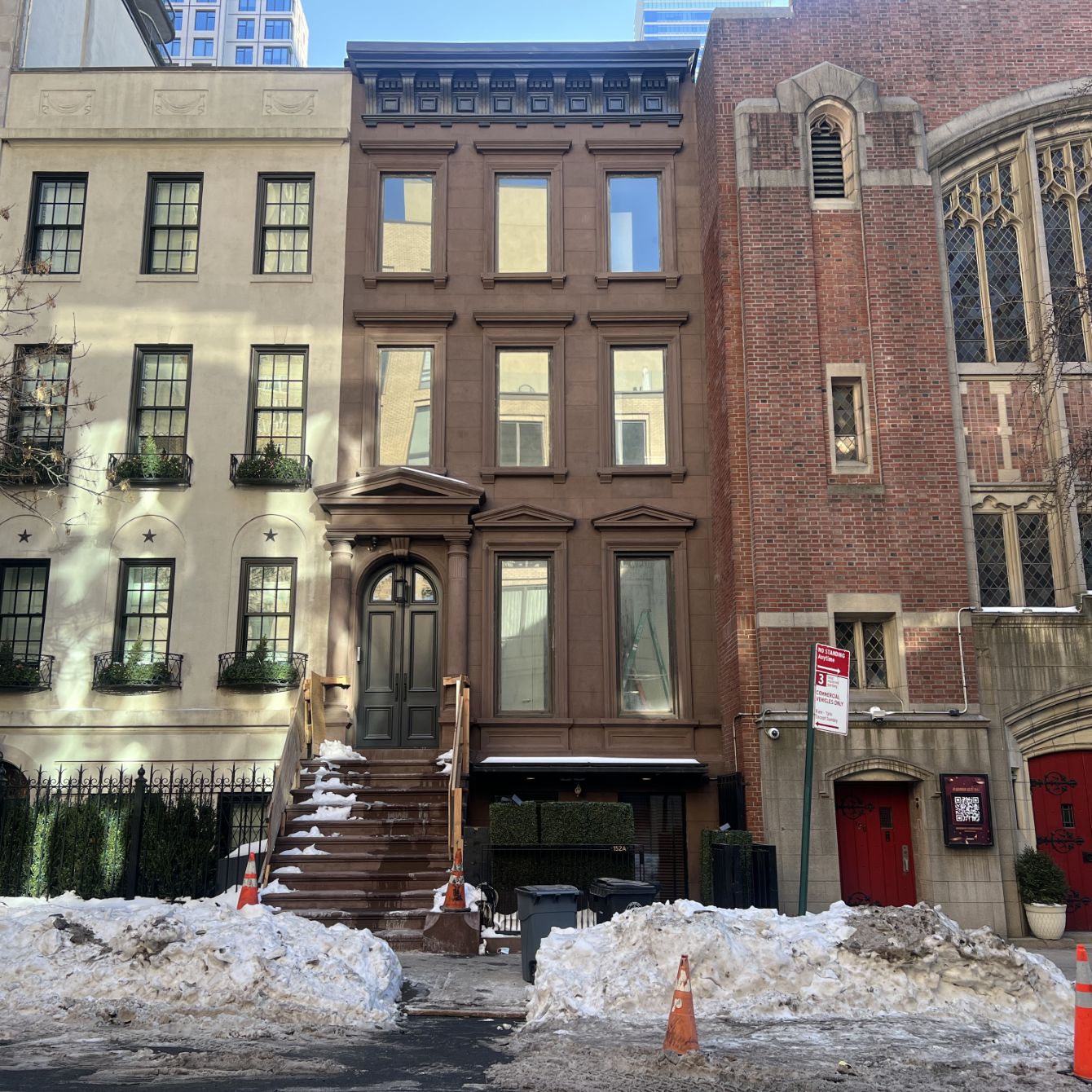
Henry-Russell Hitchcock & Robert Schmitt Residence
overview
Prominent American architectural historian Henry-Russell Hitchcock purchased this Upper East Side rowhouse in 1968 when he moved to New York.
He and his partner, jewelry designer Robert Schmitt, lived in the lower three floors until Hitchcock’s death in 1987.
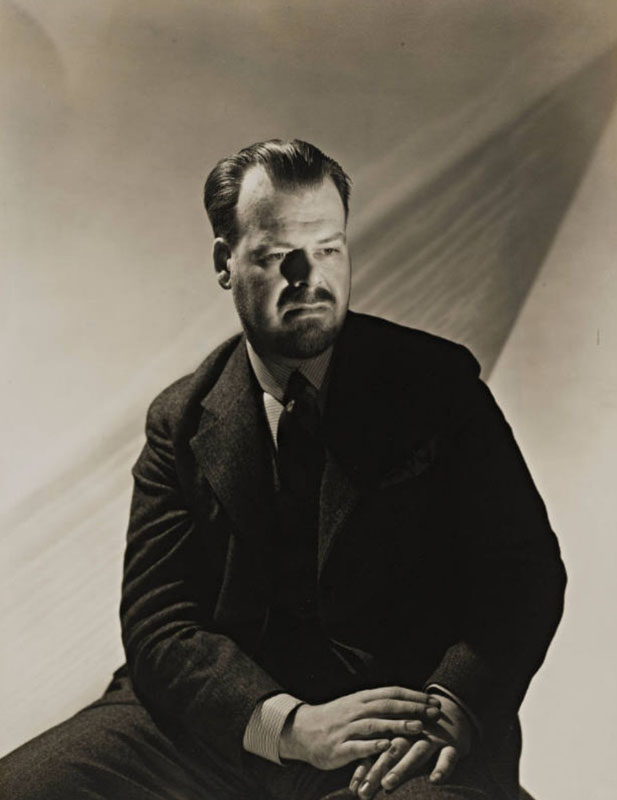
Portrait of Henry-Russell Hitchcock, 1930s. Photo by George Platt Lynes. Source: Francis Lehman Loeb Art Center, Vassar College.
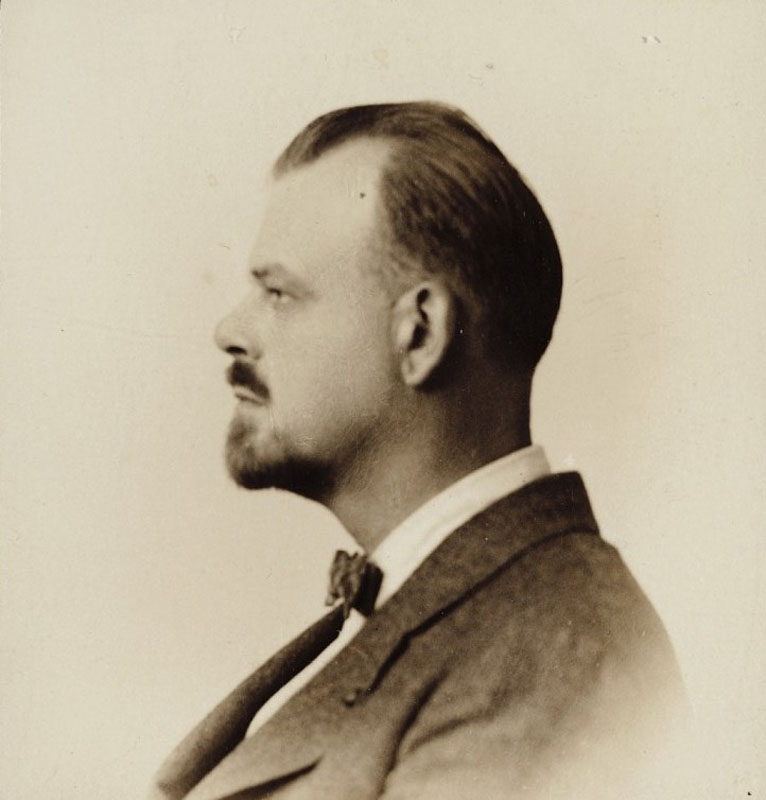
Portrait of Henry-Russell Hitchcock, c. 1930s. Photographer unknown. Source: Archives of American Art
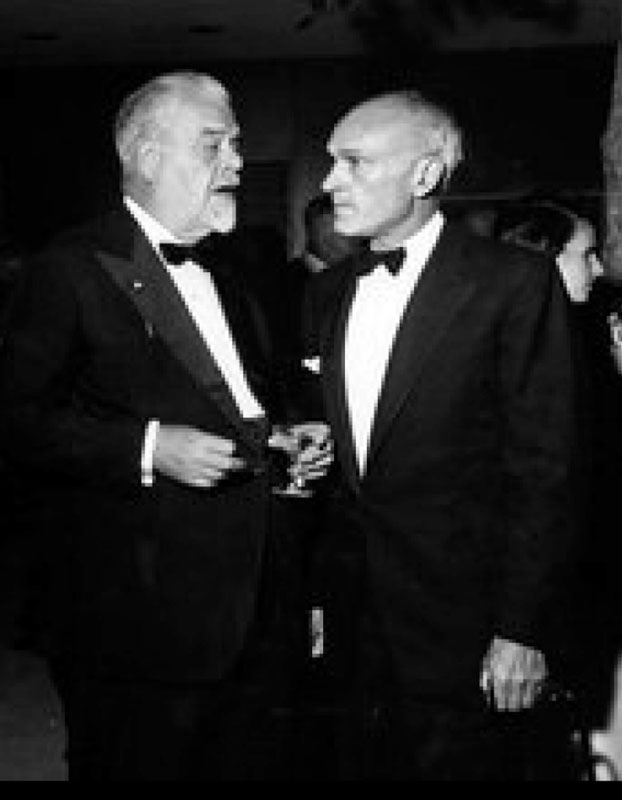
Henry-Russell Hitchcock and Philip Johnson. Photographer and source unknown.
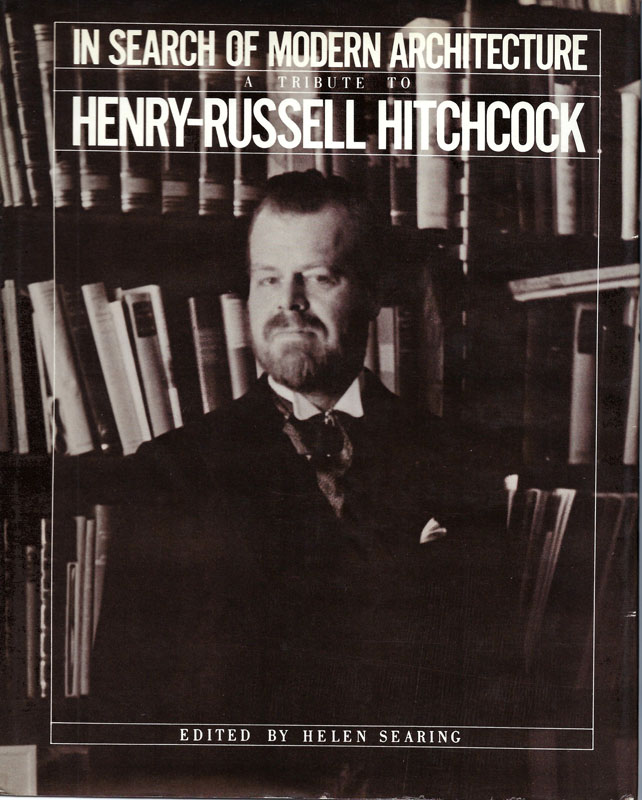
Book jacket of the Festschrift volume in honor of Hitchcock, 1982. Collection of Andrew S. Dolkart.
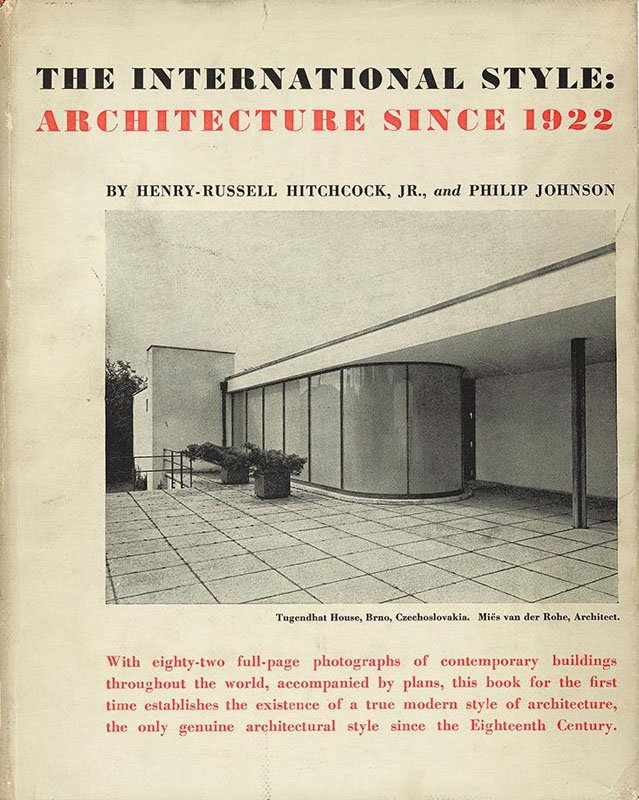
Museum of Modern Art's International Style exhibition catalog, 1932. Source: Museum of Modern Art.
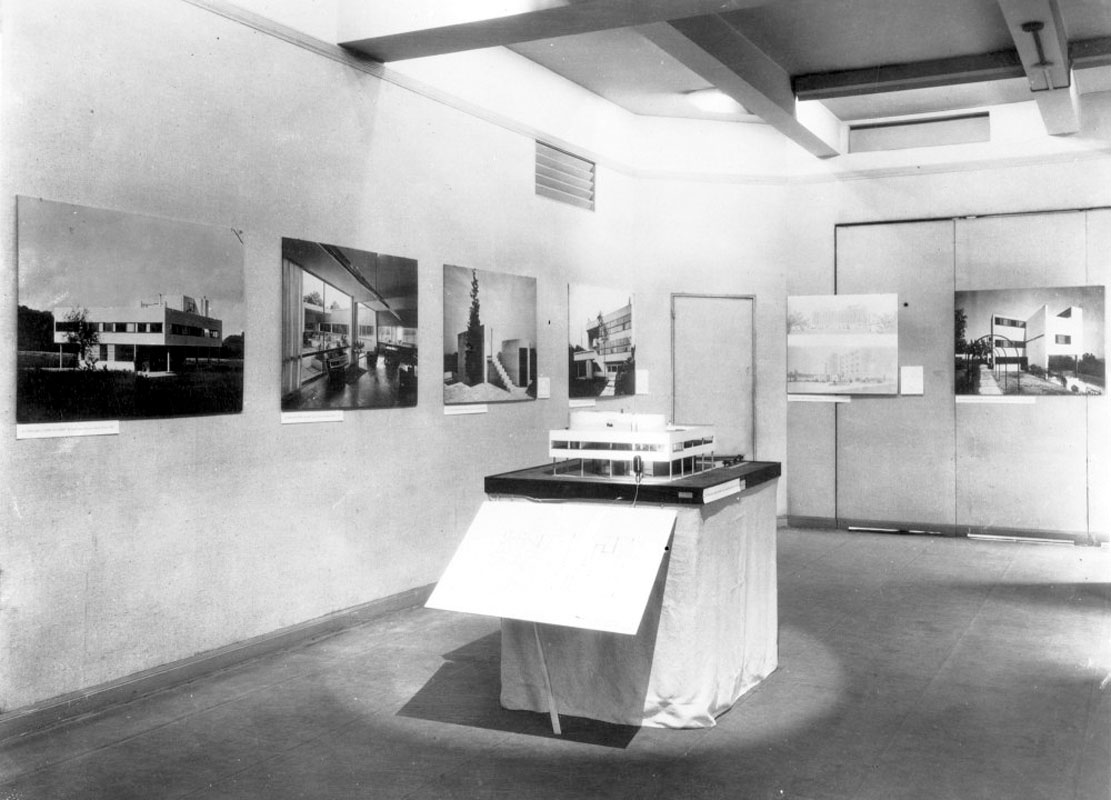
International Style exhibition installation, Museum of Modern Art, 1932. Photographer unknown. Source: Museum of Modern Art.
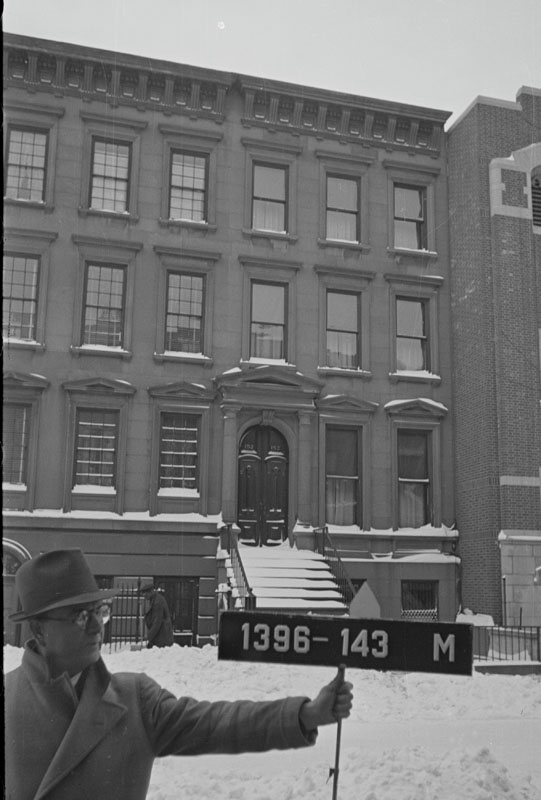
152 East 62nd Street, c. 1940. Courtesy of the NYC Municipal Archives.
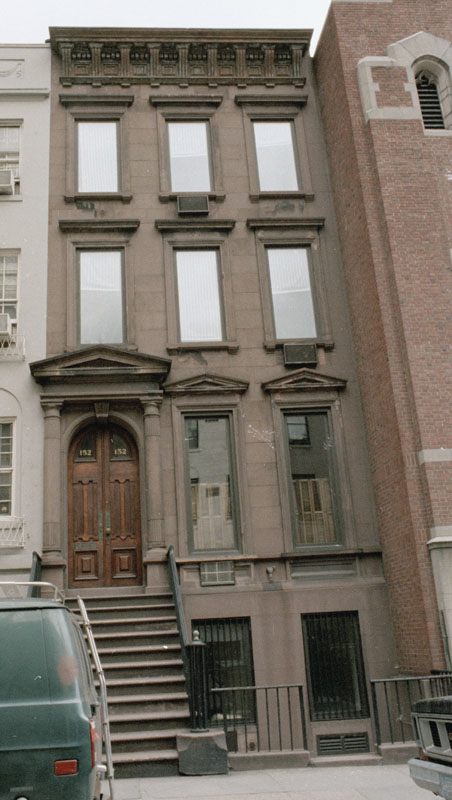
152 East 62nd Street during the period of Hitchcock's ownership of the house, 1980. Courtesy of the NYC Municipal Archives.
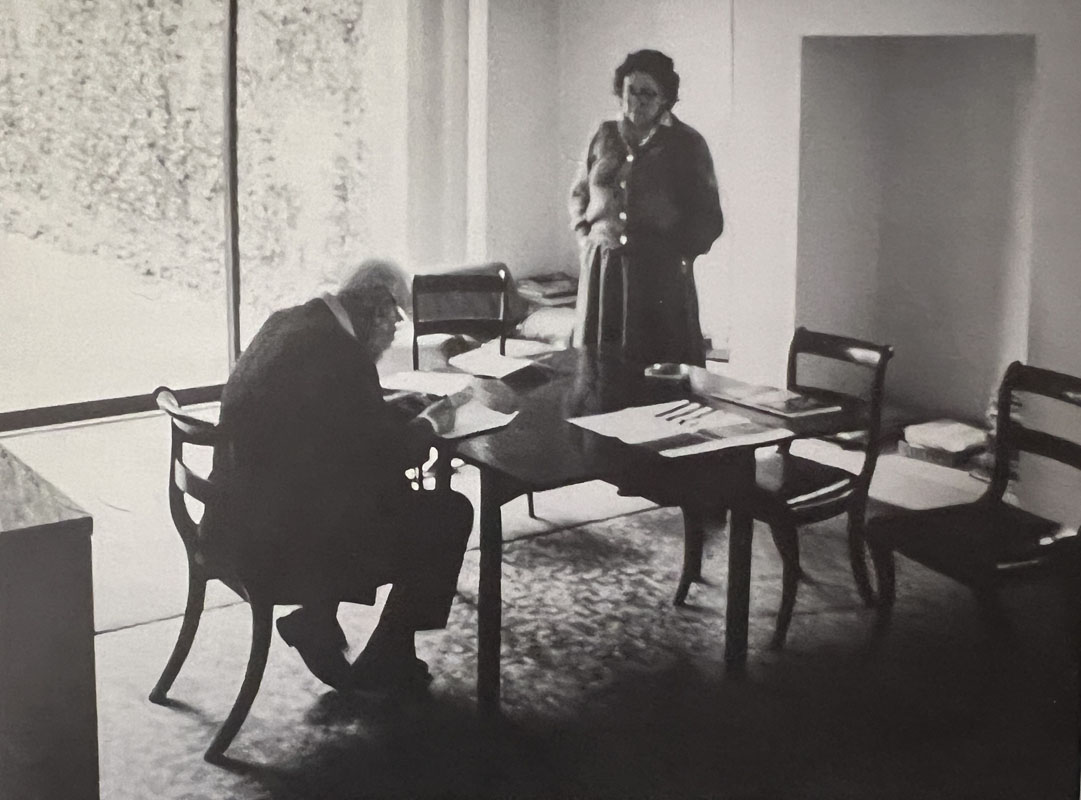
Hitchcock and Mosette Broderick in the living room of 152 East 62nd Street, c. 1980. Photo by Gavin Stamp. Source: Salmon, ed., Summerson and Hitchcock, p. 7.
History
On February 10, 1932, the Museum of Modern Art inaugurated its first architecture exhibition, “Modern Architecture: International Exhibition,” curated by Henry-Russell Hitchcock and Philip Johnson. The exhibition, its catalog, and the accompanying book, The International Style: Architecture since 1922 introduced modern European design to significant American audiences; 33,000 people attended the show during its six-week run and it traveled to eleven other cities, including a presentation at the Bullocks Wilshire Department Store in Los Angeles. The exhibition and book popularized the term International Style. Critic Joseph Giovannini observed in his obituary for Hitchcock that
[Hitchcock] helped introduce architectural modernism to the United States as a style rather than as a technical, functional or sociological way of building.
Only in his late 20s when the International Style exhibition opened, Hitchcock (1903-1987) had already published several books and would go on to become the leading American architectural historian of the middle decades of the 20th century. The eminent British architectural historian Sir John Summerson, in a quote from Frank Salmon’s introduction to the book Summerson and Hitchcock, stated that Hitchcock “is beyond doubt the greatest living architectural historian”
Hitchcock, known as Russell to his friends, was born in Boston into a family with roots in nearby Plymouth going back to the Mayflower (Hitchcock is buried in Plymouth). He was educated at Harvard where he was part of a cultured, substantially gay intellectual set that included Johnson, cultural impresario Lincoln Kirstein, composer Virgil Thomson, artist Maurice Grosser (Thomson’s lover), art administrator and curator Chick Austin, and literary critic Newton Arvin. He dropped out of Harvard’s Graduate School of Design when he realized that his drawing skills were poor and studied architectural history instead. He was working on a PhD under John Coolidge but failed his oral exams. Architectural historian Mosette Broderick, a close friend of Hitchcock, believes that Coolidge failed Hitchcock because he was gay.
Hitchcock began writing about architecture while at Harvard, including a September 1928 essay in Hound and Horn, a student literary and arts magazine founded by Kirstein, where the term “international style” was first used. He also used the term extensively in his first major monograph, Modern Architecture: Romanticism and Reintegration (1929). After leaving Harvard, Hitchcock became a professor at Wesleyan University and then from 1948 to 1968 taught at Smith College. Barry Werth describes Hitchcock during his early years at Smith:
[He was] a high-toned WASP with Rabelasian appetites … [who] openly entertained a large circle of young homosexual faculty members from area colleges who idolized him.
In 1968, following his retirement from Smith, he moved to New York City, teaching as an adjunct professor at New York University’s Institute of Fine Arts.
On moving to New York, Hitchcock bought the 1875 brownstone-fronted rowhouse at 152 East 62nd Street, a purchase made possible with money from the sale of a painting by Albert Bierstadt that he had inherited from his parents. He moved into the house with his partner, Robert Schmitt, a silversmith, goldsmith, and jewelry designer who he had met in Germany and who, after coming to America, designed for Cartier and Neiman Marcus. Schmitt had his jewelry studio in the front of the basement level of the house, while the rear was used by Hitchcock for storage of his files. The main bedroom was in the front of the first floor, with the dining room, anchored by a large black Eames chair, and kitchen to the rear. On the second floor were a library and living room, furnished with 18th- and 19th-century family furniture. The interiors were designed by Michael Kalil, an interior designer who died of AIDS in 1991. The upper two floors of the house were a rental apartment; actor Tammy Grimes was a tenant.
Hitchcock traveled extensively in Europe and America and had a photographic memory for buildings, a useful skill since he was not a good photographer. Although eclectic in his book subjects, much of Hitchcock’s writing focused on modern design and on American and British architecture. He pioneered in the study of American architect Henry Hobson Richardson, with the 1936 publication of The Architecture of H. H. Richardson and His Time. The book and related MoMA exhibition were accompanied by photographs commissioned from Berenice Abbott. Equally innovative as topics were Hitchcock’s 1942 analysis of the work of Frank Lloyd Wright, In the Nature of Materials, and his 1954 Early Victorian Architecture in Britain, written when few academics were interested in this era. Relating to this topic, Hitchcock was a founder of the Victorian Society in Great Britain in 1958 and an early president of the Victorian Society in America, which presents an annual Henry-Russell Hitchcock Award.
Hitchcock was lauded as he aged, and upon his death, in 1987. In recognition of Hitchcock’s significance, 1982, the Architectural History Foundation published In Search of Modern Architecture: Henry-Russell Hitchcock (a Festschrift), with essays contributed by many of the leading architectural historians of the day. The preface, written by Philip Johnson, opens by stating “I am only proud that I was right in 1929 to claim that Russell Hitchcock is the leading historian of architecture in the world today. My judgment has not changed.” In an assessment of his career, New York Times critic Paul Goldberger stated that “he has done more than any other historian to nurture a wise and knowing architectural eye in our culture.”
Entry by Andrew S. Dolkart, project director (February 2026), with thanks to Professor Mosette Broderick for her assistance
NOTE: Names above in bold indicate LGBT people.
Building Information
- Architect or Builder: John G. Prague
- Year Built: 1875
Sources
Barry Werth, The Scarlet Professor: Newton Arvin: A Literary Life Shattered by Scandal (New York: Nan A. Talese, 2001). [source of second pull quote]
Edgar J. Discoll Jr., “Henry-Russell Hitchcock, 83, Art, Architecture Study Was His Life,” Boston Globe, February 24, 1987.
Frank Salmon, “Introduction” in Frank Salmon, ed. Summerson and Hitchcock: Essays in Architectural Historiography, Studies in British Art 16 (New Haven: Yale University Press, 2006), xii. [source of Sir John Summerson quote]
Helen Searing, ed., In Search of Modern Architecture: Henry-Russell Hitchcock (New York: Architectural History Foundation and Cambridge: MIT Press, 1982). [source of Philip Johnson quote]
Joseph Giovannini, “Henry-Russell Hitchcock Dead at 83,” New York Times, February 20, 1987. [source of first pull quote]
Lee Sorensen, “Hitchcock, Henry-Russell,” Dictionary of Art Historians, bit.ly/4tGqXLn.
Mosette Broderick, interview with author, 2024.
Mosette Broderick, “Talk from the Table,” in Frank Salmon, ed., Summerson and Hitchcock: Essays in Architectural Historiography, Studies in British Art 16 (New Haven: Yale University Press, 2006), 7-17.
Paul Goldberger, “Honoring an Inspiring Historian,” New York Times, March 20, 1983. [source of Paul Goldberger quote]
Do you have more information about this site?
This project is enriched by your participation! Do you have your own images of this site? Or a story to share? Would you like to suggest a different historic site?